At her Getty Center memorial, Betye Saar's family and fellow artists honored a matriarch whose home, studio and assemblages were one body of work.
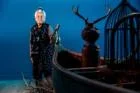
Tributes to major artists tend to sand down the rough edges. The memorial for Betye Saar at the Getty Center last week went the other way. It made a sharper case for her work by showing how she folded motherhood into her studio practice instead of treating the two as competing demands. That's a rarer choice than it sounds. Most eulogies reach for a tidy story about genius, and the messier parts of an artist's life, the ones that don't fit neatly on a wall label, usually get trimmed before anyone takes the microphone.
A send-off that matched the work
The Getty filled its 450-seat auditorium with artists, curators, friends and family. The mood held grief and celebration at once. The program ended with her brother-in-law, saxophonist Bennie Maupin, and the band Bayou Bump leading a procession, as Saar had asked. Here's the thing about that procession: it was a request, not a formality. An artist who specifies how her own farewell should unfold is still directing the work, and that fits someone who spent decades deciding exactly where each found object would land. Maupin's presence also ties the music to the family itself, since he's her brother-in-law.
Saar died last July, four days short of her 100th birthday. That timing is easy to skim past, and it shouldn't be. Missing a century by four days is the kind of detail that makes writers double-check the arithmetic. She earned her bachelor's degree at UCLA in 1949, when few Black students made it onto that campus. A degree from that era and a memorial at a major institution are separated by a long stretch of American history, and Saar was there for most of it.
A matriarch on her own terms
Channing Johnson, her eldest nephew, called her a "true" matriarch, though not a conventional one. "She was as impactful and skilful as a family matriarch as she was a gifted artist," he said. "She gathered us together whether it was in a back yard or public park." He also said she kept the family's history in public view. Then he made the point that lands hardest: "you can literally see our family in her artwork." Her assemblages often incorporated family snapshots and keepsakes.
Family tributes carry a particular risk. They can slide into sentiment, with the artist reduced to a warm presence at the dinner table and little else. Johnson avoids that, mostly because he's specific. Gathering relatives in a back yard or a public park is a practical kind of leadership, and it's a different thing from the stately role people usually imagine for a matriarch. Whether you're writing about family or about your own, that distinction is worth holding onto.
Johnson also pointed to her humor (and this is the part most people overlook) and her appetite for adventure. She learned to belly dance early, and in June she showed off those moves when the Museum of Modern Art honored her at its Party in the Garden gala. Galas are usually stiff affairs, built around speeches and seated dinners, so an honoree who gets up and moves is making a choice about how she wants to be seen. Some people will file that as a charming footnote. I think it's one of the most revealing details in the whole story, because it shows an artist who wasn't interested in performing solemnity for an institution.
MoMA director Christophe Cherix recalled visiting her Laurel Canyon studio, which was "unlike any other studio I had ever seen." It overflowed with objects that waited years, sometimes decades, to be gathered, recognized and assembled into art. That image of patience is a useful way to read her process. She didn't chase material. She let it accumulate until it had something to say. Most artists working with salvaged or sentimental objects face the same problem: the pile grows faster than the idea, and the discipline lies in knowing when to stop collecting.
Where the work and the family lived
The Laurel Canyon house was where Saar built her spiritualist, Black-centered, female-empowered vision through printmaking and assemblage. It's also where she raised her three daughters: sculptor Alison Saar, mixed-media artist Lezley Saar and writer Tracye Saar. The house does a lot of work in this story. For artists who build with found material, home and studio tend to blur, because the objects that matter arrive through ordinary life. For one of her most famous works, Black Girl's Window (1969), she used a windowpane to organize the celestial images inside it. That's a compositional choice that frames the cosmos as something seen through domestic architecture, which suits a practice built from household material.
The girls once treated the wheel of their mother's printing press as the helm of a pirate ship. They have said in interviews that they're glad they got through childhood with all their fingers and hands intact. It's a funny image, and a pointed one. Printing presses aren't toys, and any household that shares one with children is living with a real tradeoff between access and risk. The joke carries a quiet admission that the studio was a shared space rather than a sealed-off workshop, and that the family lived with its hazards as well as its benefits.
Collector Joy Simmons brought her week-old daughter, Naima, to a Saar opening at the Jan Baum gallery in 1981. "I was not going to miss this opportunity to celebrate a Black woman opening up at a white woman's gallery," she recalled. Her point was about more than one show. Showing up with a newborn is a small act of commitment, and it's easy to miss in retrospectives that focus on objects and dates. She described a lineage that now reaches grandchildren working in the arts today, and that's the part of the story that doesn't fit inside a catalogue.
"To Alison, Lezley, Tracye and the whole family: I've watched three generations of Saar women make this city's art history something special," Simmons said. "Betye's work belongs to museums now, but I know her proudest moment and her proudest accomplishment is all of you." Simmons's tribute lands on a real tension. Museums collect the work, and that's a form of permanence the family can't provide on its own. Yet she placed the family at the center of the achievement. I'd push back gently on the instinct to treat institutional acquisition as the only measure of success, because the people who lived alongside the work often understood it first.
That's the real takeaway from the service. Museums are still cataloguing what Saar's household already knew: the family she raised is the archive, and her studio was never separate from it. The eulogies made that point without quite saying it outright. Each speaker described a home where art and life ran on the same schedule, and that's harder to reproduce in a finding aid than any single object.
What this means beyond the service
If you're working in this space, whether as a curator, archivist, estate manager or critic, the memorial offers a practical lesson. Estates and institutions often sort an artist's papers, objects and family records into separate piles, each with its own cataloguing logic. Saar's case suggests those piles were never fully separate, and treating them that way can strip context from the work. The snapshots, the keepsakes and the stories from relatives are not side material. They're often the thread that explains why an object was kept in the first place.
I'm skeptical of any claim that a single memorial will reshape how an artist is remembered. Attention fades quickly once the eulogies are over, and the work has to hold its place through exhibitions, collections and scholarship that keep returning to it. What the service did accomplish is narrower and more useful. It offered a model for reading the work alongside the life, and the life alongside the work, without flattening either one.
What this means for you, practically, is simple. If you're writing about a deceased artist, ask family members about the domestic side of the practice before you settle on a narrative, because that's where the surprises usually live. You'll likely find that the details that seem trivial, like a pirate-ship printing press or a newborn at a gallery opening, carry more analytical weight than the critical consensus would suggest. That's the lesson Saar's family seems to be pressing on the rest of us, and it's one the art world would do well to take seriously.


Discussion
Sign in to join the discussion.