Sky Glabush layers oil with sand and turpentine, erasing as he builds landscapes that feel like weather. See his work at Alison Jacques, London.
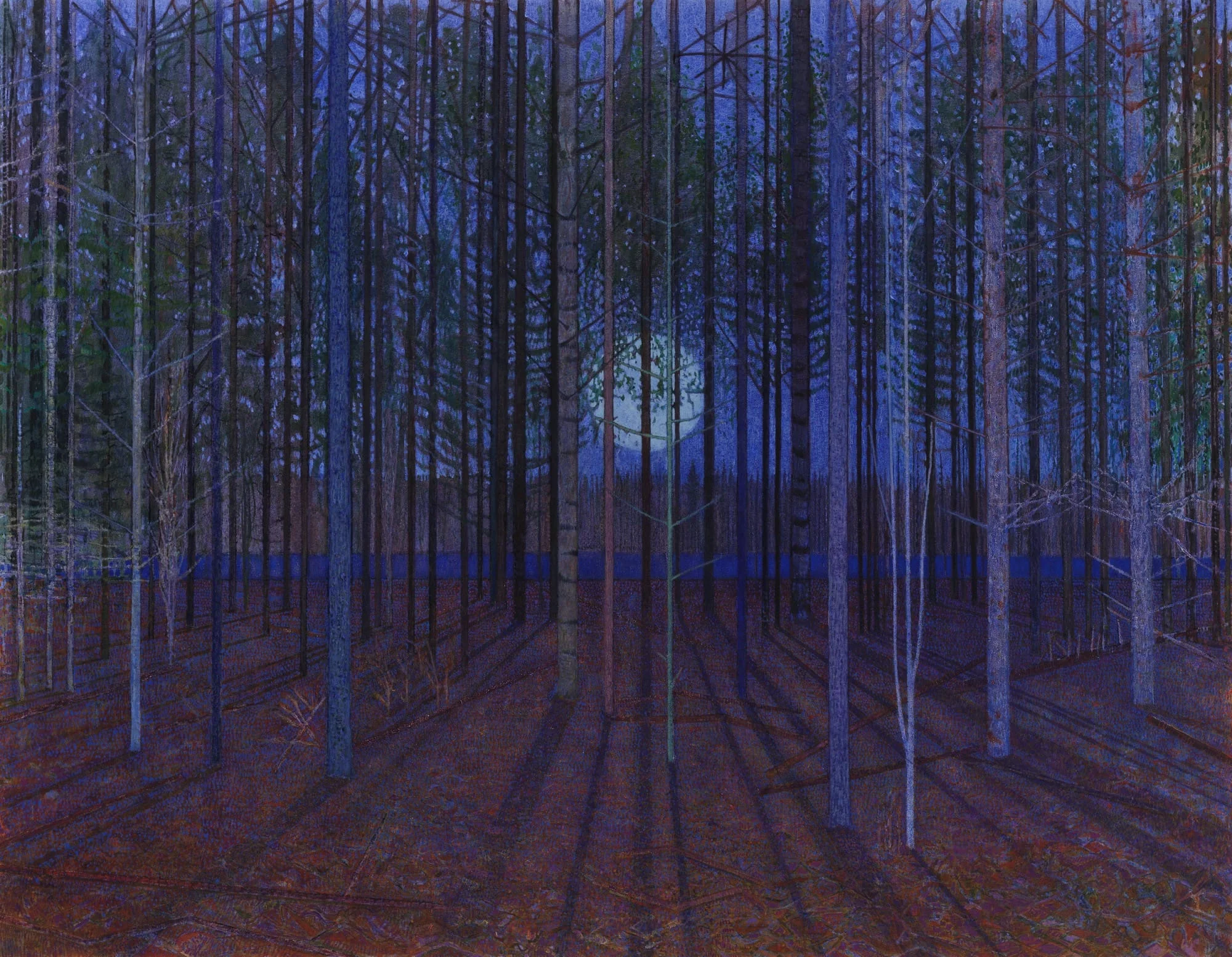
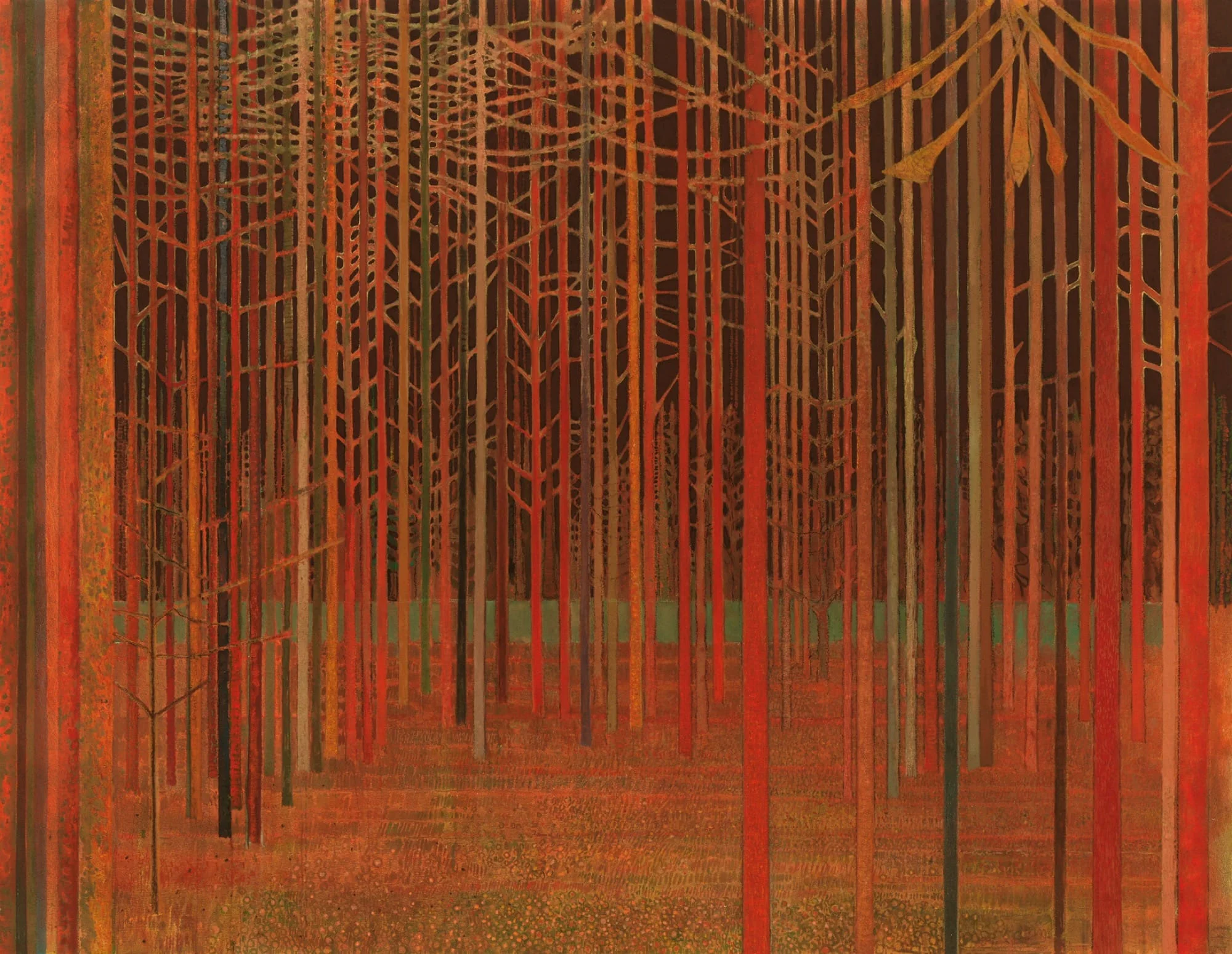
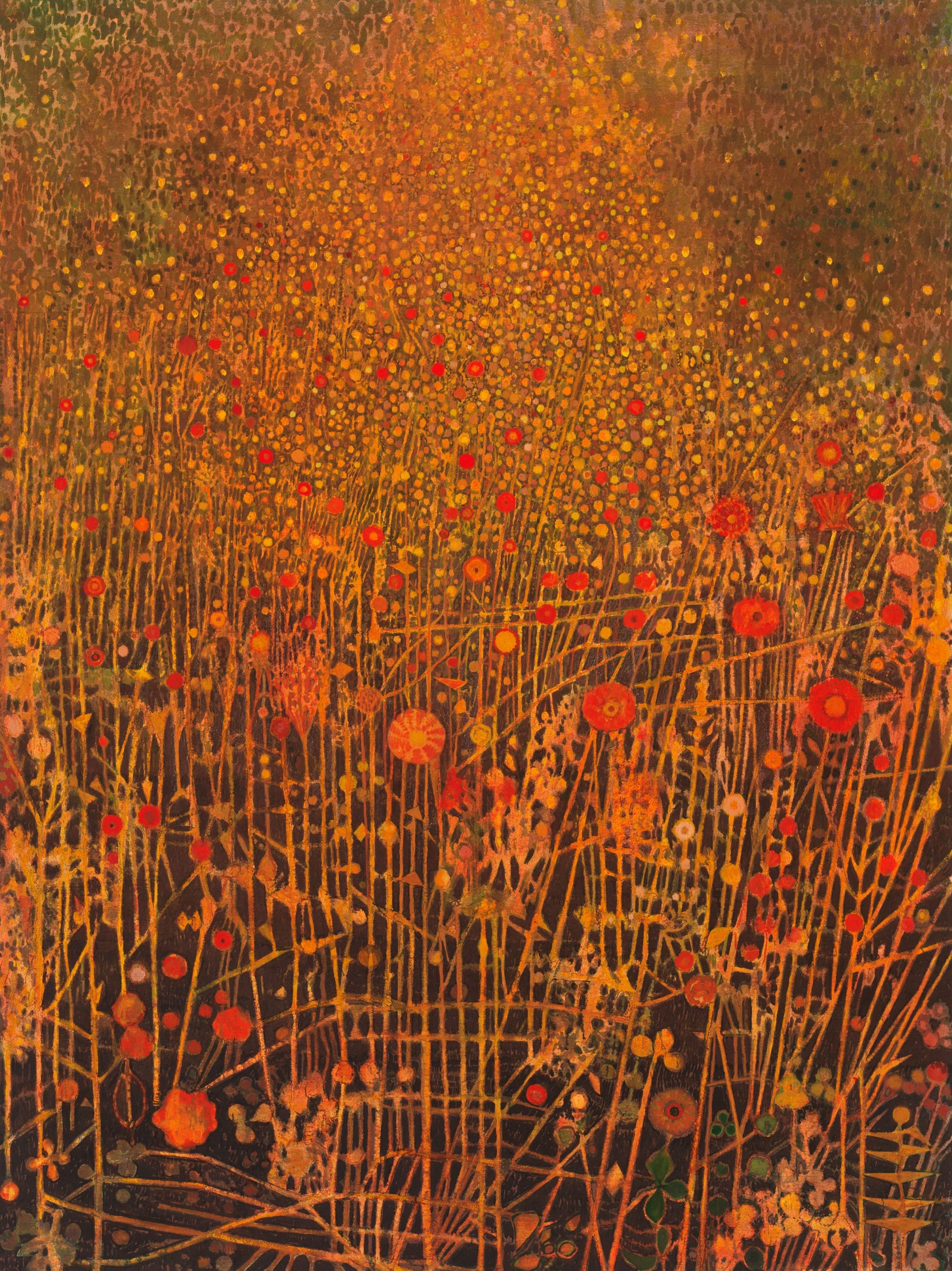
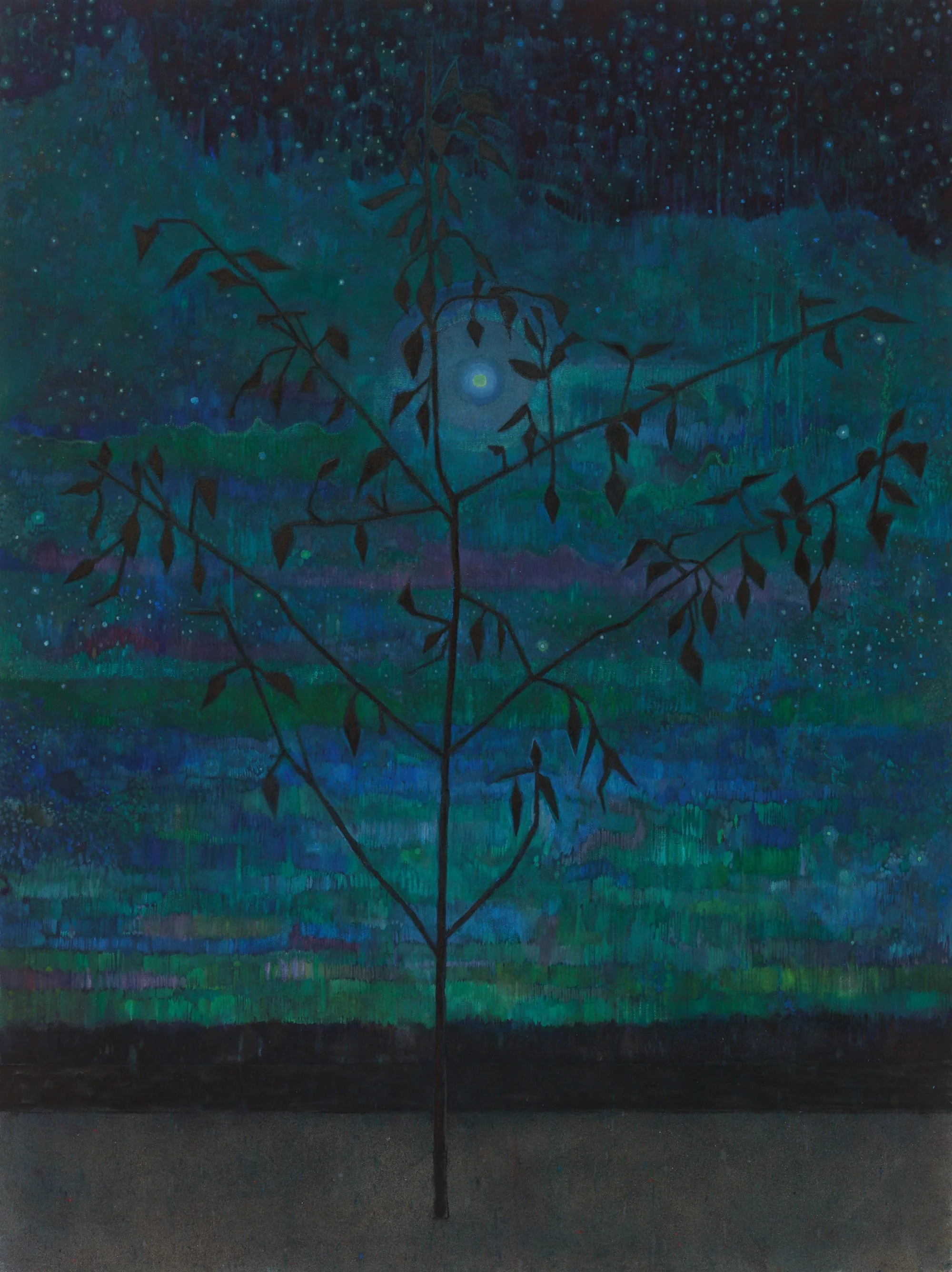
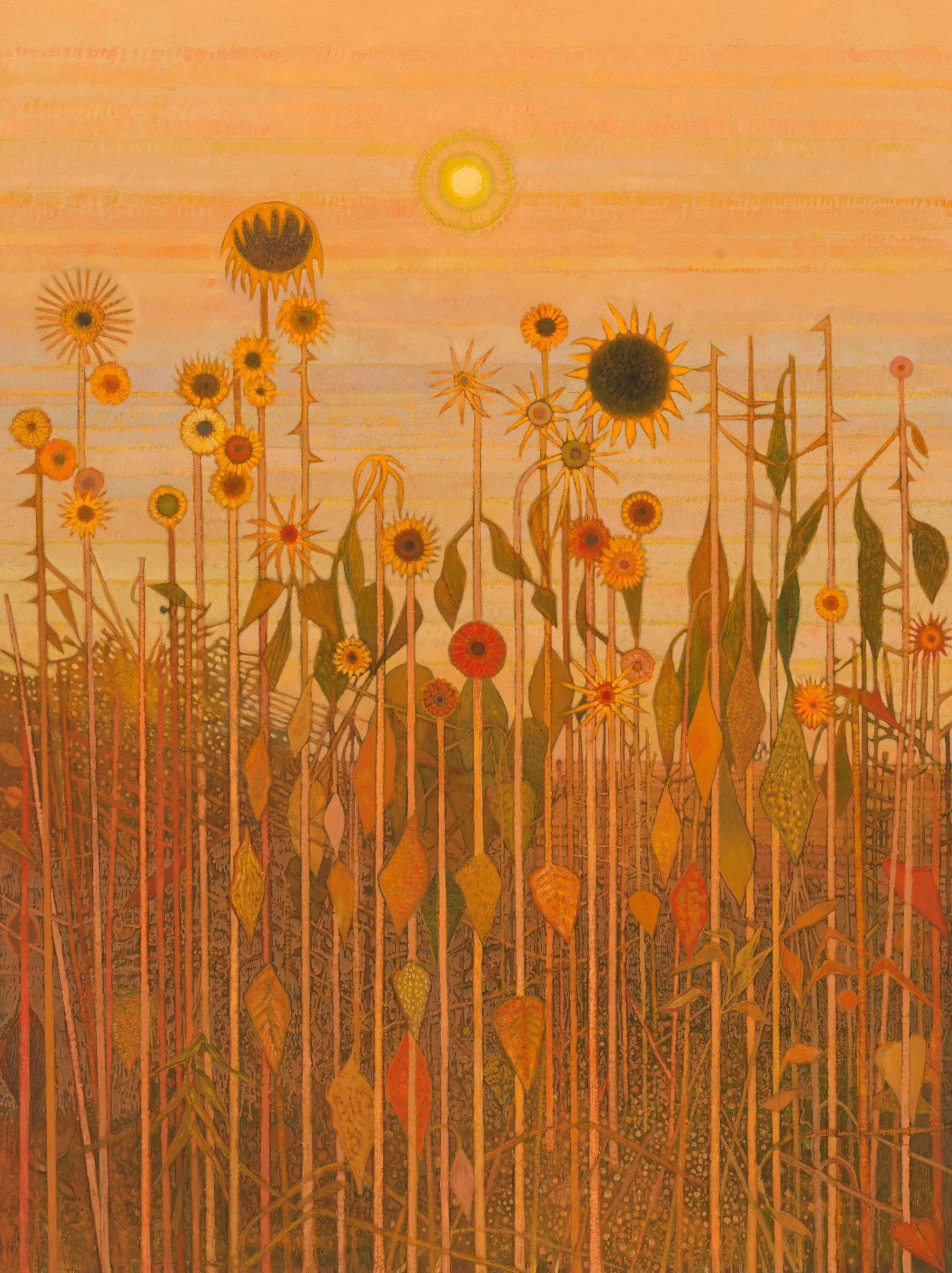
Stand in front of a Sky Glabush painting long enough and the surface starts to behave like weather. A breeze seems to slide across the green, or leaves seem to crunch underfoot. The sound comes before the image, and the texture does most of the persuading.
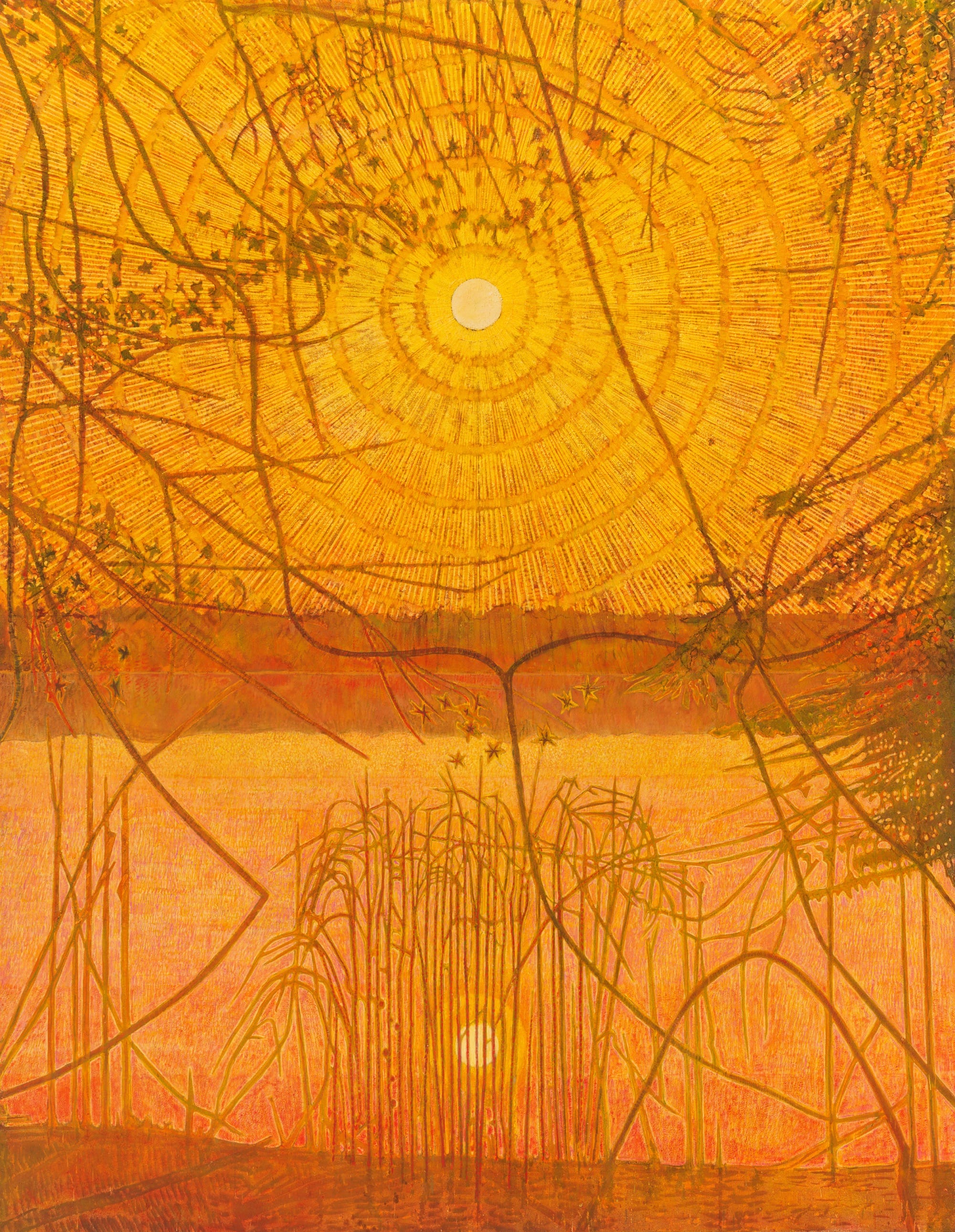
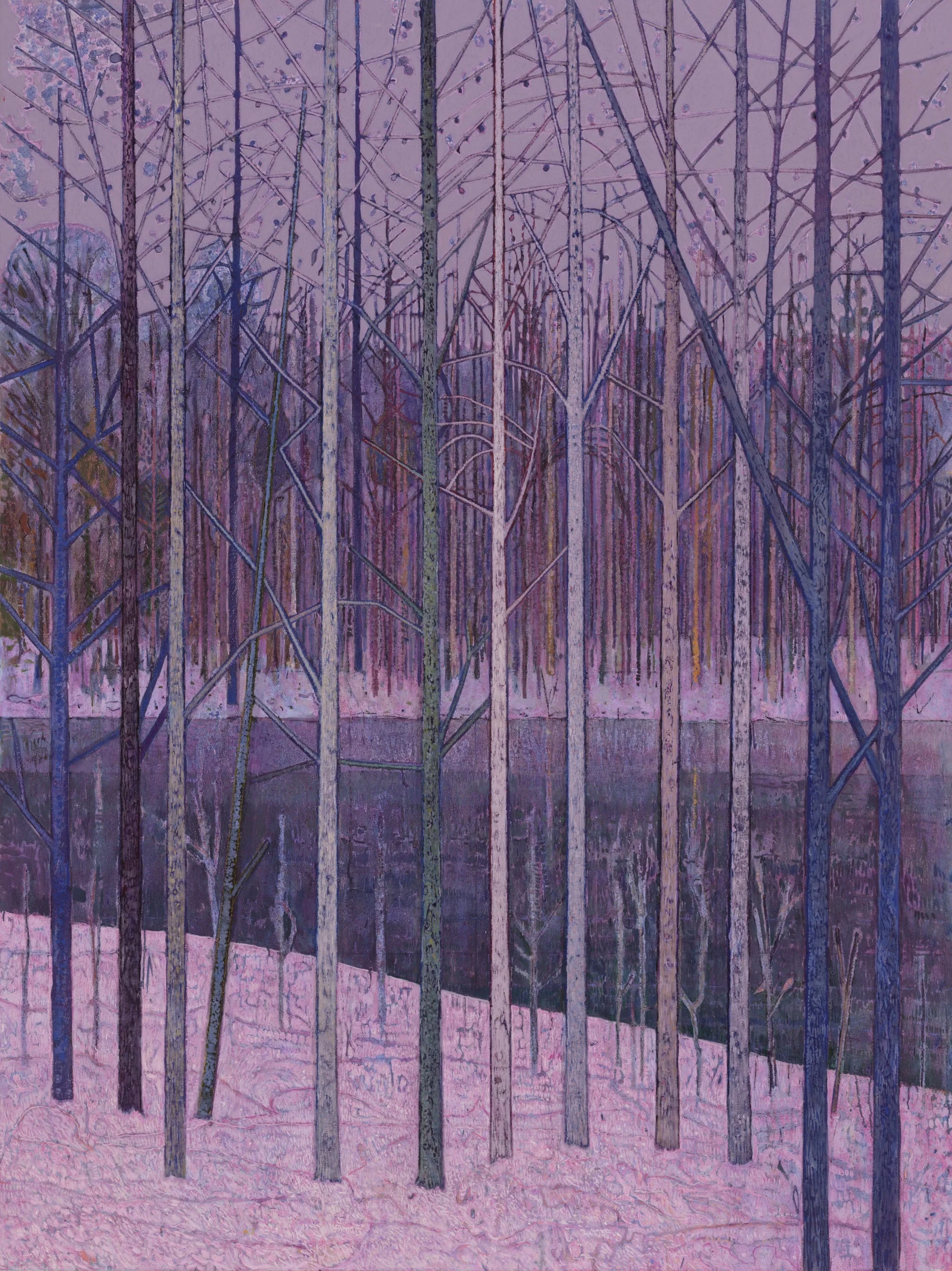
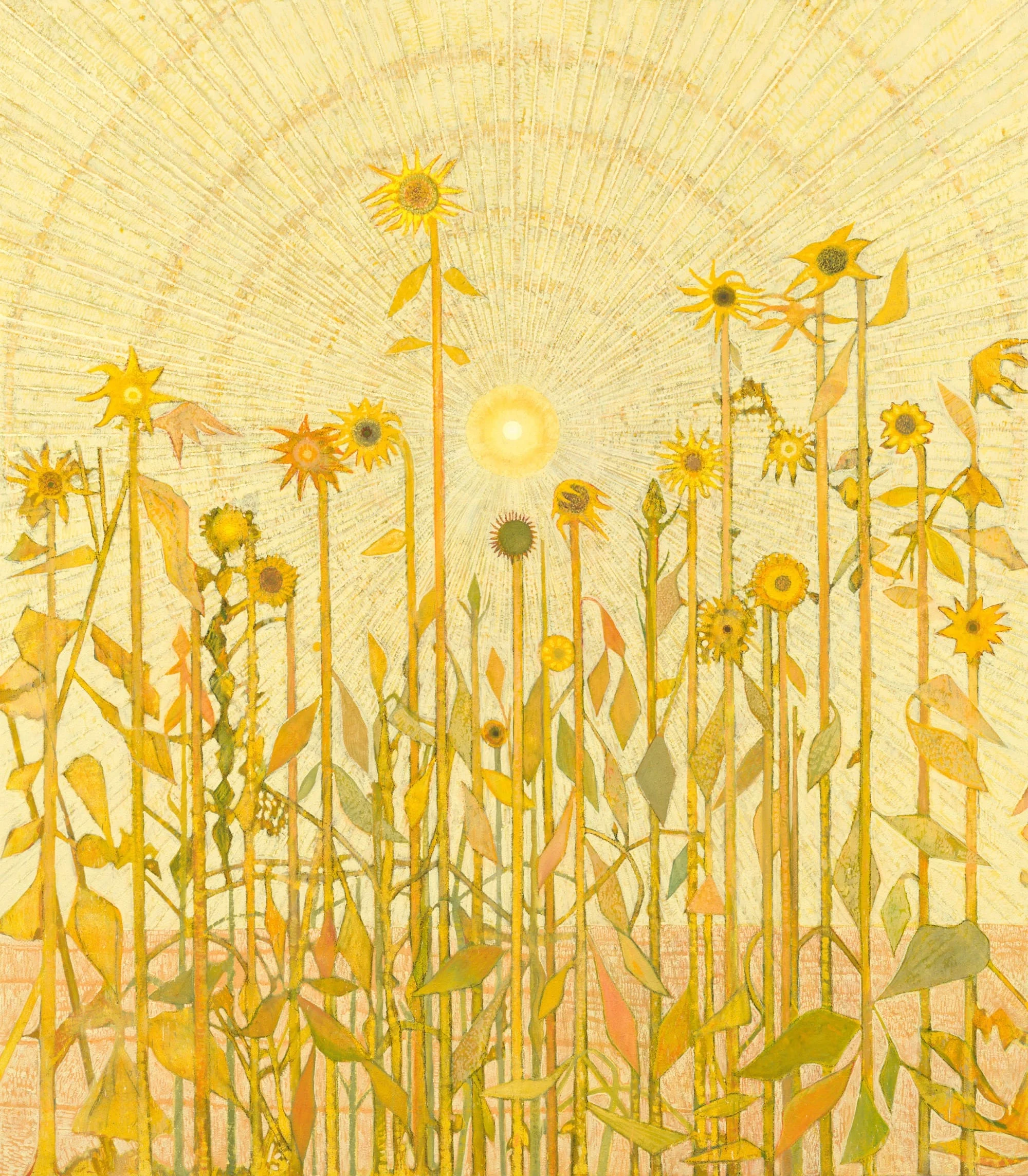
Glabush grew up on the west coast of British Columbia and now works in rural Ontario. His starting point is less a view than a feeling. He identifies the emotion a place gives him, then translates it into color and his own reading of the terrain. A forest becomes a cluster of spindly, oddly straight trunks. A sunflower becomes a study in the radial logic of the sun.
Subtracting as Much as Adding
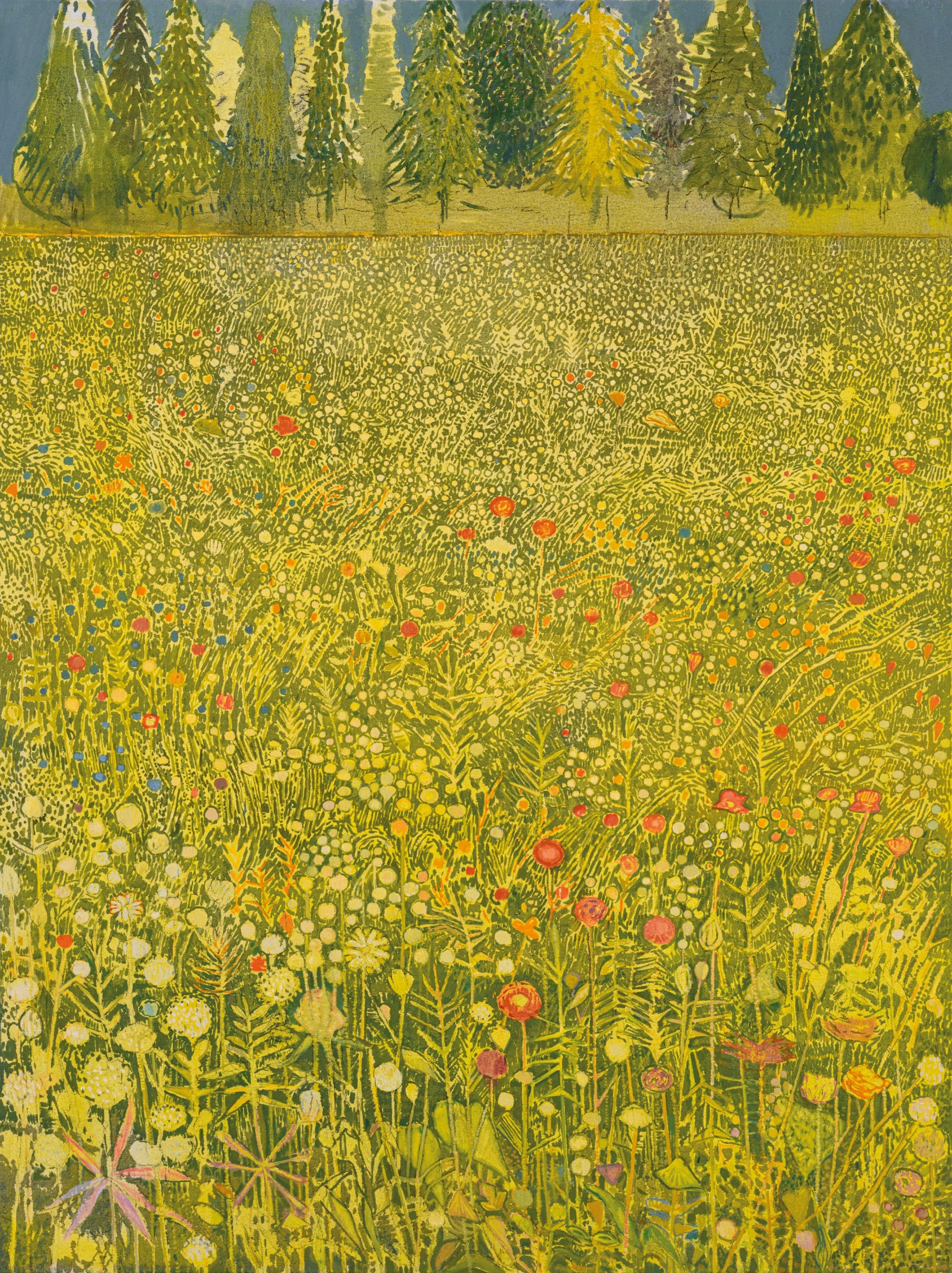
Glabush usually works with tight palettes, keeping each painting to one or two color families. He mixes oil with granular material, sand most often, though he has also used crushed quartz and raw pigment. The experiment started as an act of destruction. He set out, he says, to obliterate the image. "But I realized it didn’t destroy the image. It was still present and humming under that surface layer. So it gave me the freedom of deciding what I wanted to hold on to or what I wanted to erase."
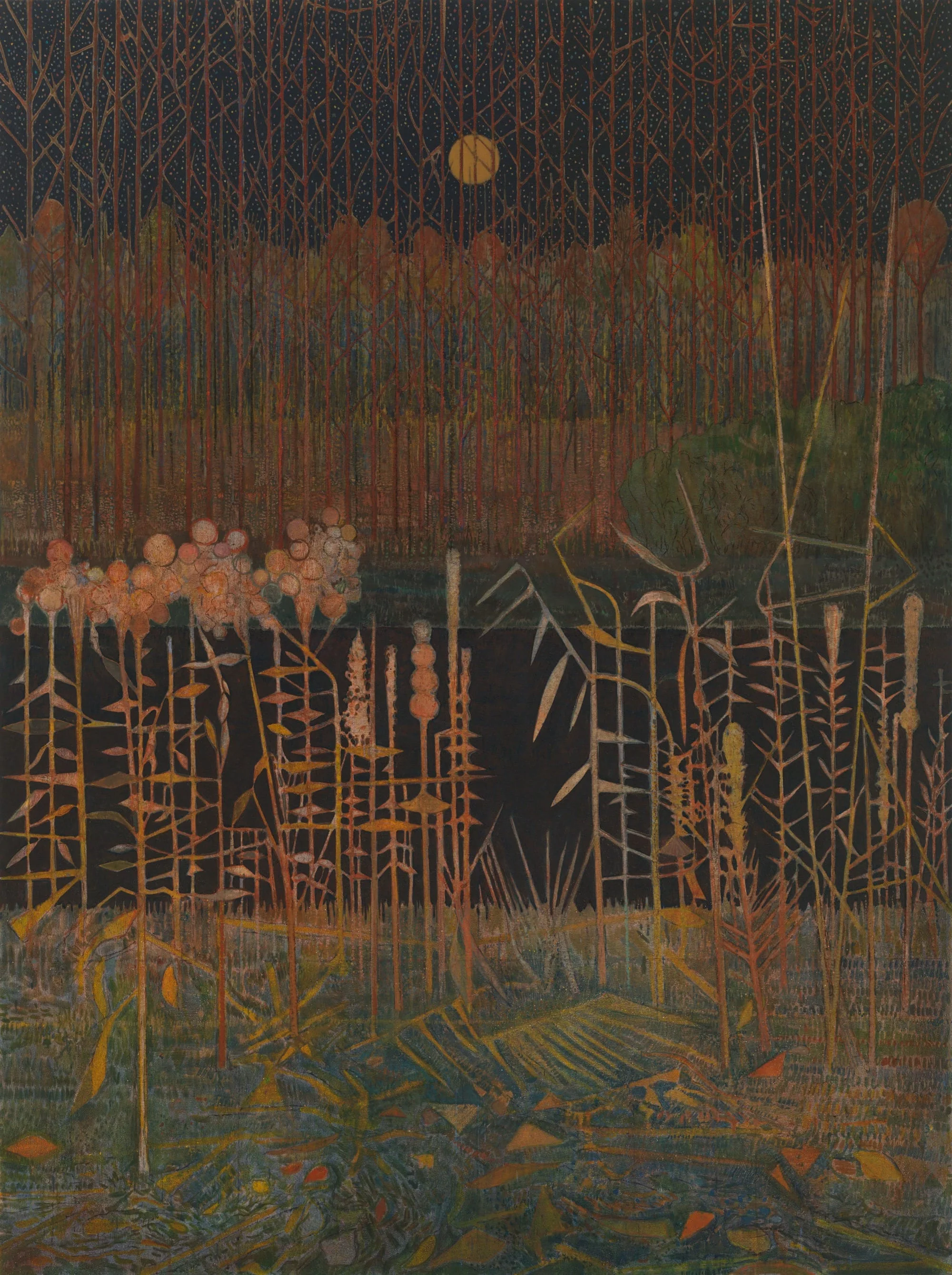
That push and pull now defines the process. He adds thin stains of paint and turpentine until the surface turns relief-like, then pulls material back to expose what sits beneath. Each work starts with an architectural frame, sometimes a grid and sometimes a radial arrangement, and that skeleton shapes every layer that follows. Here’s the thing: the structure gives the paintings their bones, but color does the emotional work. Glabush calls color “the unifying principle, it is the energy and dynamism, it is the element of surprise.” A painting often cycles through several color iterations before he commits to a direction.
Why He Keeps Coming Back to Paint
Glabush has worked in other materials and particularly enjoyed carving. Painting kept pulling him back, though, because its conventions and limits gave him something to push against. His sculptural period, he says, let him treat paintings in a more physical and experimental way. "But even during my most experimental period, I saw myself as a painter and wanted to find a way to express myself within that language."
Where to See the Work
Several pieces will appear in Glabush’s solo exhibition, If the Wild Bird Could Speak, on view from November 20 to January 9 at Alison Jacques in London. Until then, his Instagram is the best window into how the paintings shift from one stage to the next.
My read is that the sand and the erasing are doing more than texture. They keep the image unsettled, so each canvas still hums with what he almost lost. That tension is worth watching as his palettes keep narrowing.



Discussion
Sign in to join the discussion.