U2's 16th album, Carnaval De Luz, ends with "Torn," a duet featuring Dolly Parton's last recorded vocal and a song that reads as anti-war.
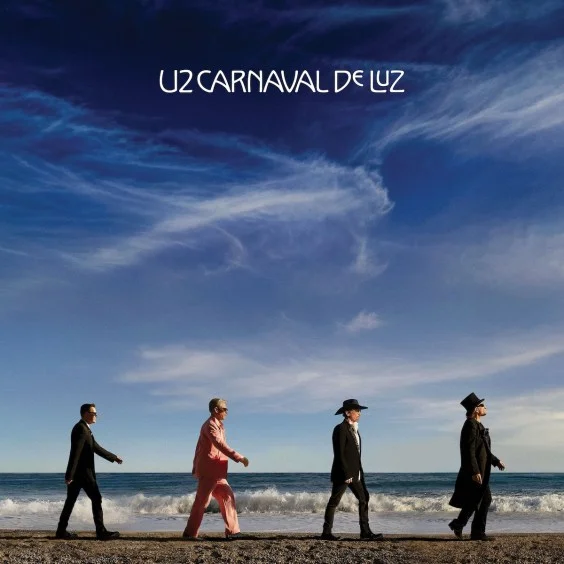
U2's 16th studio album, Carnaval De Luz, is out now on Island, and it's their first full-length collection of new songs in nine years. It's a chaotic ride. The band wrote a track about Rosalía, "The Mirror Maker (Rosalía)," and the sprawl runs in several directions at once. But the most affecting moment arrives at the end, on closer "Torn." That's the right place for it. Sprawl wears a listener down, and a strong final track is what sends them back to the start.
A farewell duet
"Torn" pairs Bono with Dolly Parton over patient drum hits, wavering synths, and pedal steel played by longtime U2 collaborator Daniel Lanois. Jacknife Lee produced it. Parton recorded her vocal in Nashville in June, and that session became her final recorded vocal performance before her death. The song was co-written by U2, Parton, and Johnny McDaid.
Duets between rock singers and country legends tend to go one of two ways. Sometimes the guest is a novelty bolted onto a song that was already finished. Other times the song is built around the voice, and the arrangement gets out of the way. "Torn" is the second kind, and that's why it sounds so spare. The drums and pedal steel leave room for Parton's phrasing, and the band seems to understand that a voice like hers doesn't need much help.
Lyrically, it reads as an anti-war song, and that lands harder in 2026 than the band could have planned. In the third verse, Parton sings, "Nothing hurts a mother more than a family at war." The chorus follows the same thread: "Somebody loses either way / And every heart is torn." It's a plain, direct message, and the restraint is what makes it work. Anti-war songs often fail by shouting. This one doesn't, and that's the more difficult choice.
How the song came together
The collaboration started somewhere else entirely. U2 first worked on a folk song called "Lifelong," which Bono described as a "slightly dizzy, drunken marriage song." Parton reportedly found it a little too Irish. She offered the opening of what became "Torn" and gave the band room to push it somewhere bigger. The Edge said she was game for the band's "sci-fi country" approach, which is about as good a summary of the record's ambitions as you'll get.
That kind of pivot is risky. A band that hands over the wheel to a guest can end up with something that belongs to neither camp. Here, the handoff seems to have worked because the song kept its core emotional idea while changing its skin. If you've ever tried to rework a song in a different genre, you know how often the result feels like a costume. This one doesn't.
A country version, co-produced by Kent Wells, isn't on the album but is available to stream. That tells you something. The band clearly saw the song as one that could travel beyond the album's more experimental edges. And yet the fact that a separate version exists also suggests the band wasn't entirely sure where the song should live. Most artists don't release a second take unless they're hedging a little.
Bono's read on the prayer
Bono said Parton wasn't aware of how ill she was while they recorded. He called the song her last prayer, one he hears as meant for America and for anywhere politics has divided people. He pictured families arguing over politics at Thanksgiving tables, and he framed Americans as the children of Dolly Parton, urging them to find common purpose across the table.
Here's the thing about reading a song as someone's last prayer. Once you hear it that way, every line gets heavier, and the listener starts doing the emotional work the band might have wanted to leave to them. That's a powerful effect. It's also a frame that's hard to argue with, because nobody wants to be the person who questions a dying artist's final recording. Bono's framing is persuasive, and it's worth being a little skeptical of how neatly it fits the song.
I'd also be careful about treating the Thanksgiving image as a thesis. It's a vivid picture, and it works on the page. But a song can't fix a fractured family dinner, and the track doesn't pretend it can. What it does is offer a shared emotional register, which is smaller and, arguably, more honest.
What this means for the band and for you
For longtime fans, "Torn" is likely to matter more than the rest of the record. The album's sprawl is part of its identity, and that's not a bad thing, but it makes it harder for any single track to stand out. A closer that works as a farewell, even accidentally, gives the album a shape it might otherwise lack. Here's the thing, though: the song is strongest because it isn't trying to be a summary of U2's career. It's simply a good song with a serious subject.
If you're working in music, or following how established acts handle collaboration, this is a useful case study. A veteran band reached outside its own sound, let a guest shape the emotional core, and didn't flinch from a direct message. That's harder to pull off than it sounds, especially for a group with four decades of expectations behind it. The risk is sentimentality, and the track mostly avoids it.
Whatever you make of the rest of Carnaval De Luz, "Torn" is the track I expect to hold up over time. It's a farewell that doesn't feel like one, and that's a rare thing to land on the closer of a U2 album.



Discussion
Sign in to join the discussion.