Moving between Nigeria and Chicago informs Collins Obijiaku’s portraits, where familiar faces and art historical references turn memory into a shared experience.
Portraits between presence and recollection
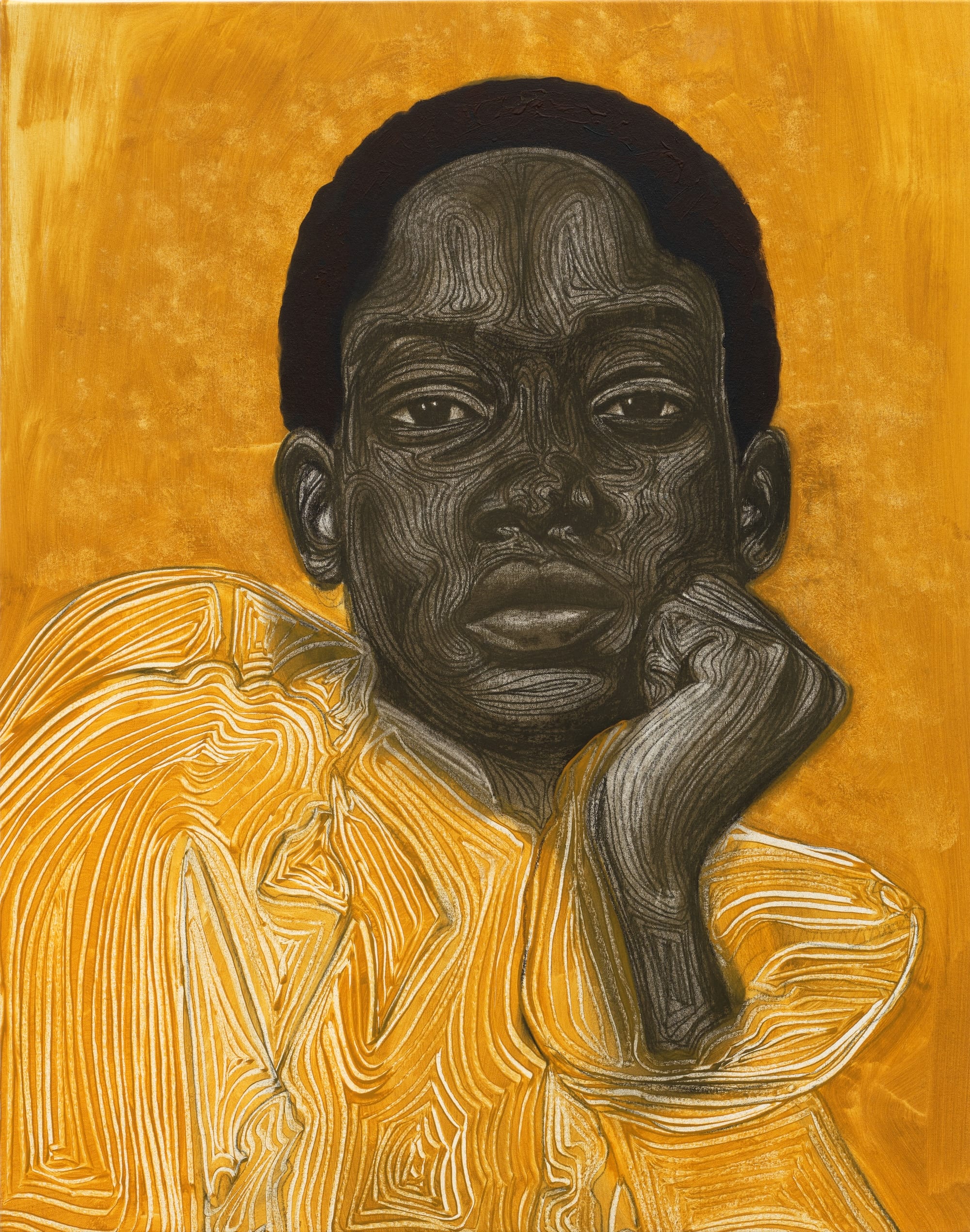
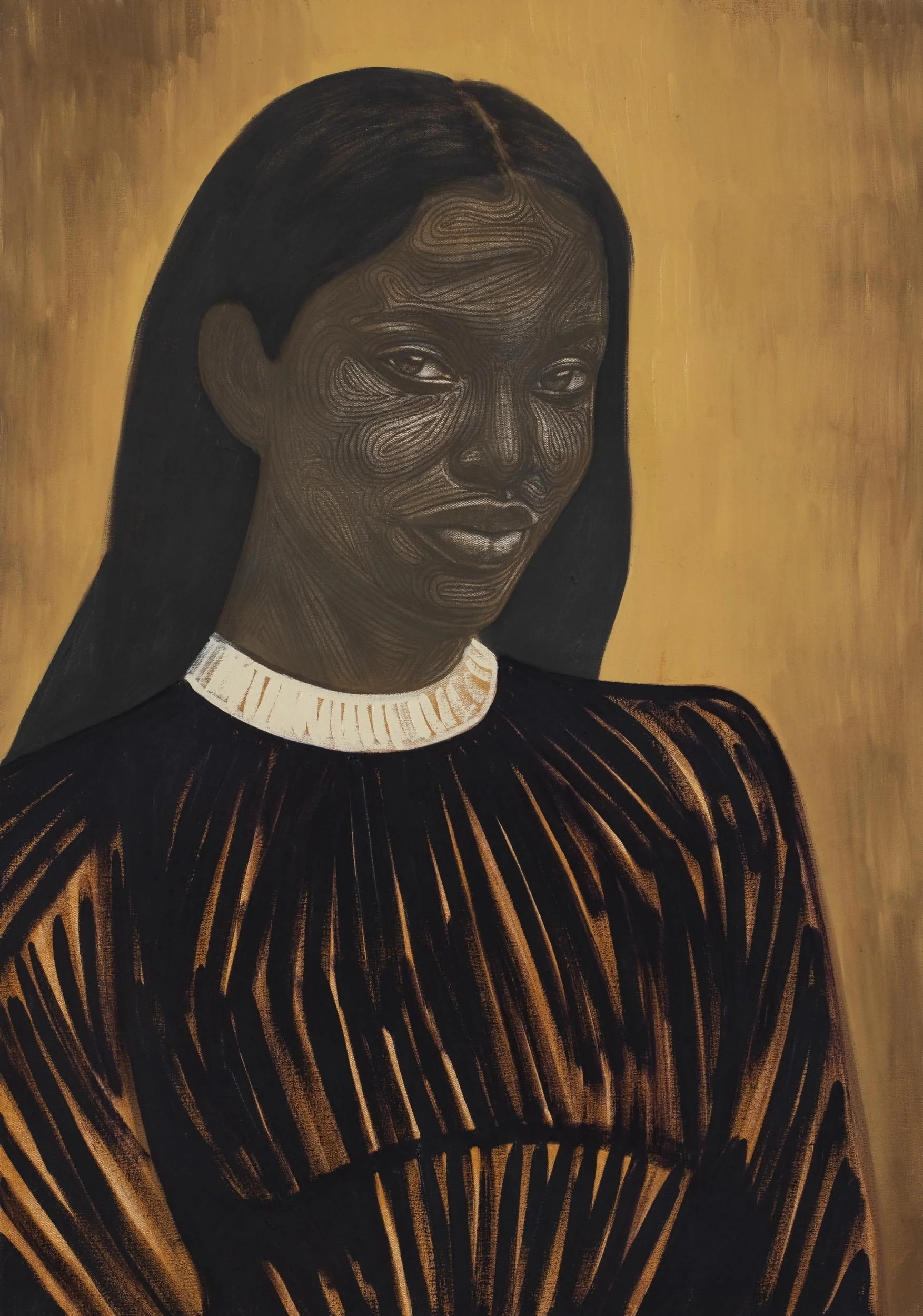
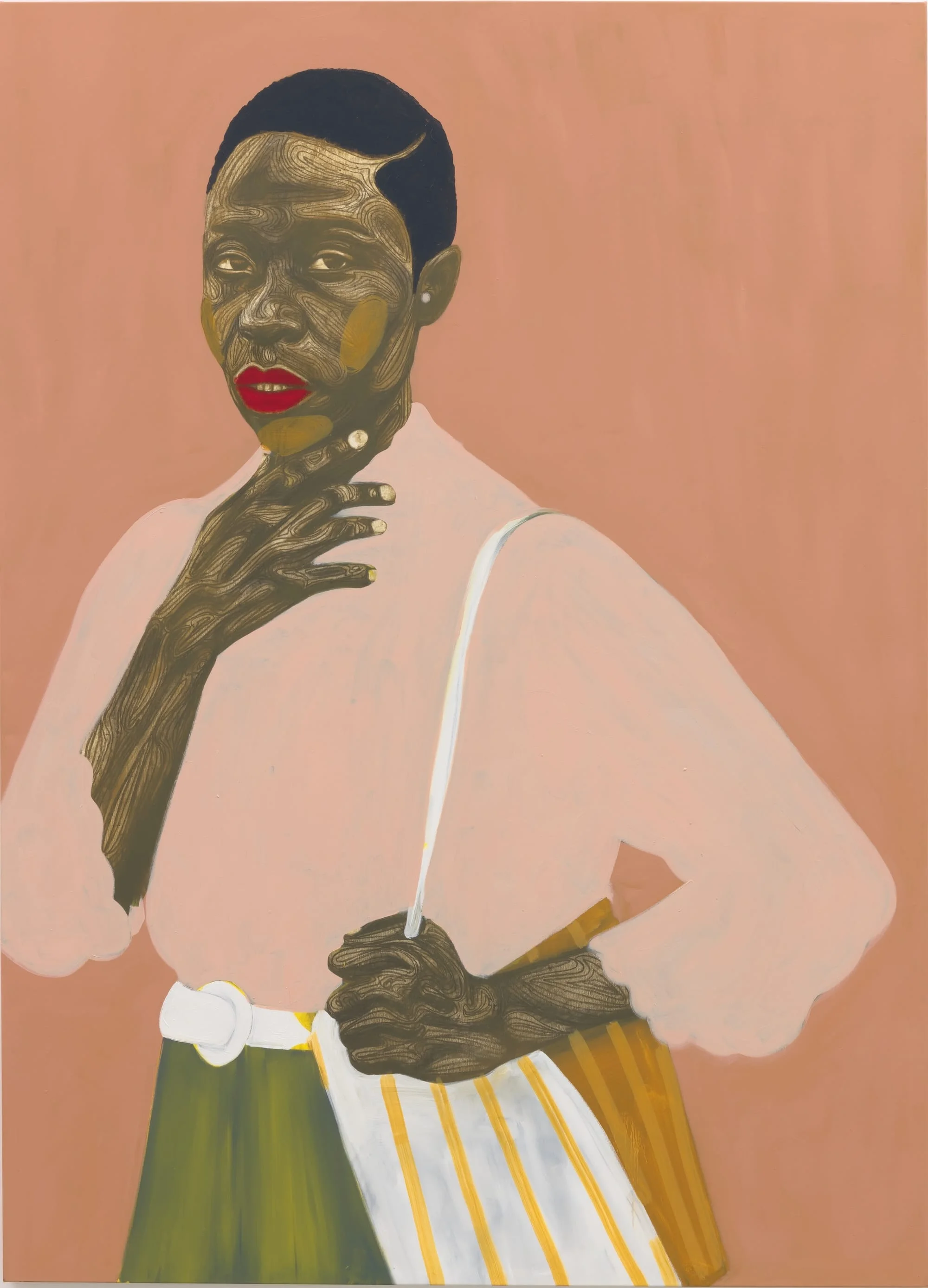
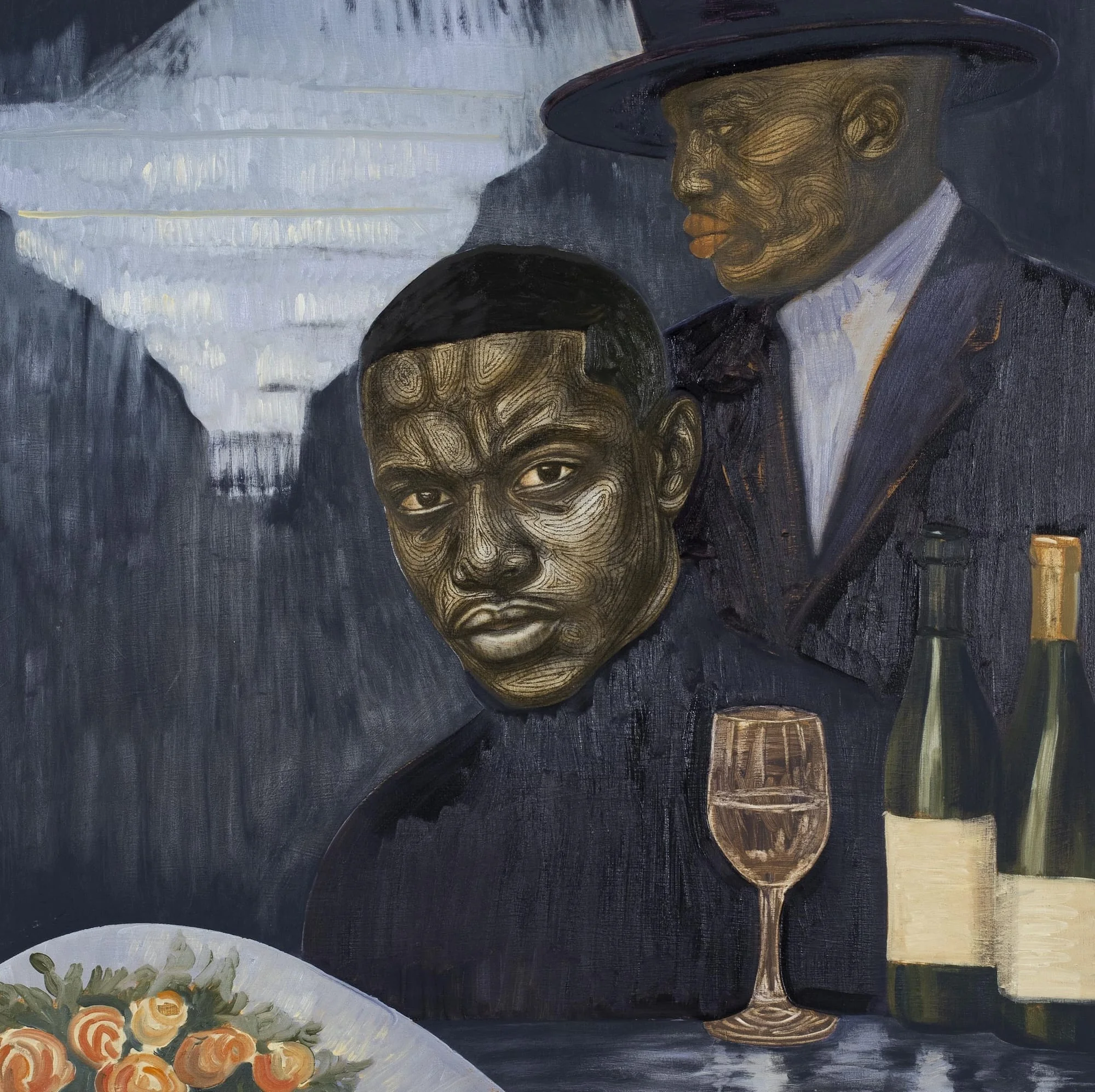
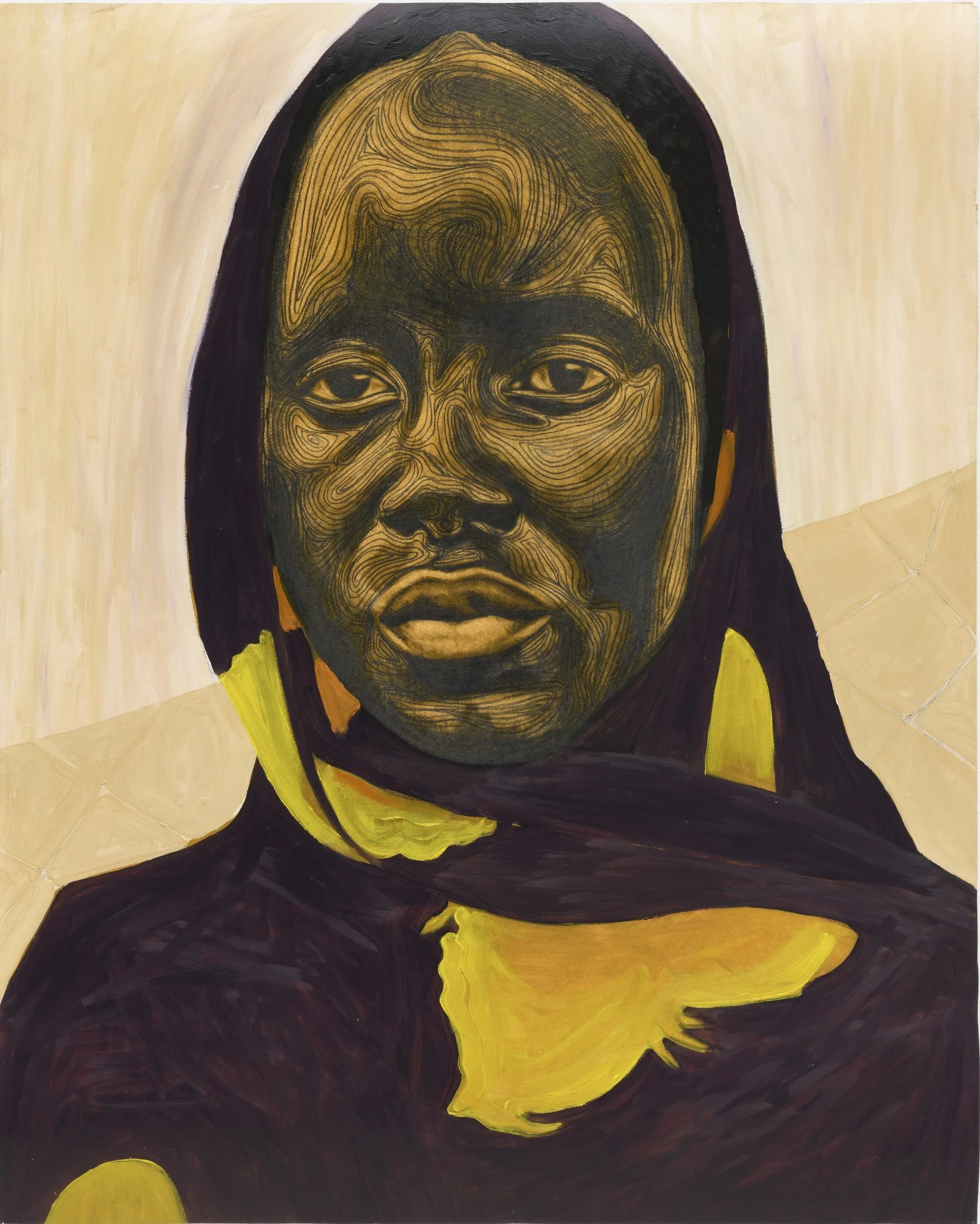
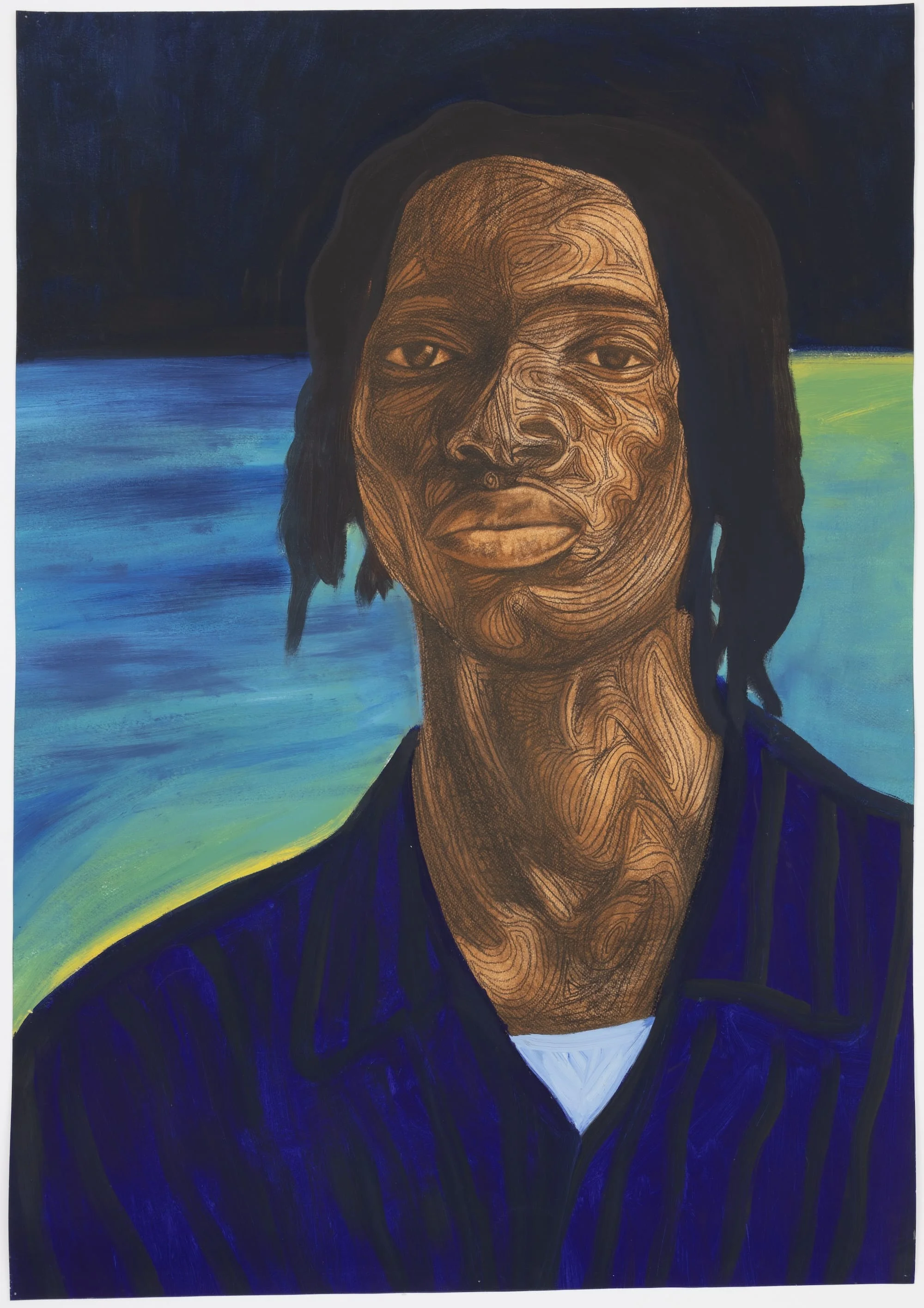
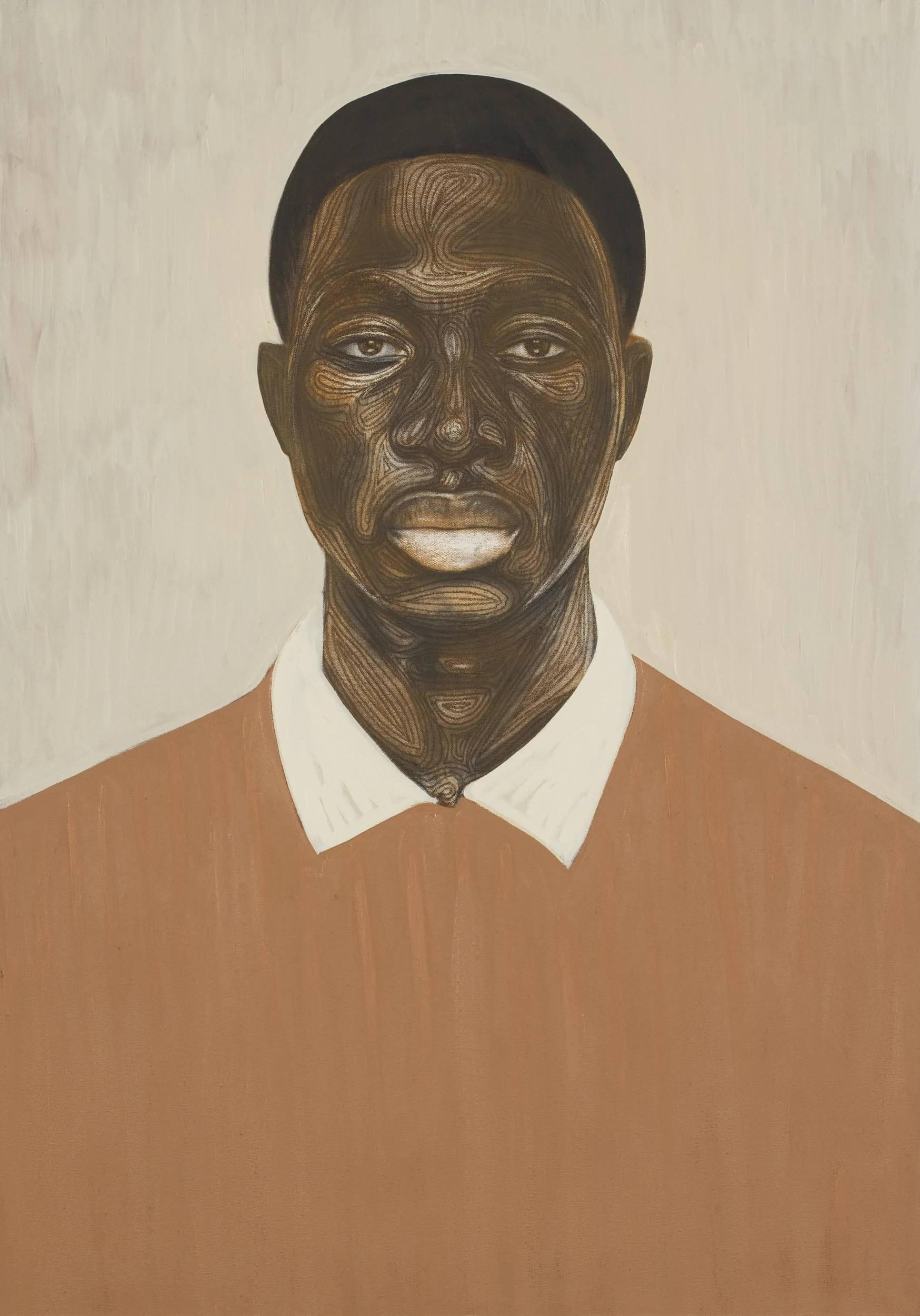
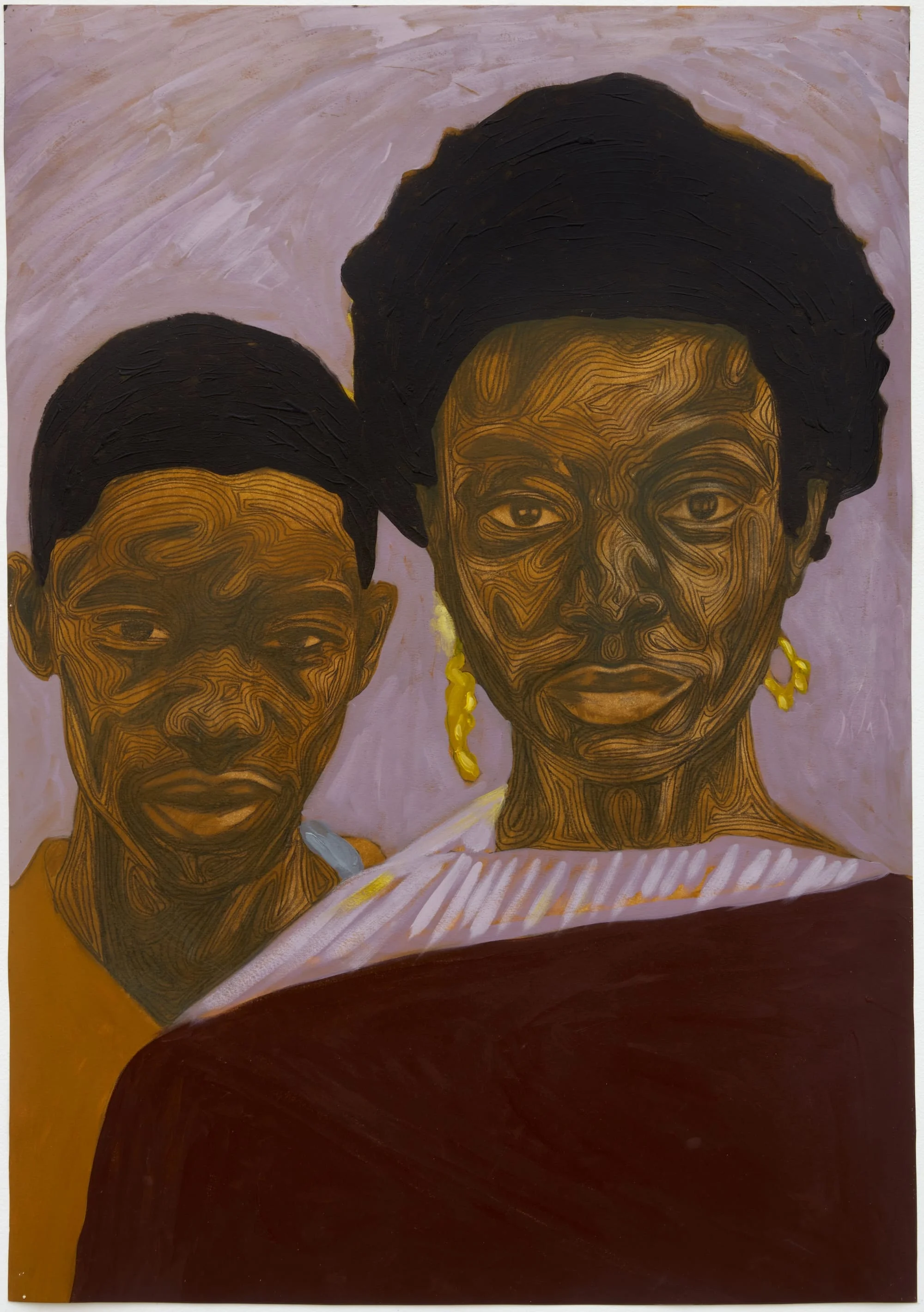
Collins Obijiaku paints portraits that hold a tension between presence and recollection. His subjects meet the viewer’s gaze, while spare linear details and broad fields of color give each figure a distinct stillness. The faces feel immediate; the scenes around them seem to belong to memory, where separate places and moments can sit beside one another without explanation.
Earthy shades and saturated hues shape these compositions, alongside architectural, natural and art historical references. Obijiaku doesn’t pin the images to a single era, and that ambiguity gives the work room to move between personal history and a more open, imagined past. The figures remain the anchor. Their direct gazes ask for attention, even as the settings resist a straightforward reading.
A move that changed the frame
That sense of suspended time has a personal source. Raised in Nigeria’s Kaduna region, Obijiaku recently moved to Chicago and has been reckoning with the feelings that distance and unfamiliar surroundings can bring. The paintings draw on that experience, finding connections between people and places that may be far apart. As Roberts Projects puts it, the settings carry a sentimental quality, like remembered presences.
Migration often changes how ordinary details register: a face, a color, or a familiar gesture can take on new weight when it appears in an unfamiliar place. Obijiaku’s paintings seem attentive to that shift. They don’t present distance as a clean break from the past; instead, memory travels with the subject and subtly changes the way the present is seen. This is more significant than it looks. The work’s quietness gives displacement a visual form without turning it into a tidy story of arrival.
Everyday cues, distant echoes
Obijiaku’s paintings make memory feel close at hand. A familiar smell can bring back a holiday or a relative; a sound can return someone to a particular moment. Even a stranger glimpsed in a new city might call up a person who lives thousands of miles away. These associations are brief and often hard to explain, but they can change the emotional temperature of a scene. That’s the source of much of the work’s intimate, dreamlike atmosphere.
And yet the paintings don’t depend on viewers knowing the artist’s biography. Their subjects’ stillness and directness leave space for recognition, while the references in the backgrounds complicate any single interpretation. If you’re working in this space, that balance is familiar: personal history can give an image its charge, but the image has to hold together for someone who doesn’t share that history. Obijiaku’s restrained compositions make that balance feel deliberate.
Renaissance imagery and remembered ceremony
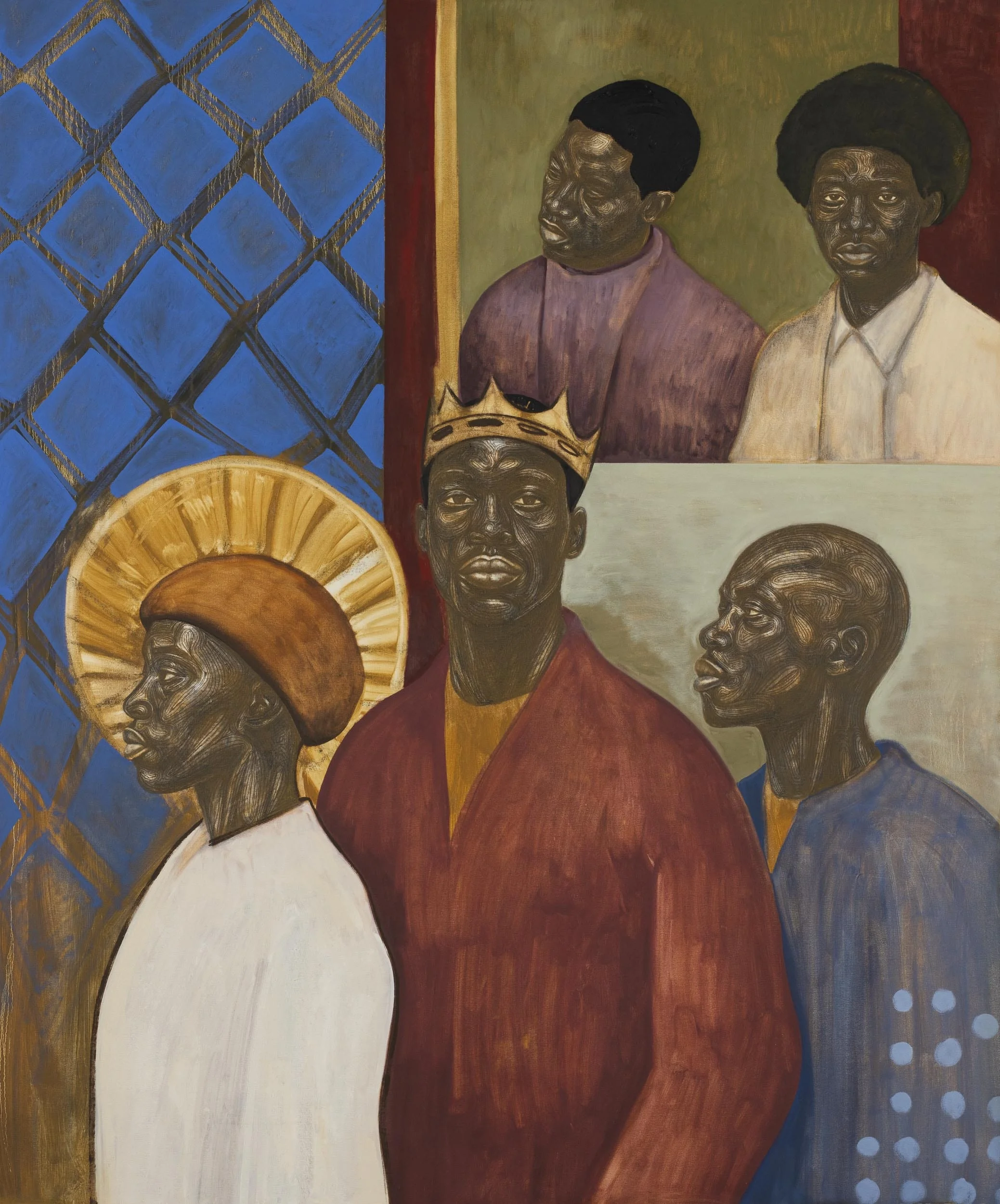
Several paintings, including “Portrait of Benedicta Rufus” and “Rengaji,” will appear in Wherever You Are, Remember Me, alongside a group of still lifes. “Rengaji” brings together two kinds of reference: the visual language of Christian Renaissance painting, including work by Fra Angelico, and Obijiaku’s childhood memories of royal processions in Nigeria. In those gatherings, crowds came out to watch the king pass. The result links an art historical frame to a scene grounded in the artist’s own past.
That pairing does more than place a familiar European tradition beside a personal memory. It makes the frame itself part of the subject: viewers are asked to consider how an image can carry references from different histories at once. The procession supplies a remembered social scene, while the Renaissance influence lends it a formal register associated with religious painting. (And this is the part most people overlook.) The connection doesn’t erase the differences between those traditions; it lets them remain visible within the same composition.
A meeting of references can be striking, but it can also become a shortcut if the image relies on symbolism alone. Here, the account of “Rengaji” points back to a specific childhood memory, giving the historical echo a personal foothold. The figures and the scene matter as more than signs. A quiet tension remains.
What the exhibition brings into focus
The exhibition opens November 7 and runs through December 19 in Los Angeles. Its mix of portraits and still lifes offers a chance to see how Obijiaku handles presence across different kinds of subjects. Portraits can hold a viewer through a face and gaze; still lifes shift attention toward the objects and arrangements through which memory might surface. That range could clarify how much of the work’s atmosphere comes from the figures themselves and how much from the settings around them.
For the viewer, the useful question isn’t whether every reference can be decoded. It’s how the paintings make distance feel perceptible: through color, compositional stillness, and images that connect a remembered place to a new one. The works invite close looking, but they don’t promise a single answer. You’ll find more of Obijiaku’s work on Instagram.

Discussion
Sign in to join the discussion.