Esther Elia’s paintings and tiled sculptures bring Assyrian culture into contemporary home life, blending ancient forms with Southwest materials and style.
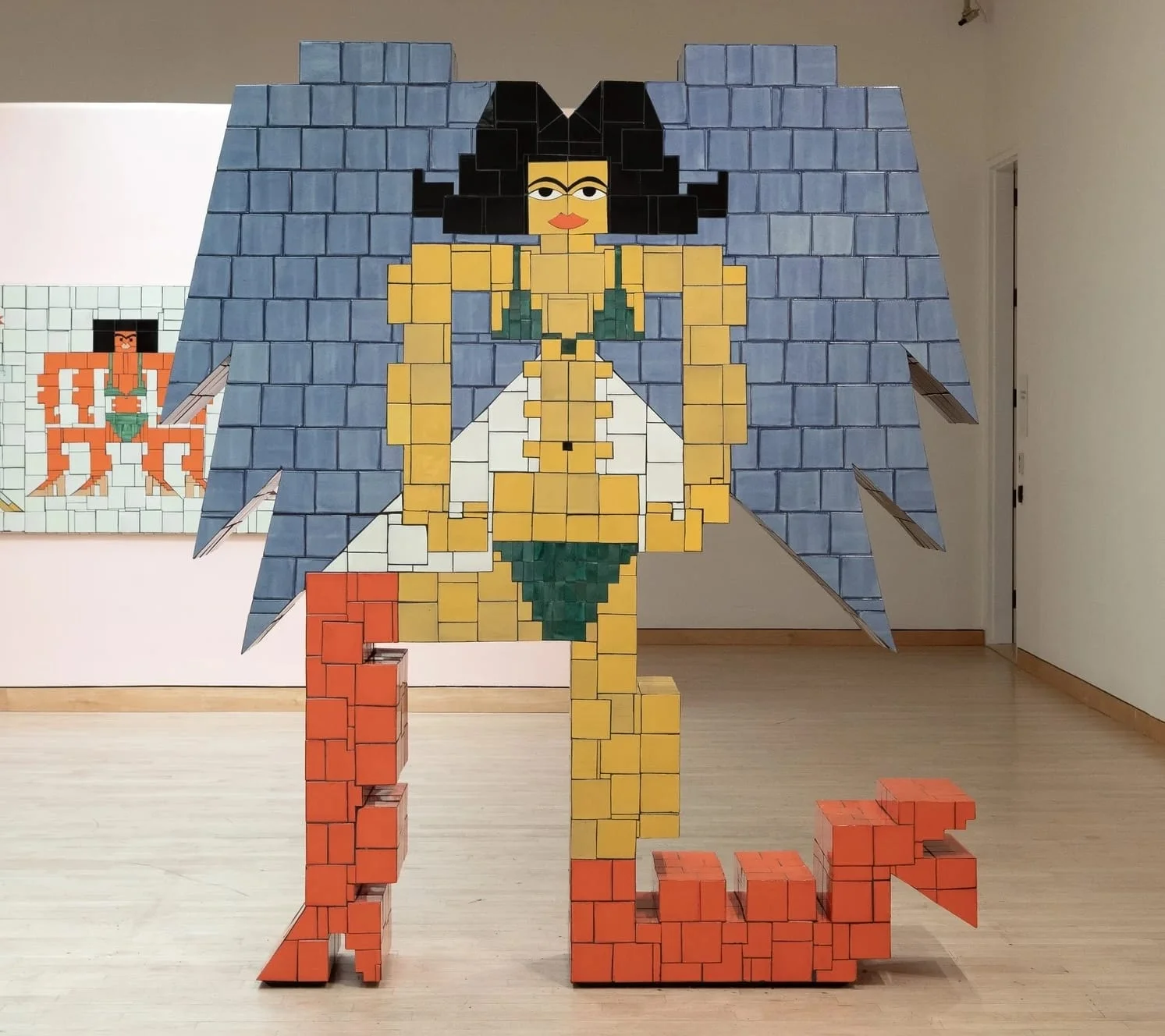
Esther Elia’s work treats Assyrian culture as something made and remade in everyday life, rather than as a fixed inheritance preserved at a distance. In Bazaar Ashuraya, her solo exhibition at Hecho a Mano in Santa Fe, ancient forms meet contemporary clothing, household objects and the layered experience of diaspora. The result places cultural continuity in ordinary choices: what people wear, how they decorate a room, and which customs they carry into a new place.
That approach gives the exhibition a useful tension. Its references reach back to ancient Mesopotamia, while its materials and imagery are recognizably contemporary. Elia’s work suggests that tradition can remain legible even as it changes. It doesn’t need to be sealed off from modern life to endure.
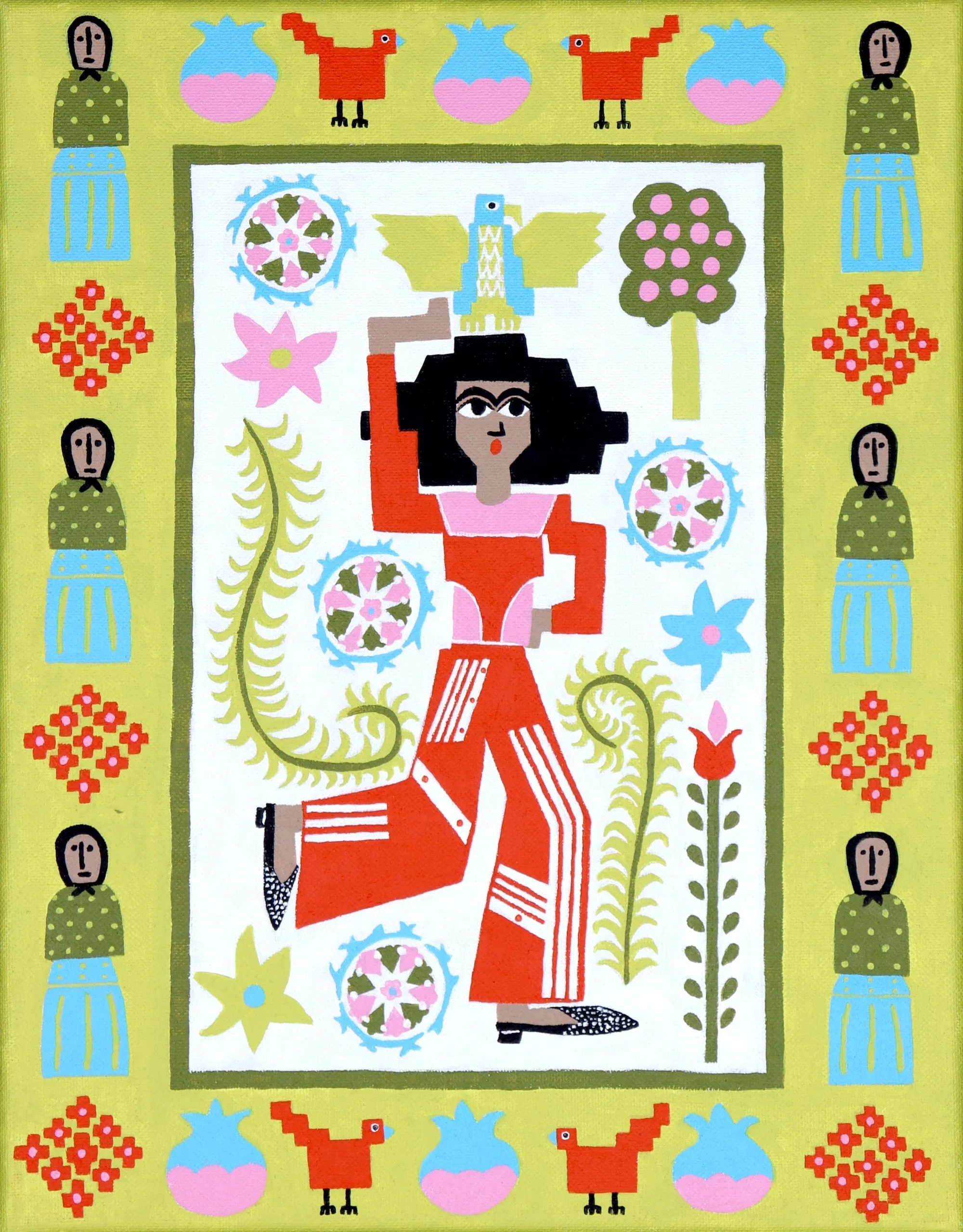
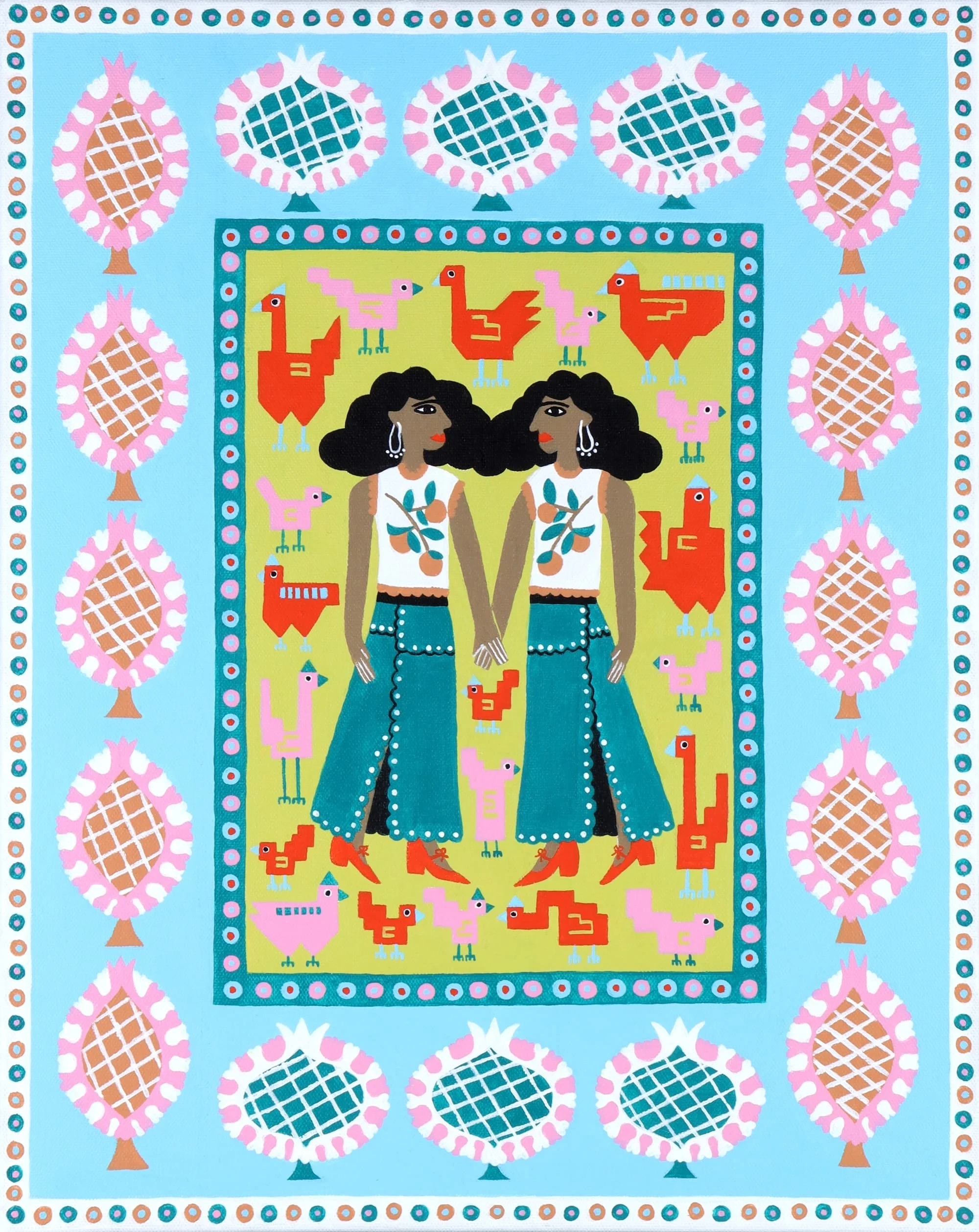
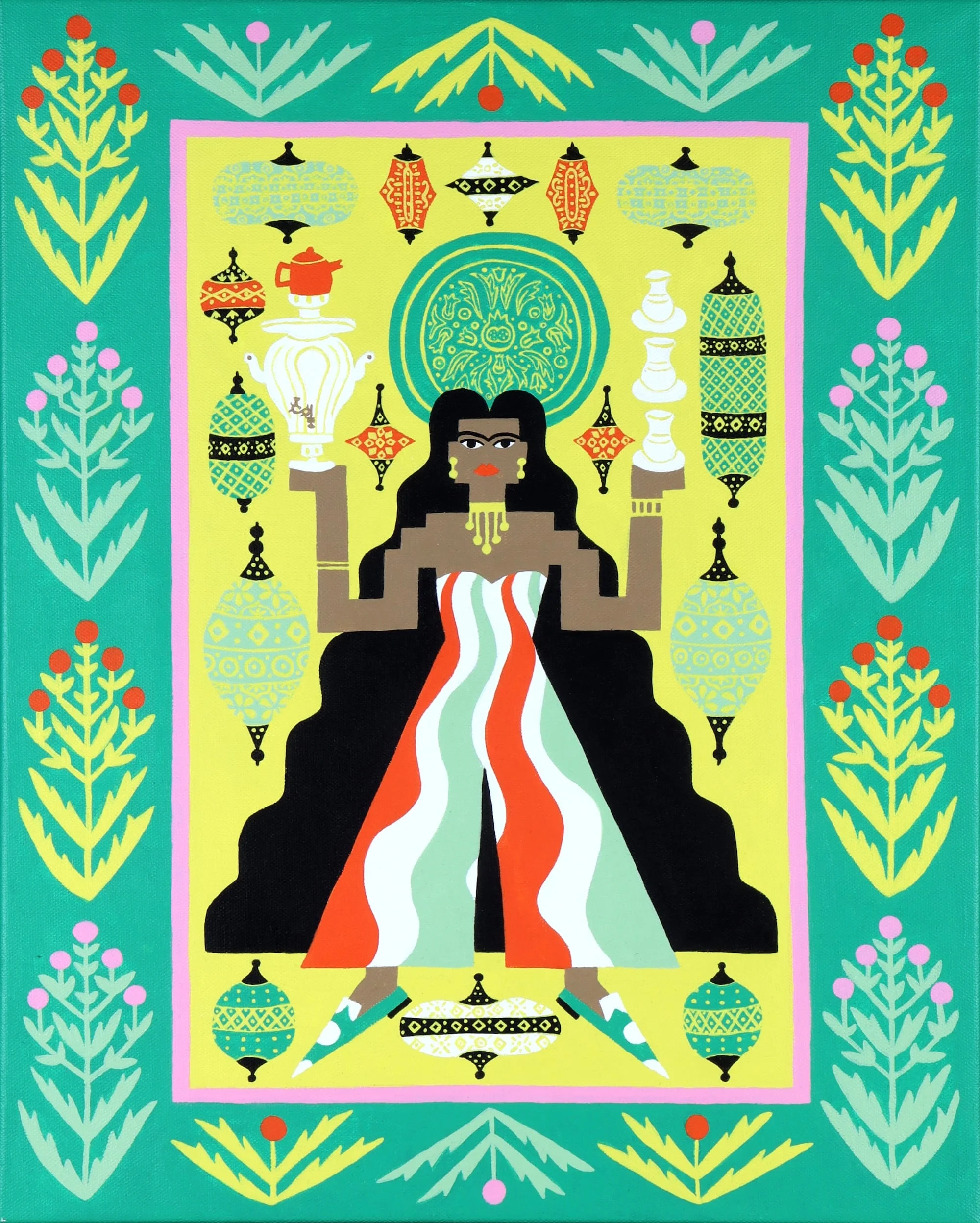
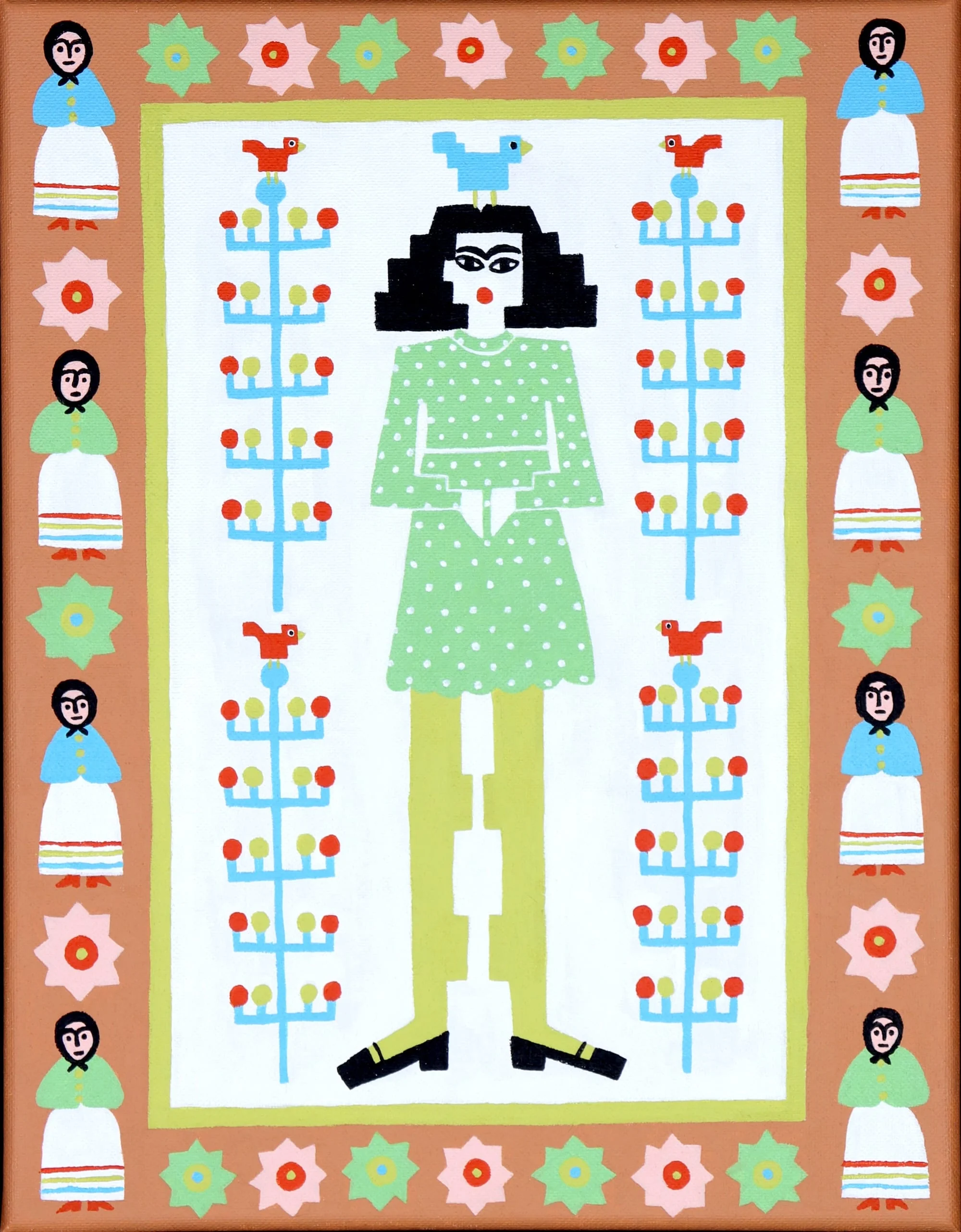
Elia, an Albuquerque-based artist of Assyrian and Irish descent, draws on the lamassu: winged figures that guarded cities and palaces in ancient Mesopotamia, often depicted as human-headed bulls or lions. Her paintings, sculptures and textiles recast that visual language through patterns, fashion and autobiography. In works such as “Sharrat Wearing Adidas” and “Esther and Zahra Wearing Farm Rio,” figures associated with Assyrian culture appear alongside modern clothes and folk-inspired designs. The clothing carries a familiar present-day signal into a visual tradition that might otherwise be treated as remote or ceremonial.
That juxtaposition is more than a playful update. By placing contemporary dress beside ancient iconography, Elia makes cultural identity look lived in: personal, changeable and shaped by contact with other places. The figures don’t have to choose between ancestral reference and modern style. They occupy both at once.
Culture takes shape at home
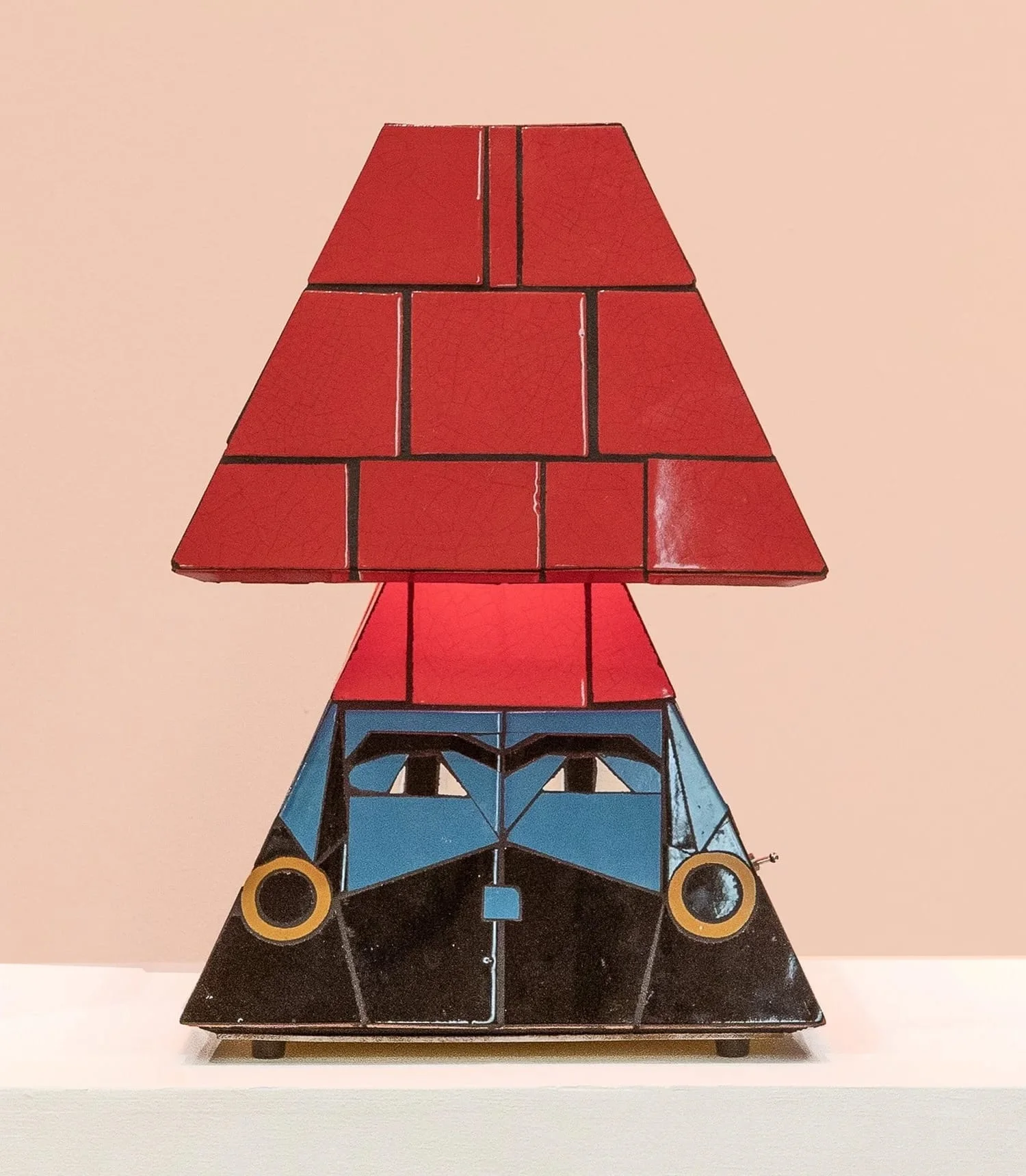
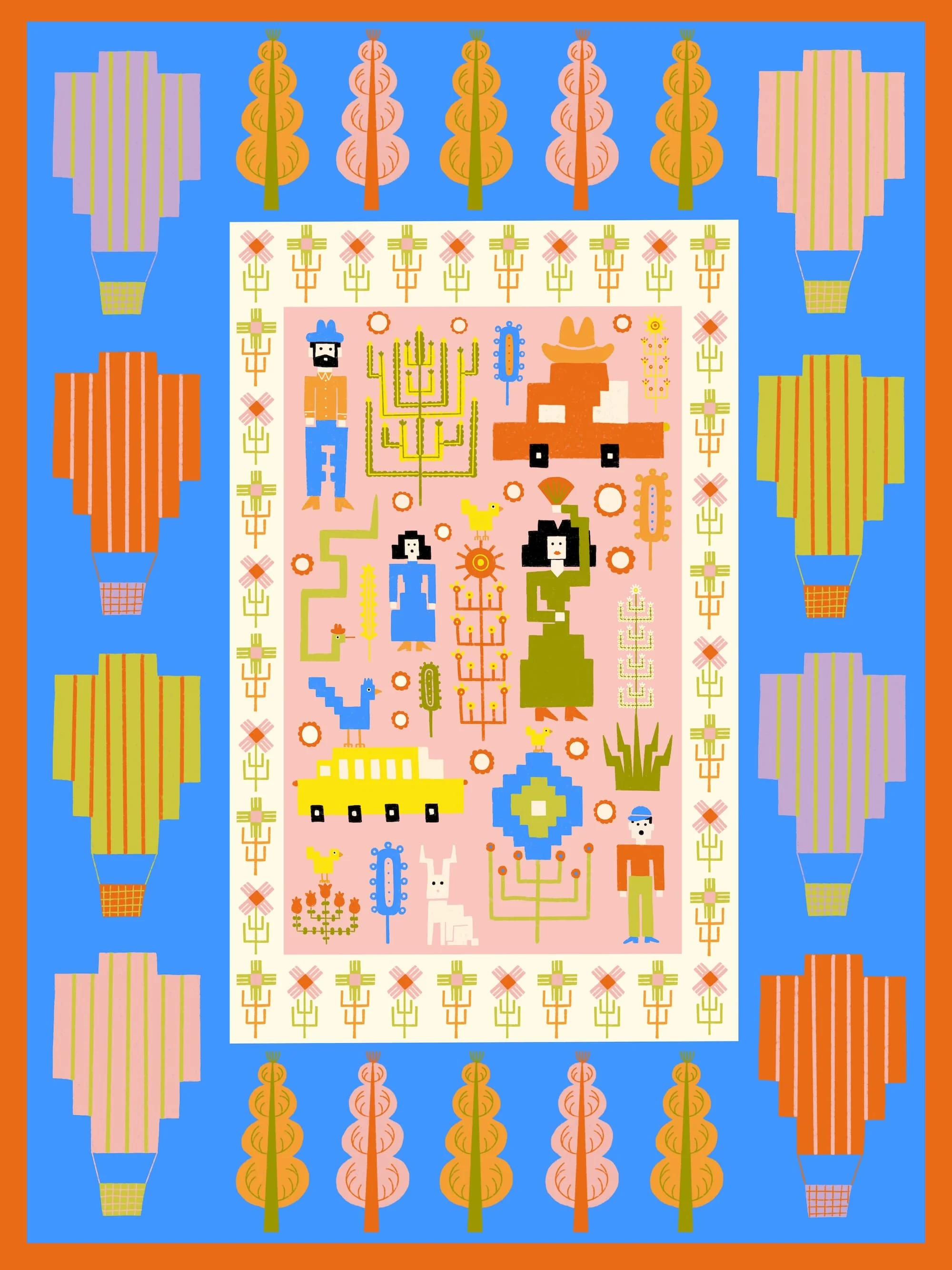
The exhibition’s new acrylic paintings sit alongside tile mosaics and functional objects, including lamps. Rug-like compositions frame vivid figures and details drawn from domestic life. The range of formats matters: a painting can present a cultural image for contemplation, while a lamp belongs to the routines of a room. Elia’s use of both puts heritage in view and within reach.
For Elia, the home is where culture stays active: “The home is where Assyria lives and breathes,” she says. That idea resists a narrow definition of cultural preservation as the faithful repetition of old forms. A household is also a place where people adapt inherited practices to current circumstances, and where each generation decides what to keep, change or pass on.
The home is where our language is spoken. Even if we speak English or Arabic or Farsi or French or Swedish outside of the home, the home is where Assyrian food is made, where Assyrian customs thrive, and where culture is maintained as well as created—pushed forward. As we mix with diaspora, our clothes, furnishings, and habits reflect the mixing with these new places.
Her account also makes room for the unevenness of diaspora. Language, food and customs can have different places in public and private life, and a household may hold several languages and influences at once. Here’s the thing: that mixture doesn’t make culture less specific. It shows how people sustain it through choices made in daily life, including choices that reflect the places they now call home.
Portable figures, local materials
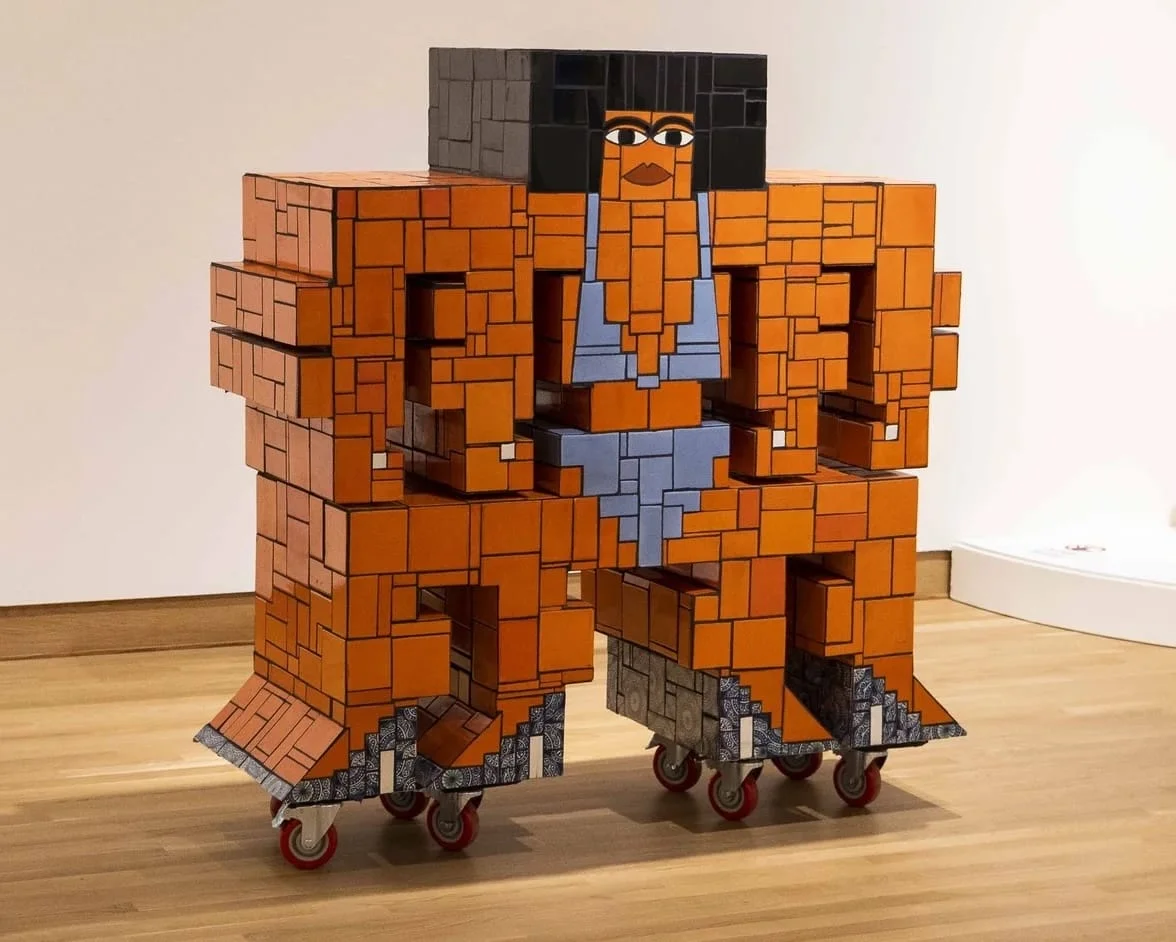
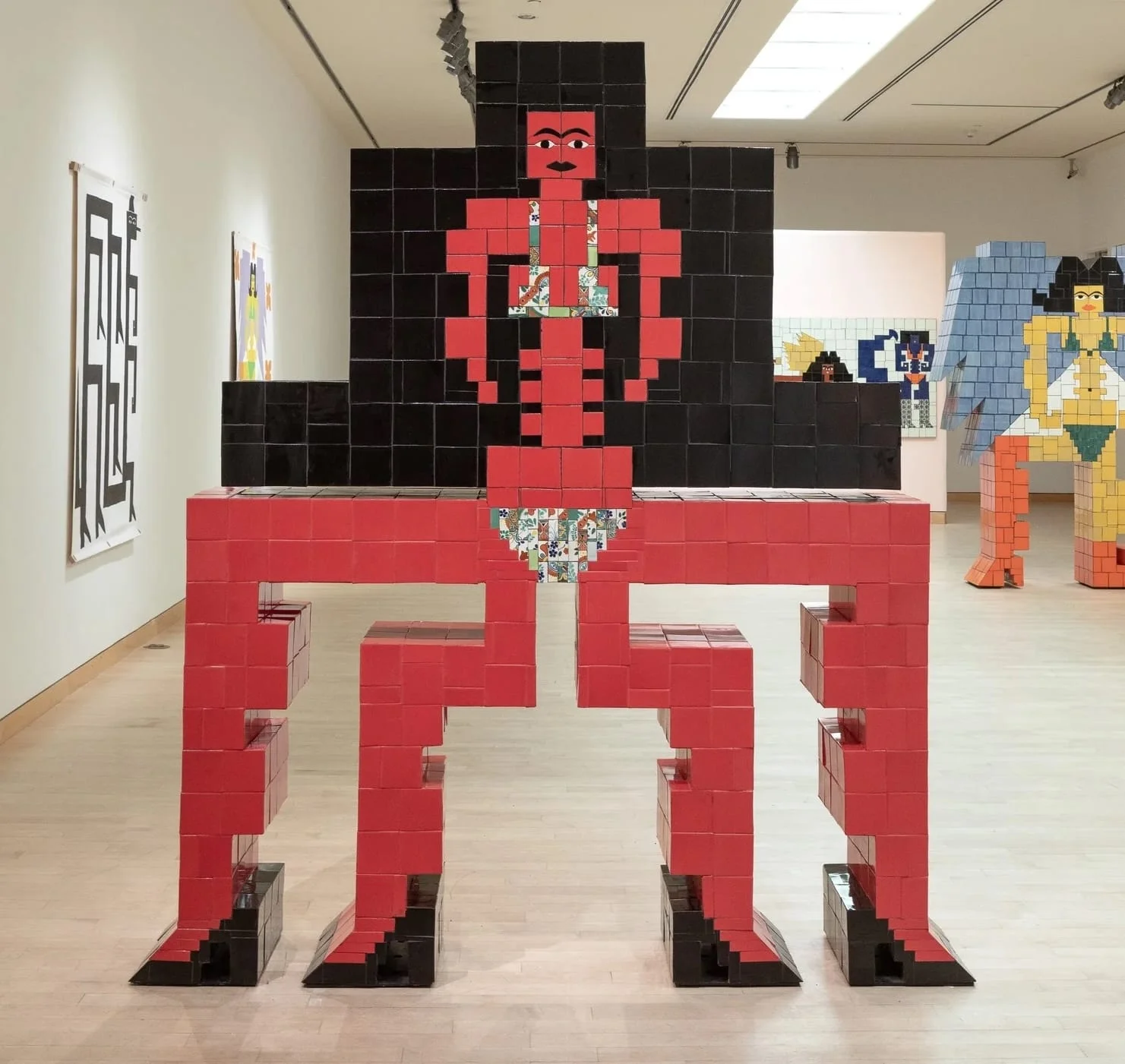
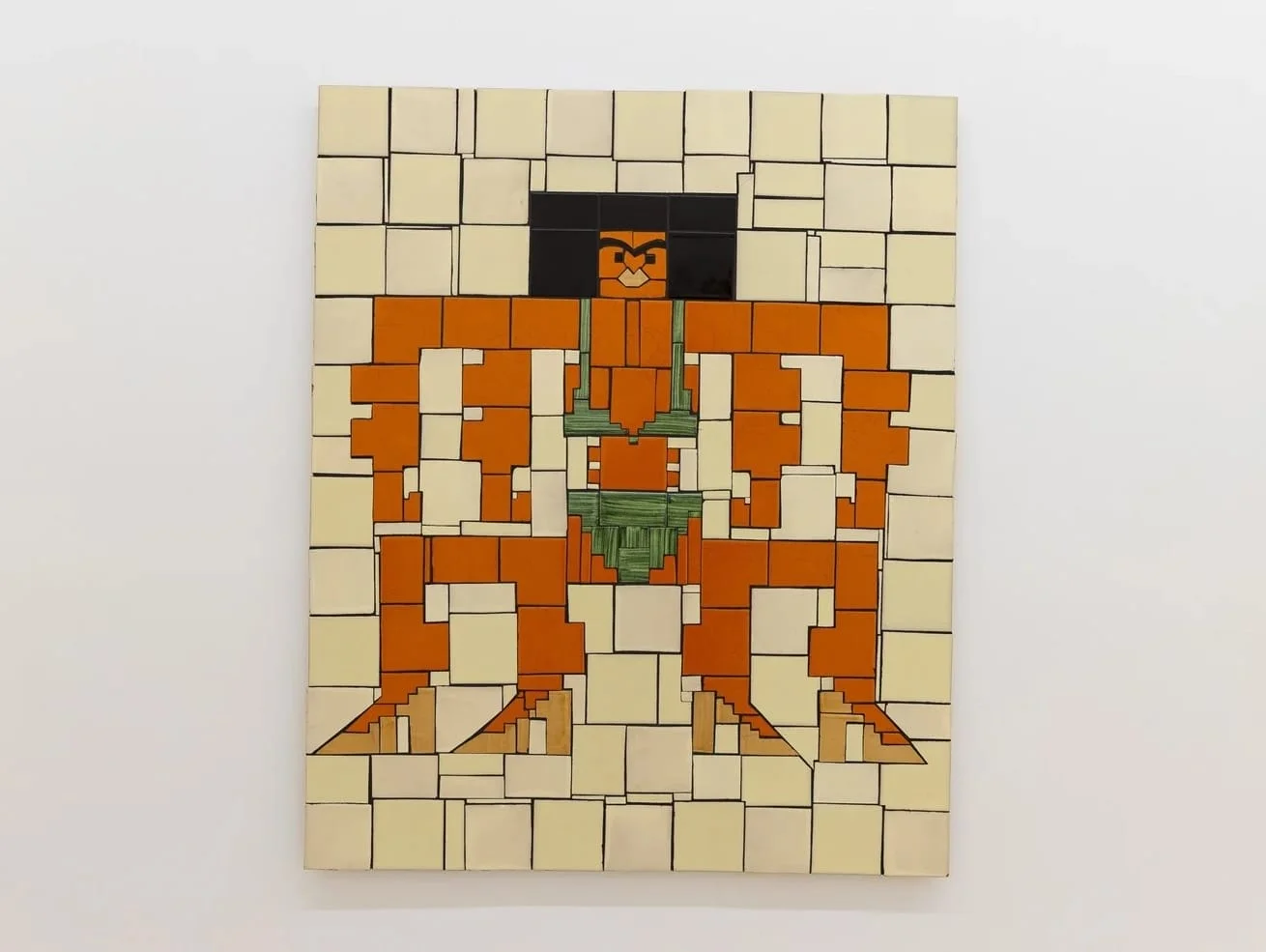
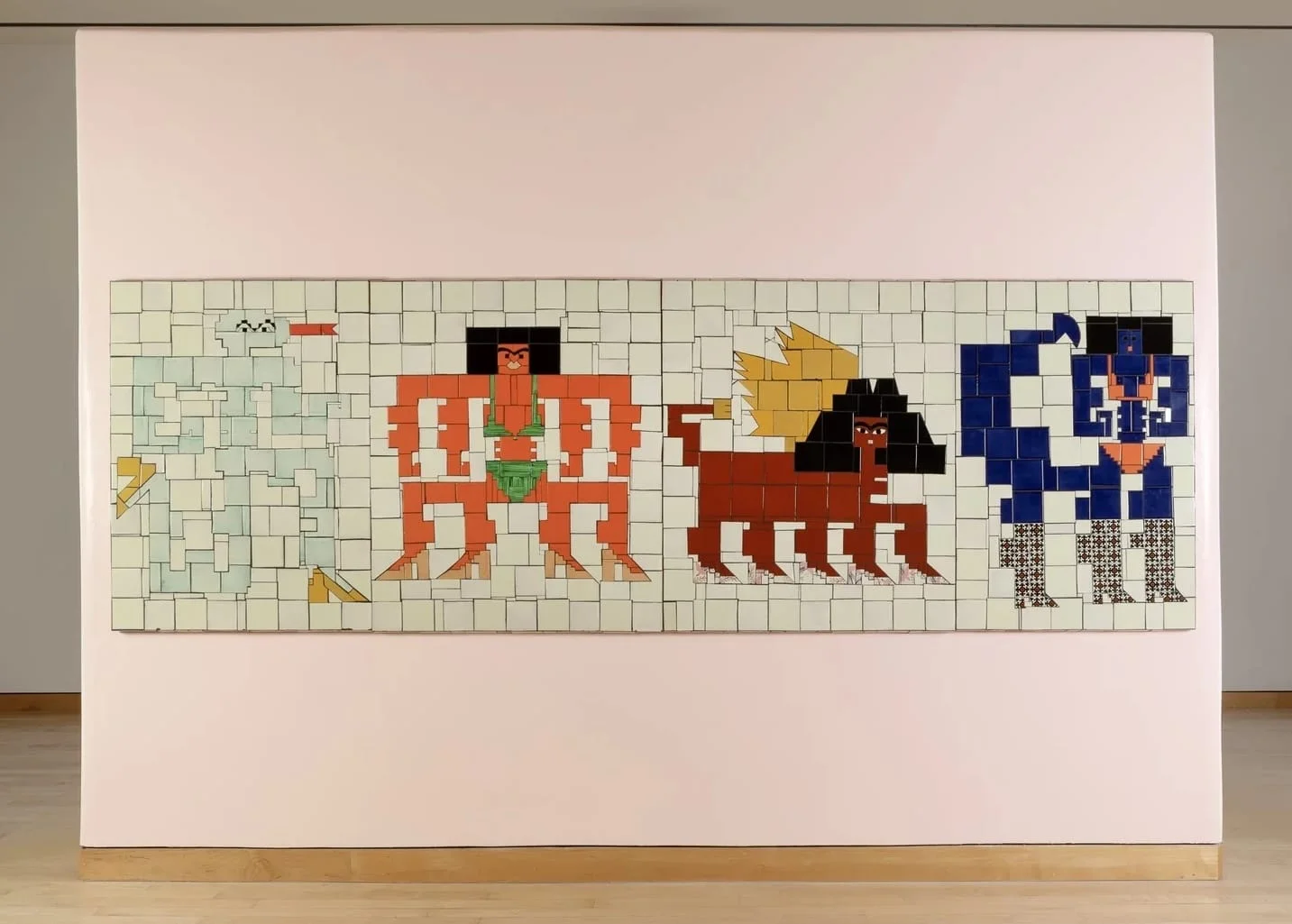
Elia’s nearly life-size sculptures use Mexican tiles on cement board and plywood. Wheels fitted to their bases let the works move between spaces. That mobility gives the sculptures a practical dimension, but it also echoes the exhibition’s larger interest in what can travel: images, customs and ways of making that change as they encounter new settings.
She calls them “diasporic deities,” a name that links their ancestral references to materials readily available in the Southwest and to their capacity to adapt to different settings. The title holds two ideas together: these figures invoke a long cultural memory, yet their physical presence depends on contemporary materials and local craft. And this is the part most people overlook: the objects’ movement is not just a display feature. It makes adaptability visible.
If you’re working in this space, the sculptures offer a clear example of how material choices can carry meaning without requiring a long explanation. Tile, plywood and wheels are concrete parts of the work, not neutral supports. The figures’ presence comes from the combination.
Bazaar Ashuraya runs November 6–29 in Santa Fe. Elia was also recently named a 2027 resident of the John Michael Kohler Art Center and Kohler Co.’s Arts/Industry program. The exhibition and residency are distinct contexts for her work, but both place attention on the relationship between artistic practice and the materials through which ideas take form.
What the work carries forward
The works suggest that heritage can travel: it takes form in the materials, habits and styles people carry into the places they call home. That claim is modest, but the exhibition gives it a tangible shape across paintings, lamps and movable sculptures. Its strongest point is that continuity doesn’t require cultural identity to remain untouched. It can be maintained through adaptation, with visible traces of the places and relationships that have shaped it.
That’s more significant than it looks. Elia’s images make diaspora neither an abstract theme nor a simple story of loss; they present it as a condition people actively negotiate through everyday life. The figures remain rooted in Assyrian references while wearing current fashions and inhabiting objects built from regional materials. A culture in motion.



Discussion
Sign in to join the discussion.