A New York exhibition brings together 25 works by Aminah Brenda Lynn Robinson, whose beaded books and dolls turn personal memories into community histories.
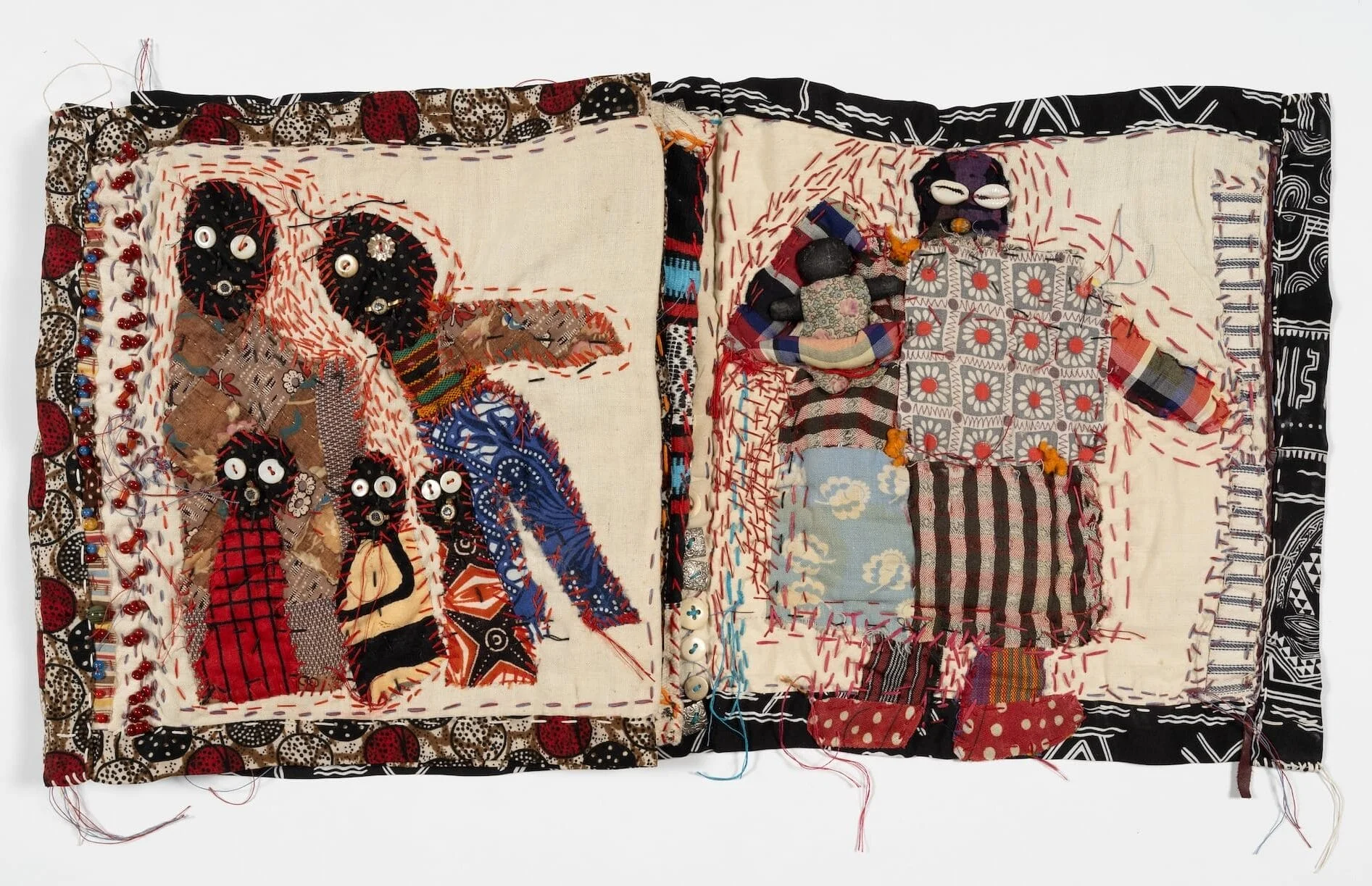
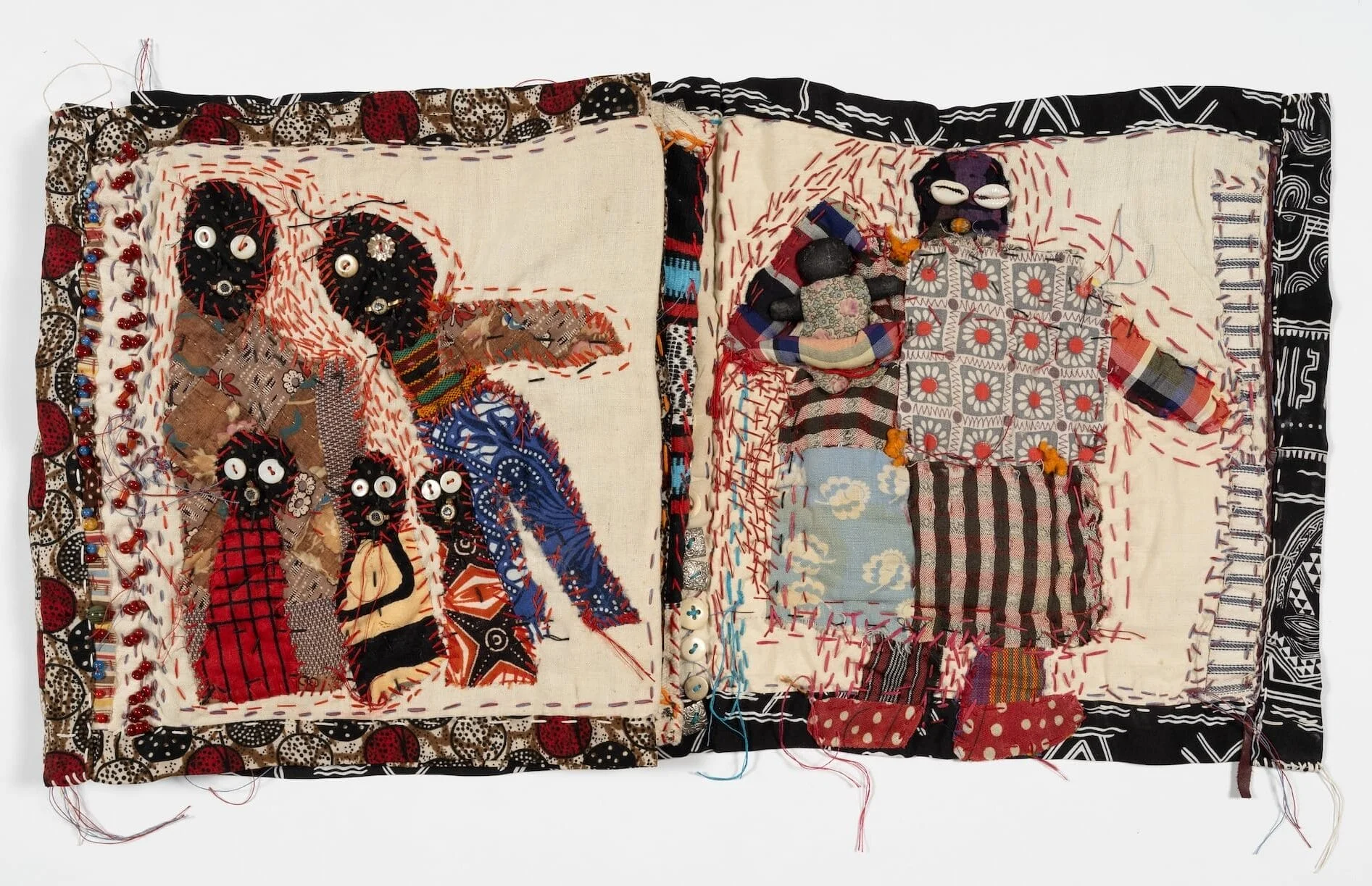
Aminah Brenda Lynn Robinson made books that behave like small worlds. Beads, buttons, fabric, paint, found objects and sculpted figures carry stories of family, neighborhood life and the African diaspora. A New York exhibition brings 25 of these works together, showing how her intimate recollections also speak to a wider Black communal experience.
Books built to be handled and interpreted
Beaded and Bound, presented by Fort Gansevoort in collaboration with the Columbus Museum of Art, pairs mixed-media books with embellished textiles and dolls. Robinson combined embroidery, appliqué, writing, painting and drawing, giving each object a dense physical surface and a narrative that viewers can enter in different ways.
She called the sculptural reliefs on her books “RagGonNon.” Robinson saw them as interactive works that could keep changing in meaning, much as a reader brings their own experience to a text. Her visual storytelling follows that open-ended logic: part memory, part invention, and never confined to a single reading.
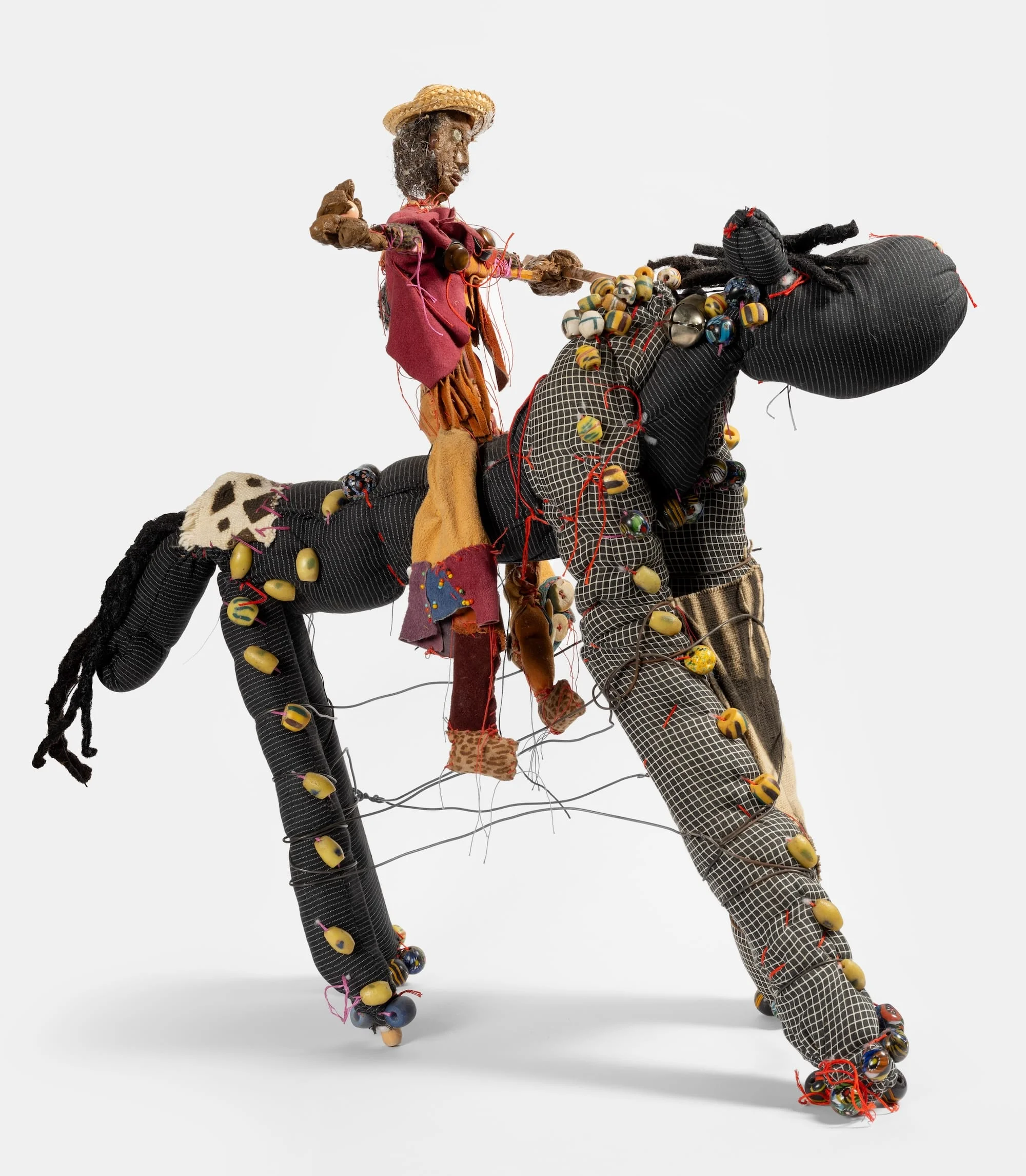
“Untitled [Man on horse]” (date unknown), beads, bells, wood, hair, found objects, thread, fabric, and hogmawg, 24 x 24 x 9 inches
Poindexter Village as a sourcebook
Robinson’s own history was closely tied to Columbus. Born in 1940, she moved with her family to Poindexter Village, a newly built public housing community dedicated that year by Franklin D. Roosevelt. It was among the first federally funded housing projects specifically created to support African Americans. A museum honoring Poindexter Village’s history is slated to open in 2028.
Robinson spent most of her life in Columbus, apart from several years in Boise, Idaho, while married to a U.S. Air Force serviceman. She studied art in college, then expanded her practice during the 1970s while working for the city’s recreation and parks department and leading workshops. After a 1979 study trip to Egypt, a holy man gave her the name “Aminah”; she legally adopted it and used it from then on. She first exhibited her work in the early 1980s.
In “Women in Poindexter Village, Button Beaded Book” (1989), fellow residents become the focus of a layered community portrait, with a tribute to Robinson’s mother tucked inside. The work turns a place she knew firsthand into a record of relationships and shared life.
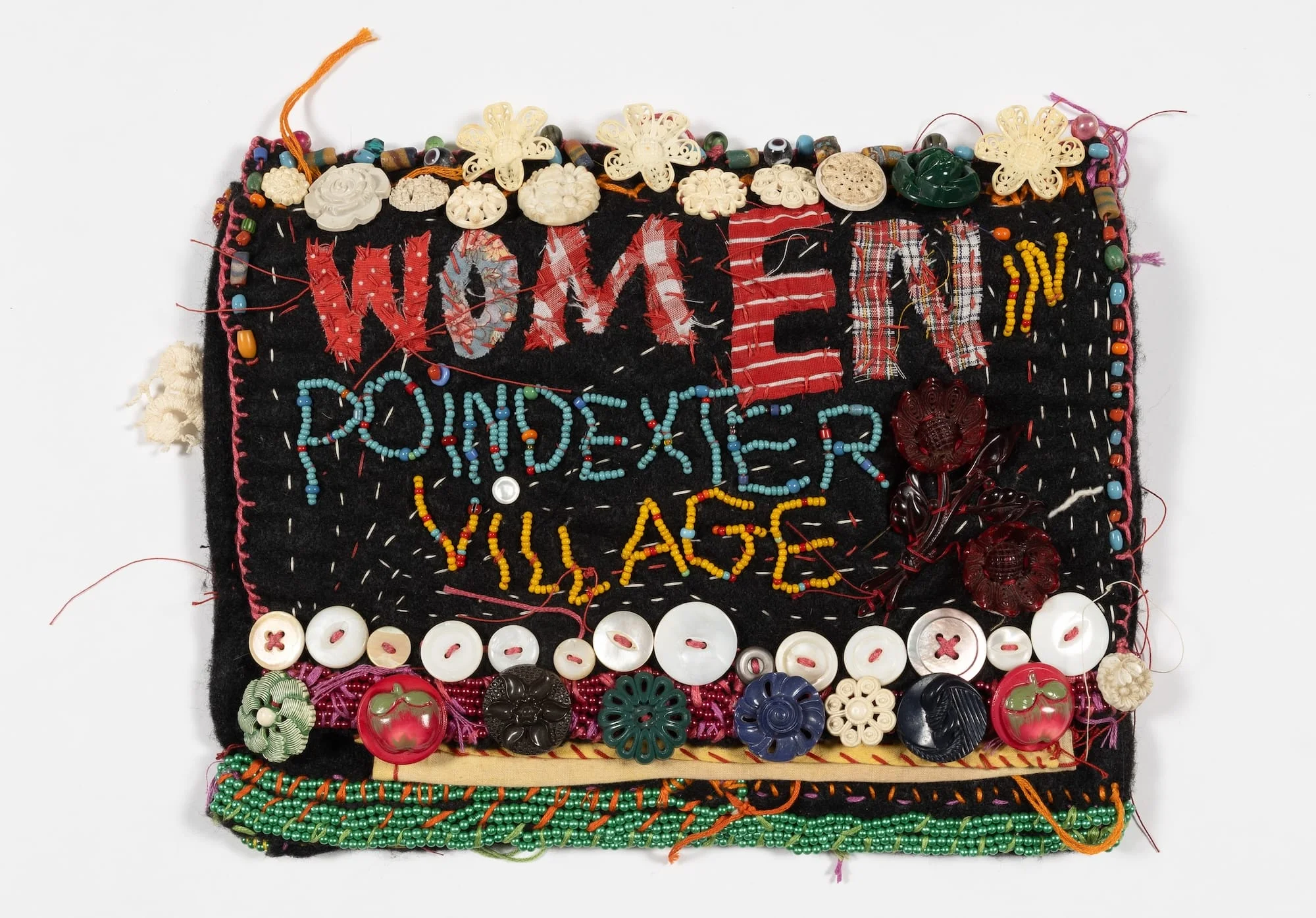
“Women in Poindexter Village, Button Beaded Book” (1989), buttons, beads, thread, ink, paint, and fabric, 11.75 x 9 inches (closed), 11.75 x 27.5 inches (open)
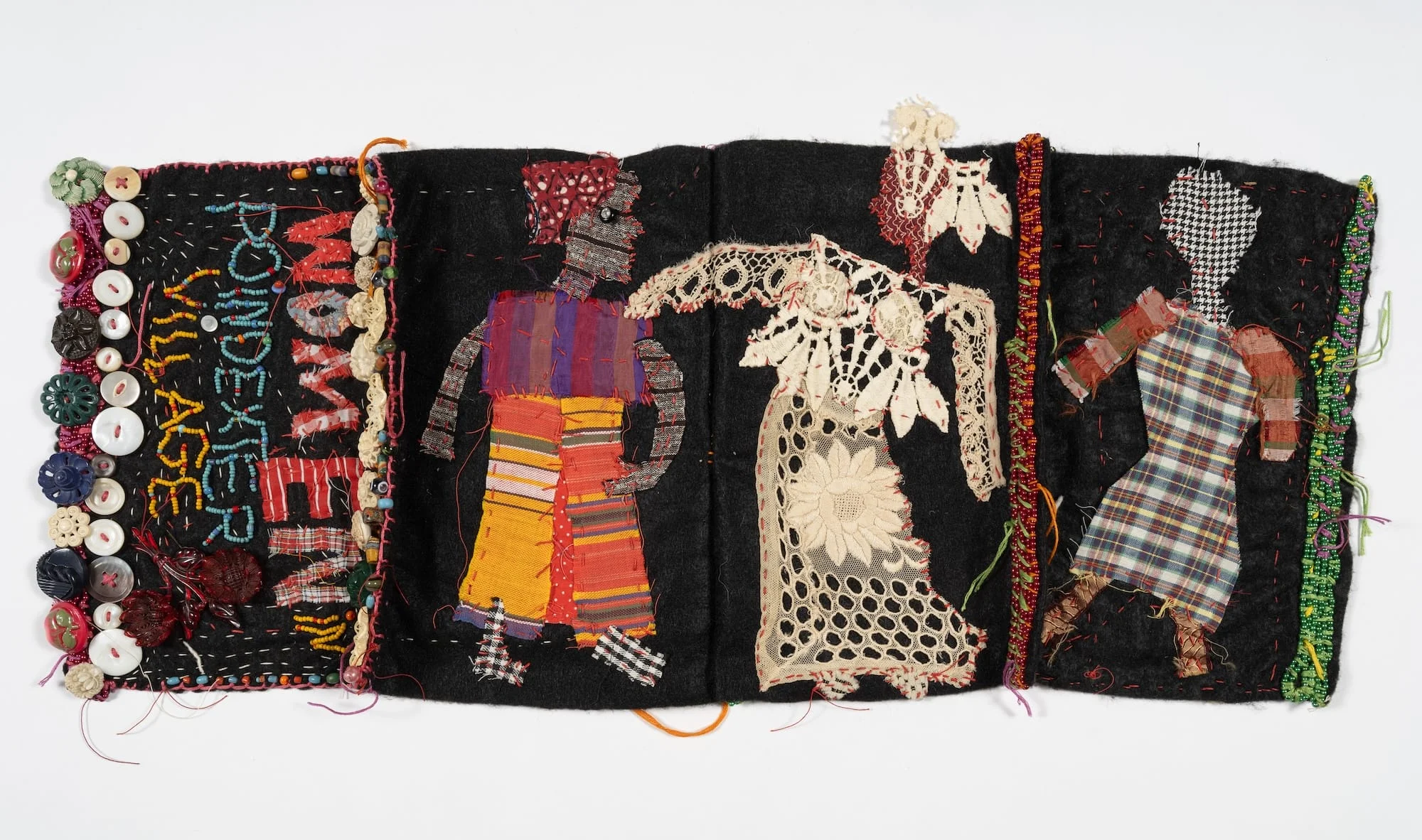
Open view of “Women in Poindexter Village, Button Beaded Book”
Materials that carry memory
Robinson’s methods were rooted in skills learned at home. Her father taught her bookmaking; her mother taught her sewing and needlework. Robinson also developed “hogmawg,” a material made from clay, leaves, twigs, mud, lime, animal grease and glue. She used it alongside shells, buttons and other gathered elements, treating material choices as part of the story itself.
Her connection with Columbus artist Elijah Pierce brought another personal history into the work. Robinson described Pierce as a friend and spiritual mentor: “He was a great person, a great artist, and a person who walked with integrity, and he passed on so much of that wisdom to me. We just generally like to be around each other. There was just a connection there.”
That friendship appears in “A Holy Place: The Elijah Pierce Barbershop” (1983), which depicts Pierce at work. The piece honors a specific relationship while recognizing the barbershop as a place of connection and joy in African American communities.
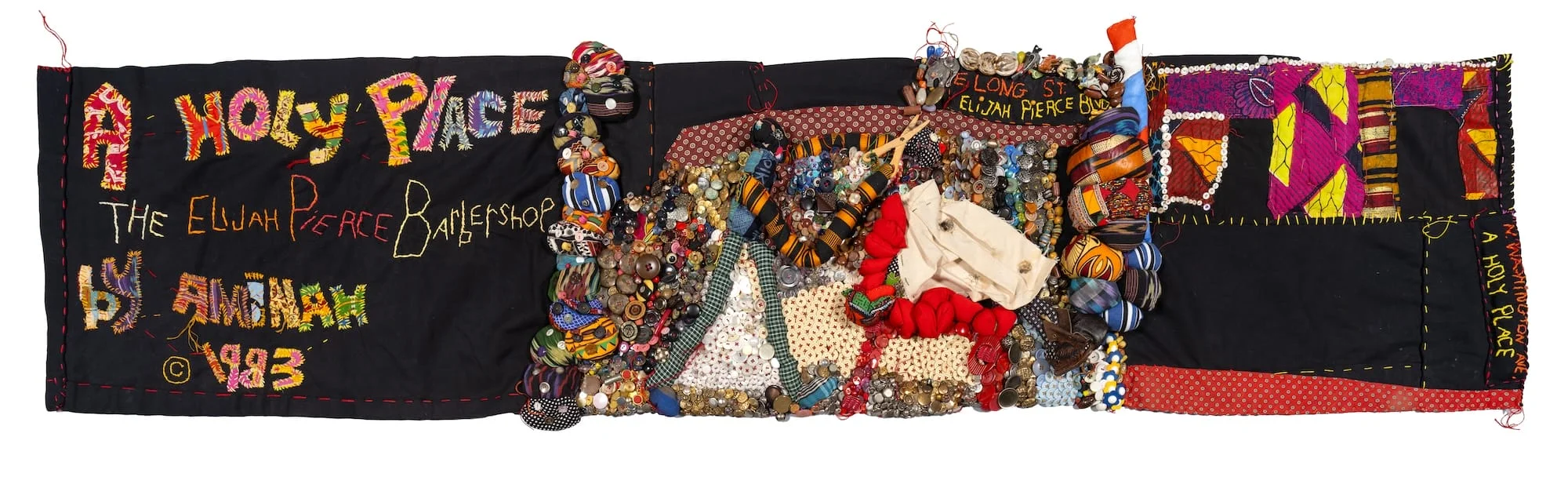
“A Holy Place: The Elijah Pierce Barbershop” (1983), buttons, beads, wood, found objects, hair, thread, and fabric, 30 x 102 inches
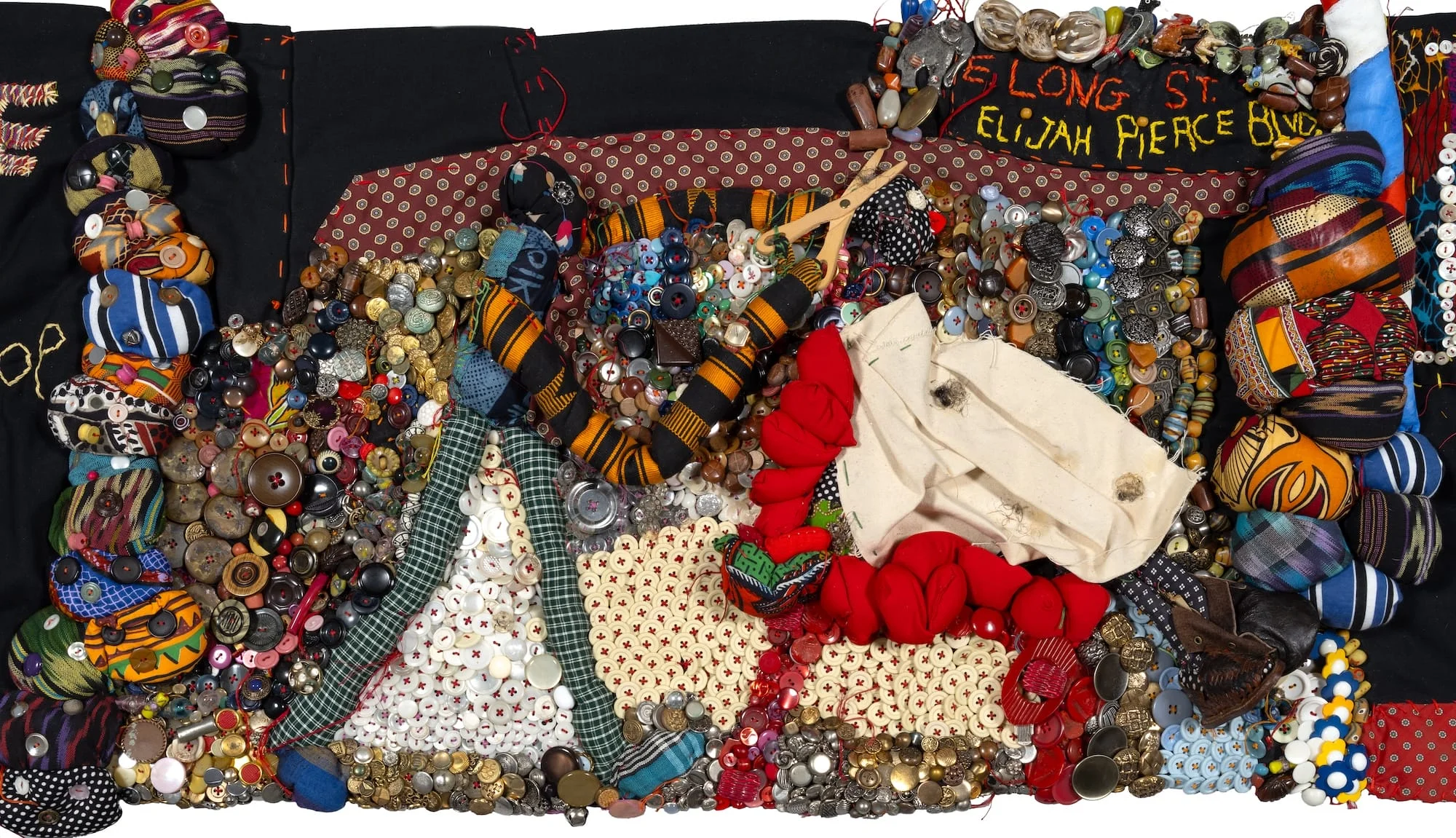
Detail of “A Holy Place: The Elijah Pierce Barbershop”
Dolls and books as portable archives
The exhibition’s dolls extend Robinson’s storytelling into three dimensions. “Button Beaded Doll with Music Box and Poncho” and other figures assemble fabric, beads and buttons into expressive characters. Her accordion and roll books use similar materials to make pages feel like objects with bodies, textures and rhythms of their own.
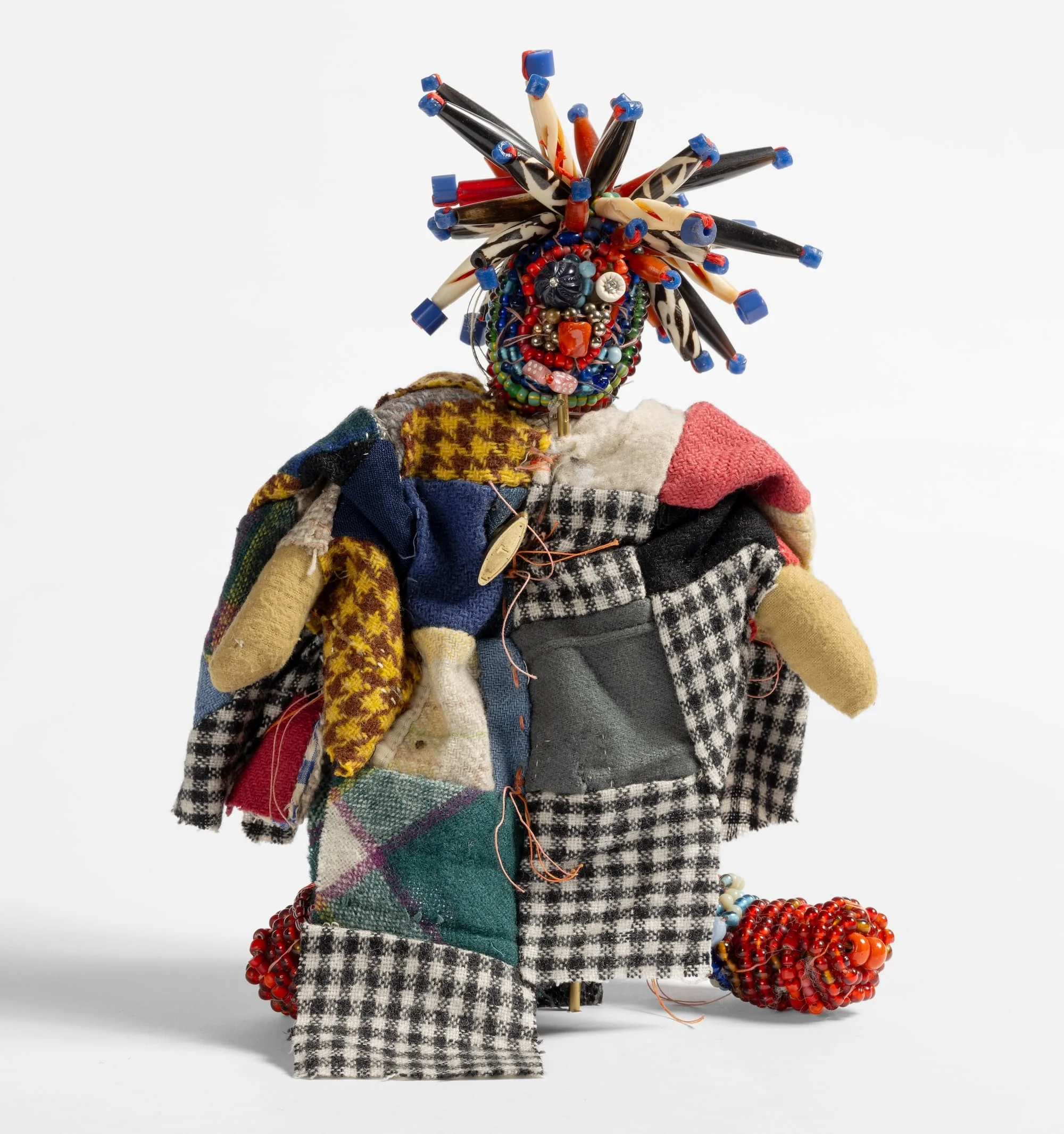
“Button Beaded Doll with Music Box and Poncho” (c. 1988), beads, buttons, thread, fabric, and music box, 14 x 8 x 4.25 inches
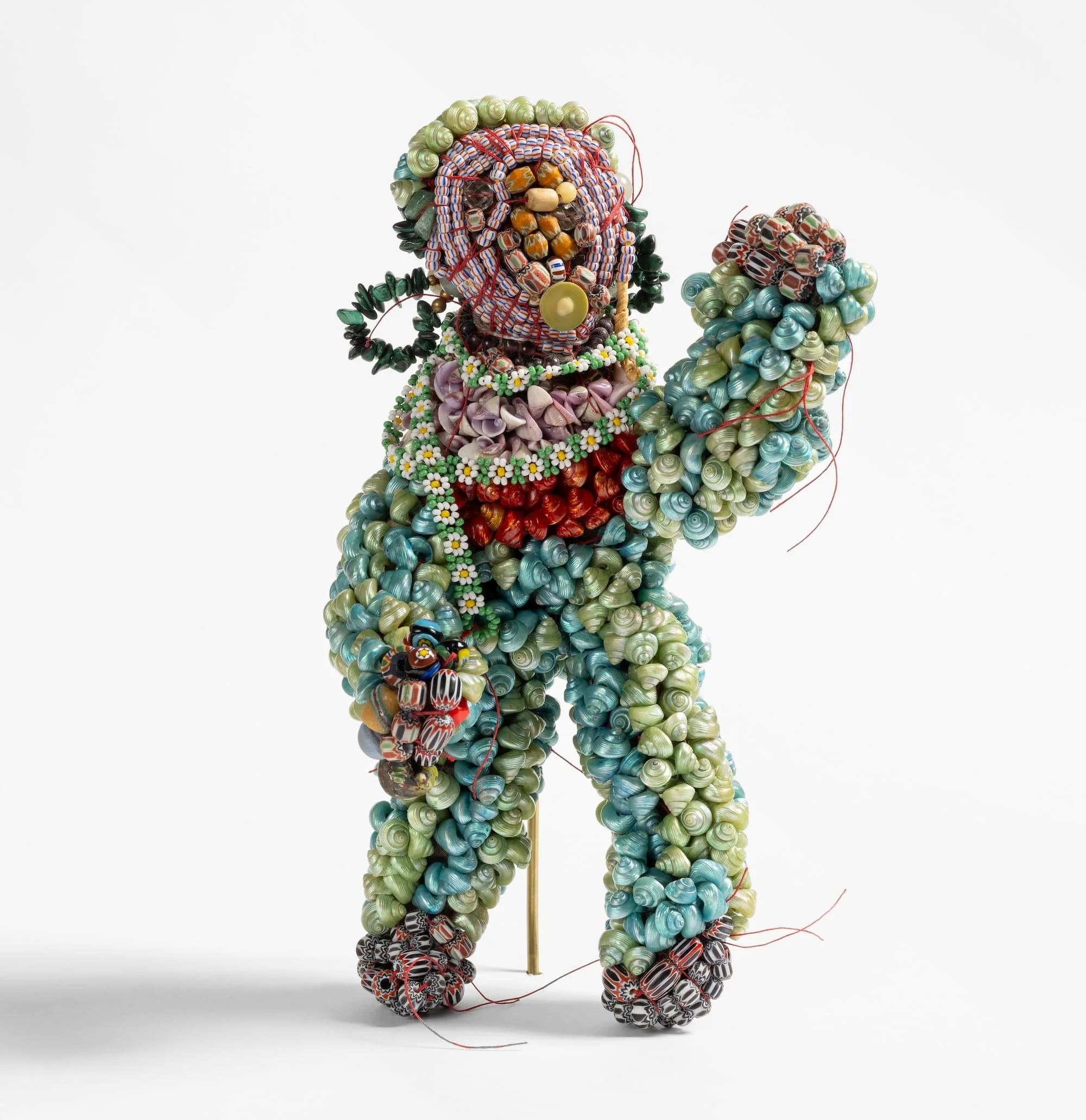
“Button Beaded Doll” (c. 1988), buttons, beads, thread, and fabric, 10 x 6.5 x 5.5 inches
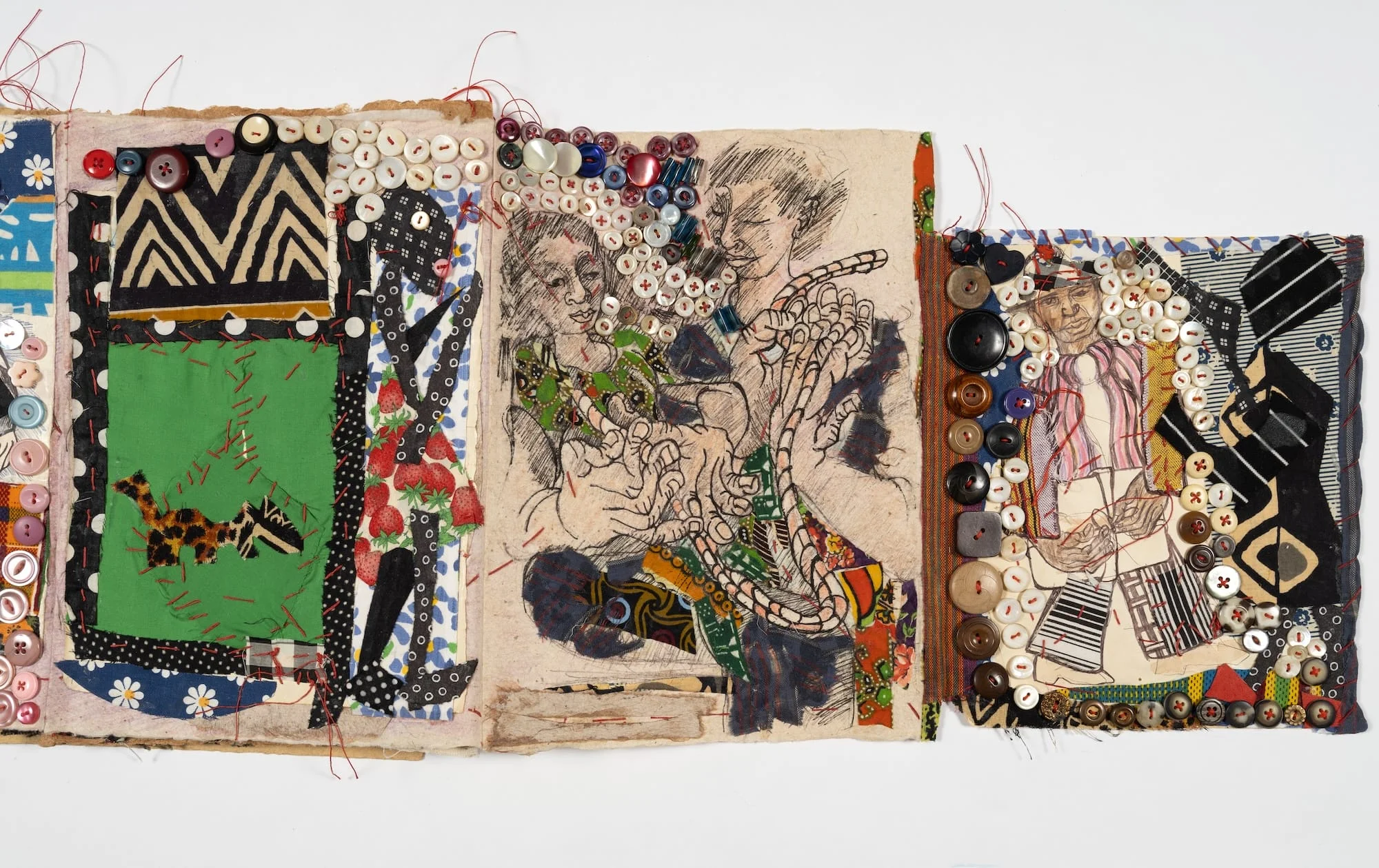
Detail of “Early Life: Themba-A Life of Grace and Hope” (c. 1996), buttons, beads, thread, pastel, acrylic, ink, and paper
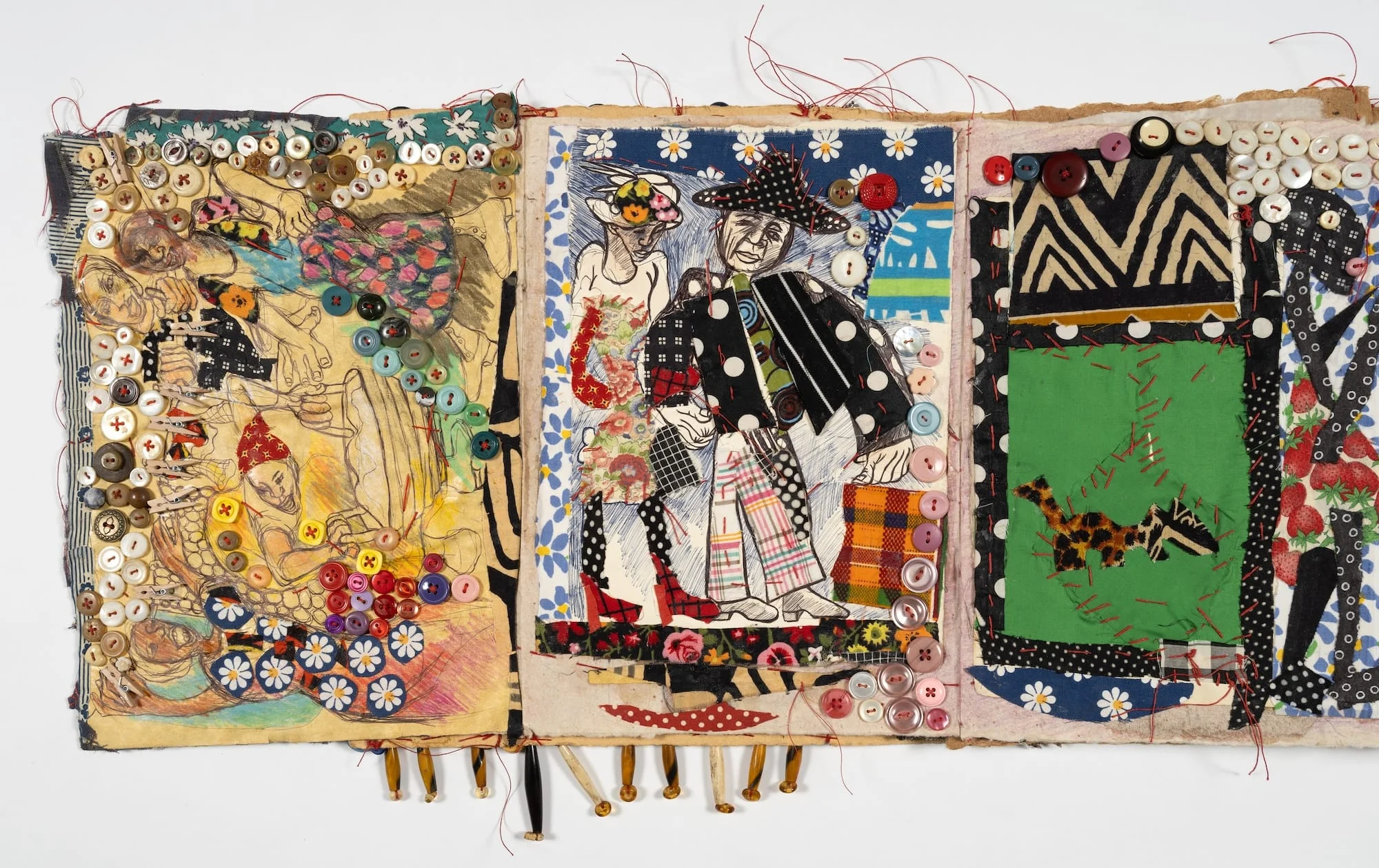
Detail of “Early Life: Themba-A Life of Grace and Hope” (c. 1996), buttons, beads, thread, pastel, acrylic, ink, and paper
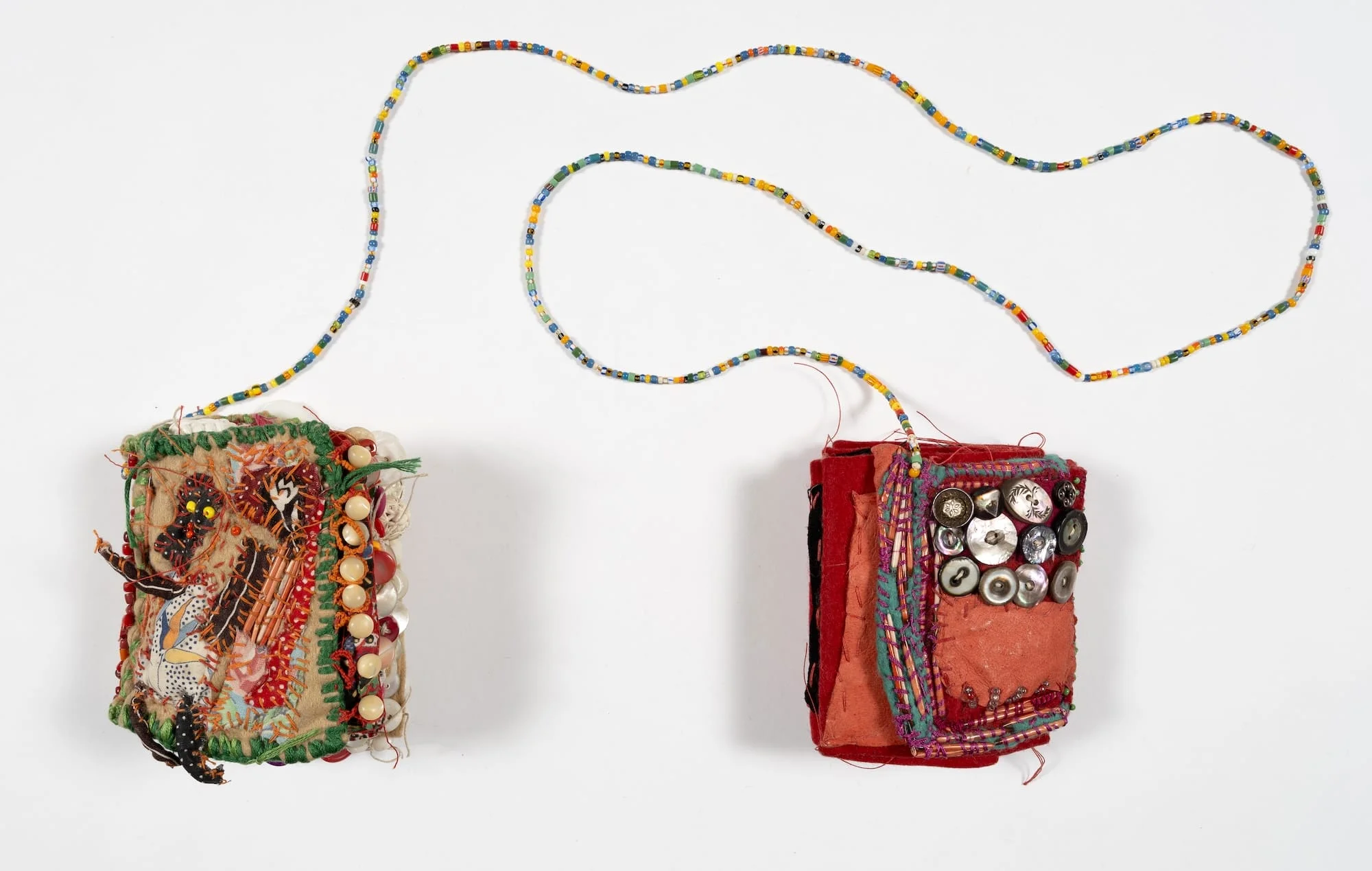
“Roll Books with Cord, Button Beaded Books” (date unknown), buttons, beads, thread, and fabric, 4 x 4.5 x 2.73 inches
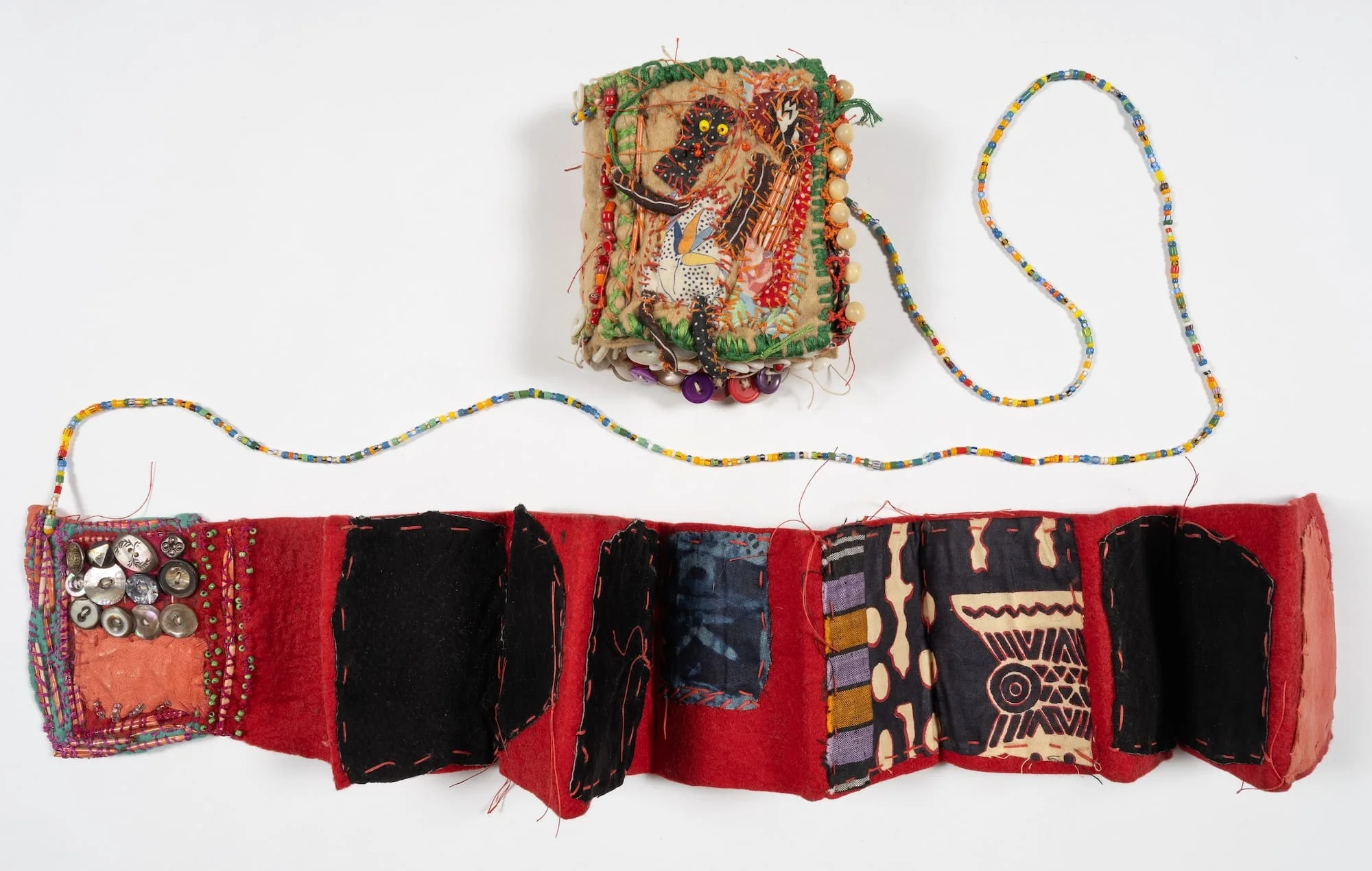
Alternate view of “Roll Books with Cord, Button Beaded Books” (date unknown), buttons, beads, thread, and fabric, 4 x 4.5 x 2.73 inches
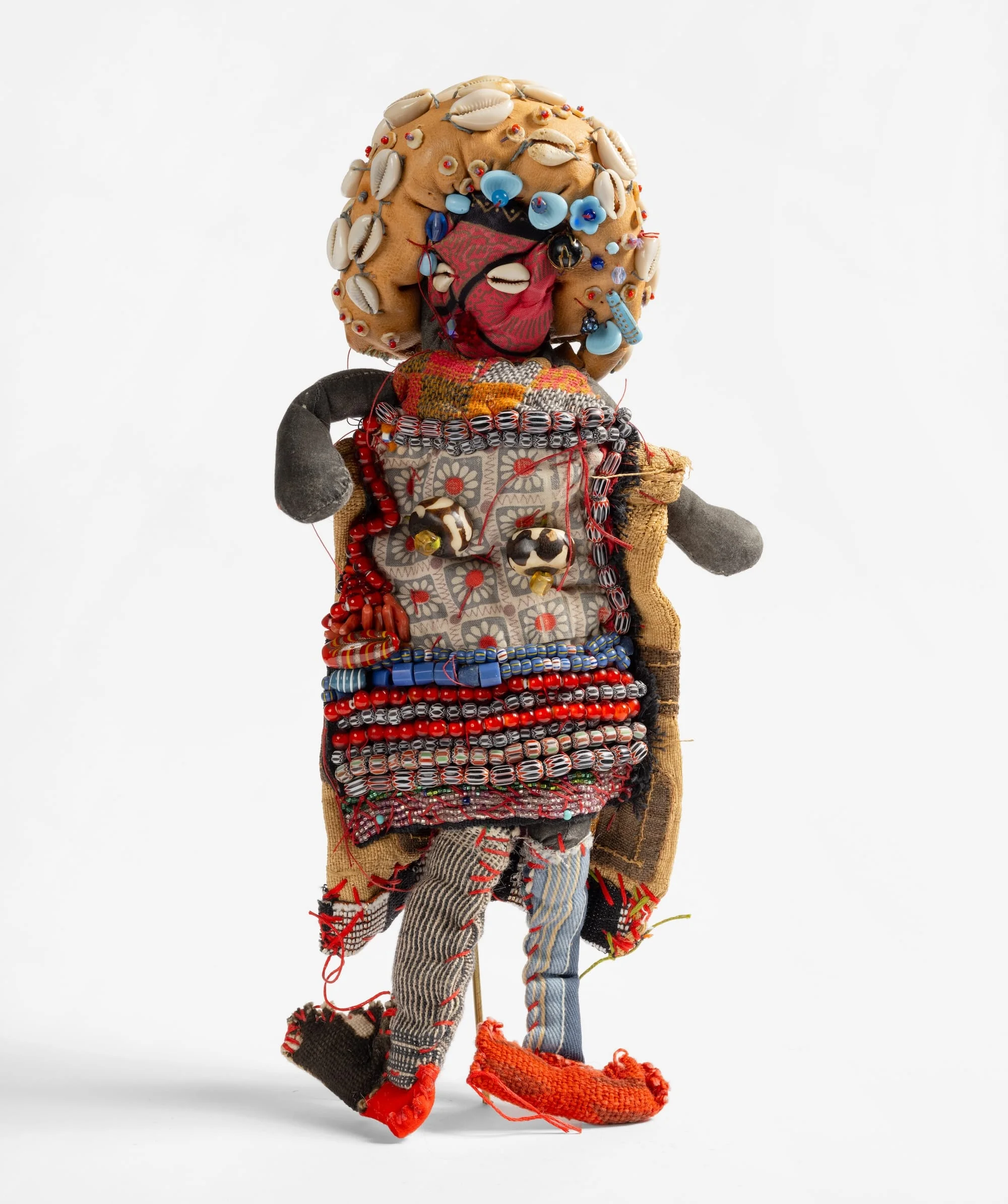
“Button Beaded Doll” (c. 1988), buttons, beads, cowrie shells, thread, fabric, and music box, 16.5 x 7.5 x 4.25 inches
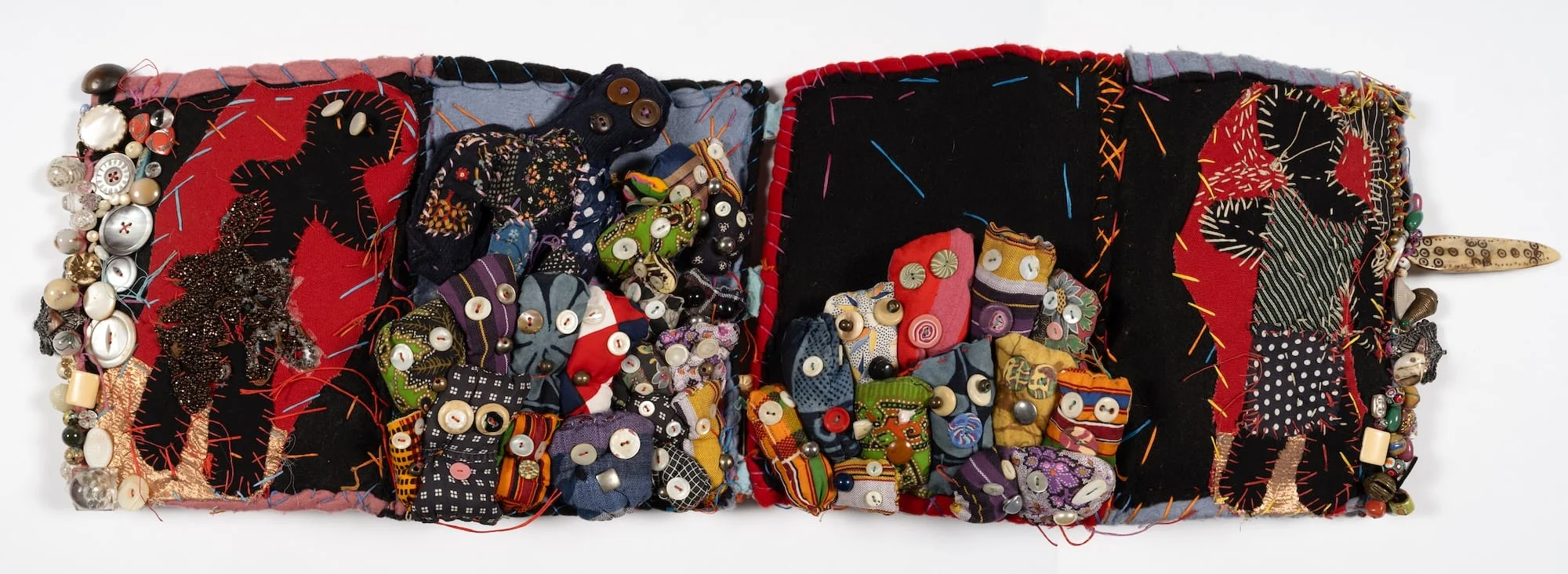
“Button Beaded Accordion Book with Stuffed Figures” (date unknown), buttons, beads, cowrie shells, found objects, thread, paint, and fabric, 11.5 x 9.25 x 5.5 inches (closed), 11.5 x 39 inches (open)
Beaded and Bound opens November 19 and runs through January 16 in New York City. Robinson’s books and figures preserve stories at the scale of a family, a neighborhood and a community—histories made tangible through the materials and people she knew.

Discussion
Sign in to join the discussion.