Fifteen works at Johns Hopkins trace Jeffrey Gibson’s use of beadwork, textiles, music and Indigenous references across a decade of practice.
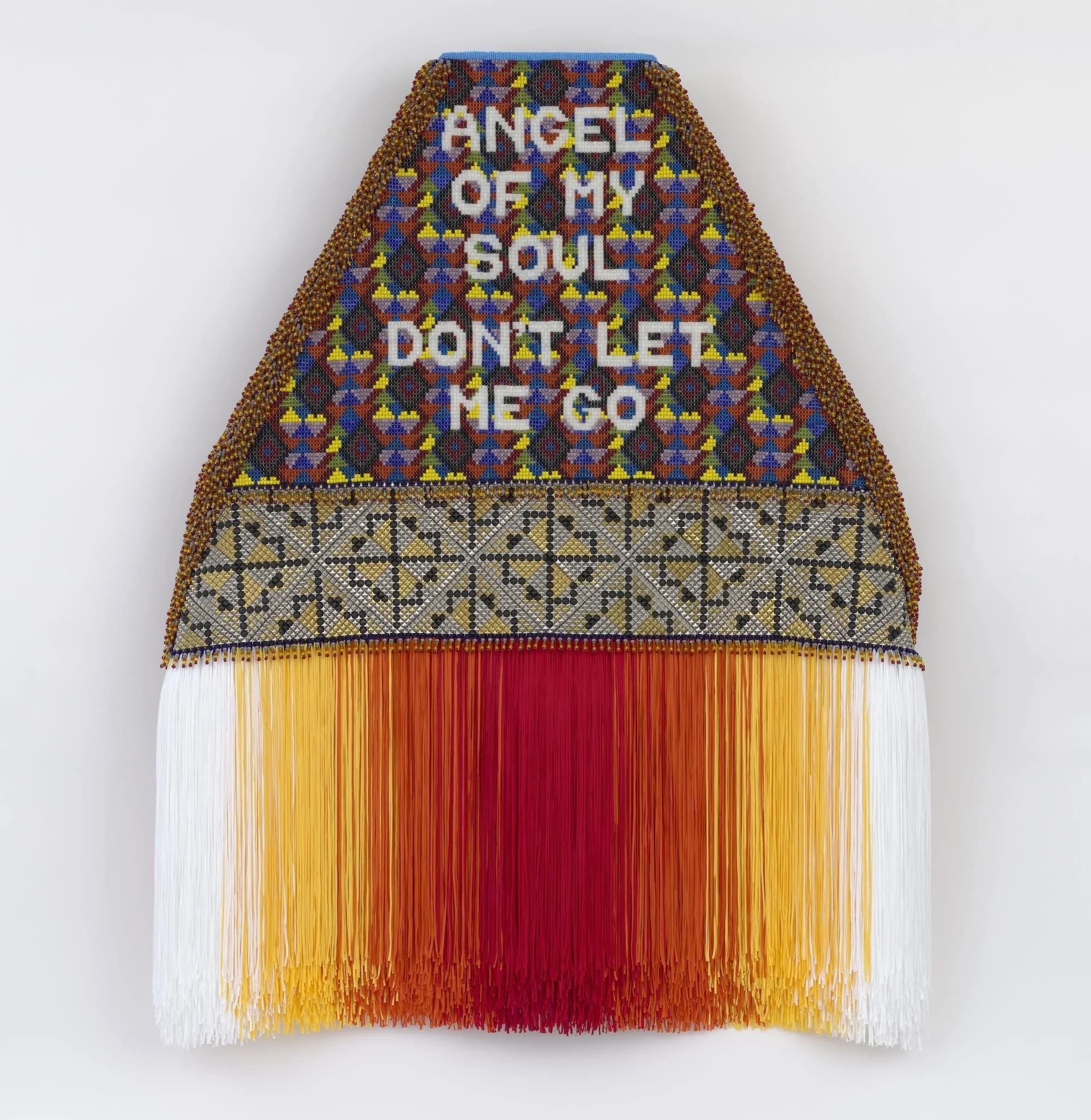
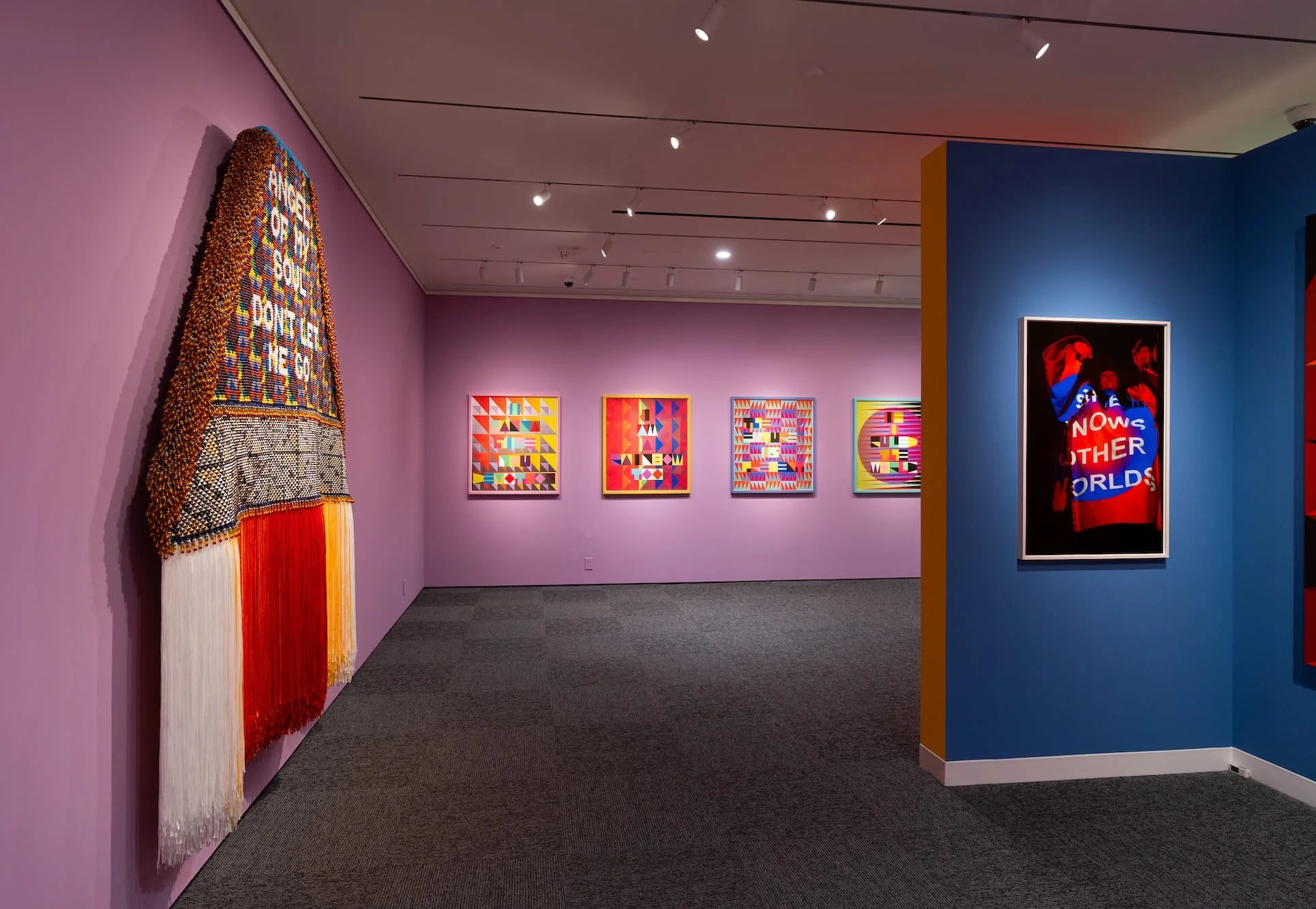
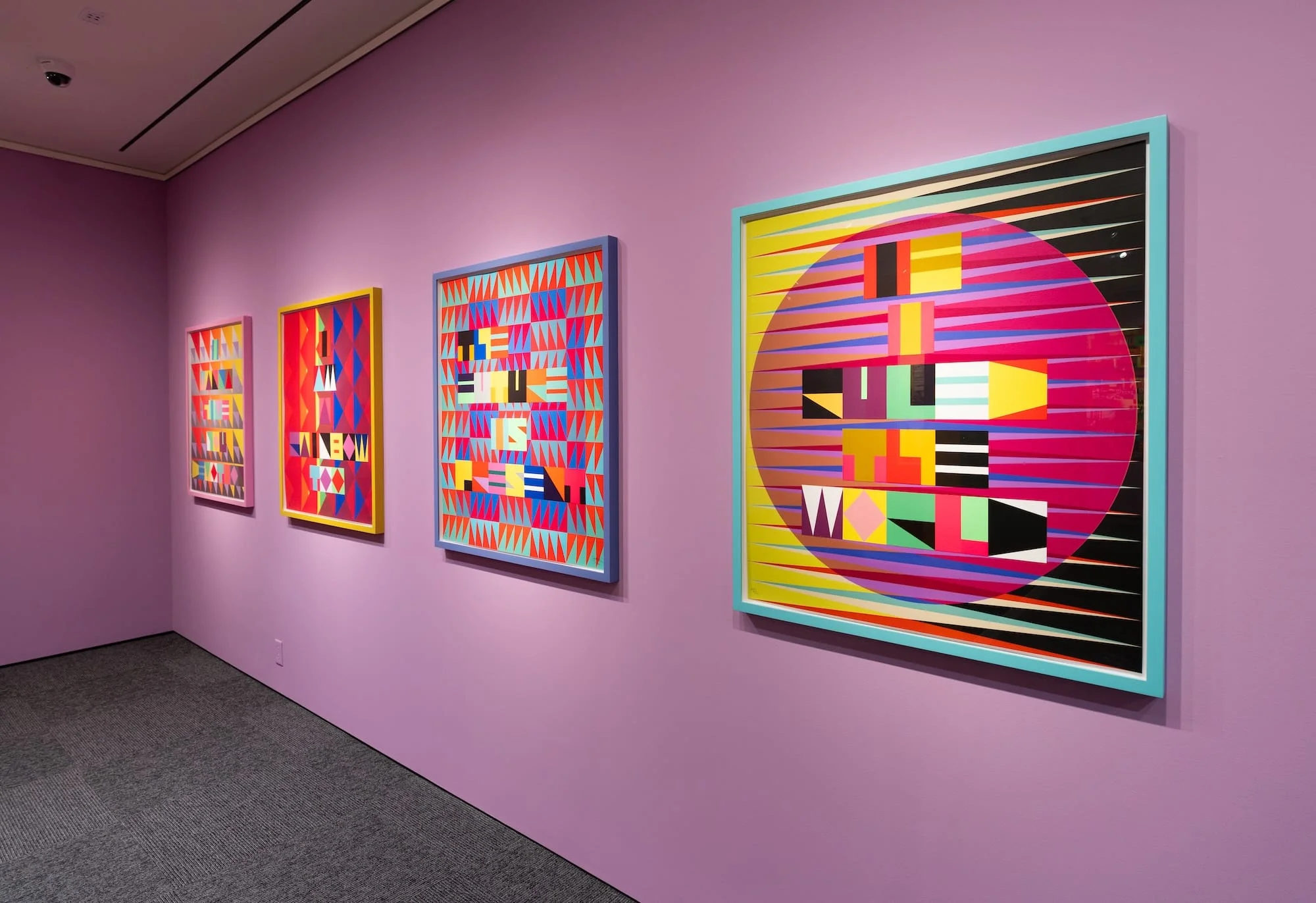
Jeffrey Gibson: A Real Love Thing brings together 15 works that show how the artist moves between painting, textile collage and sculptural forms. At Johns Hopkins University’s Bloomberg Center in Washington, D.C., the exhibition makes a case for pattern and material as more than visual choices: they carry questions of identity, lineage and cultural translation. The works’ bright surfaces draw the eye, but their force comes from the relationships they set in motion: between image and object, personal history and shared tradition, familiar materials and unexpected combinations.
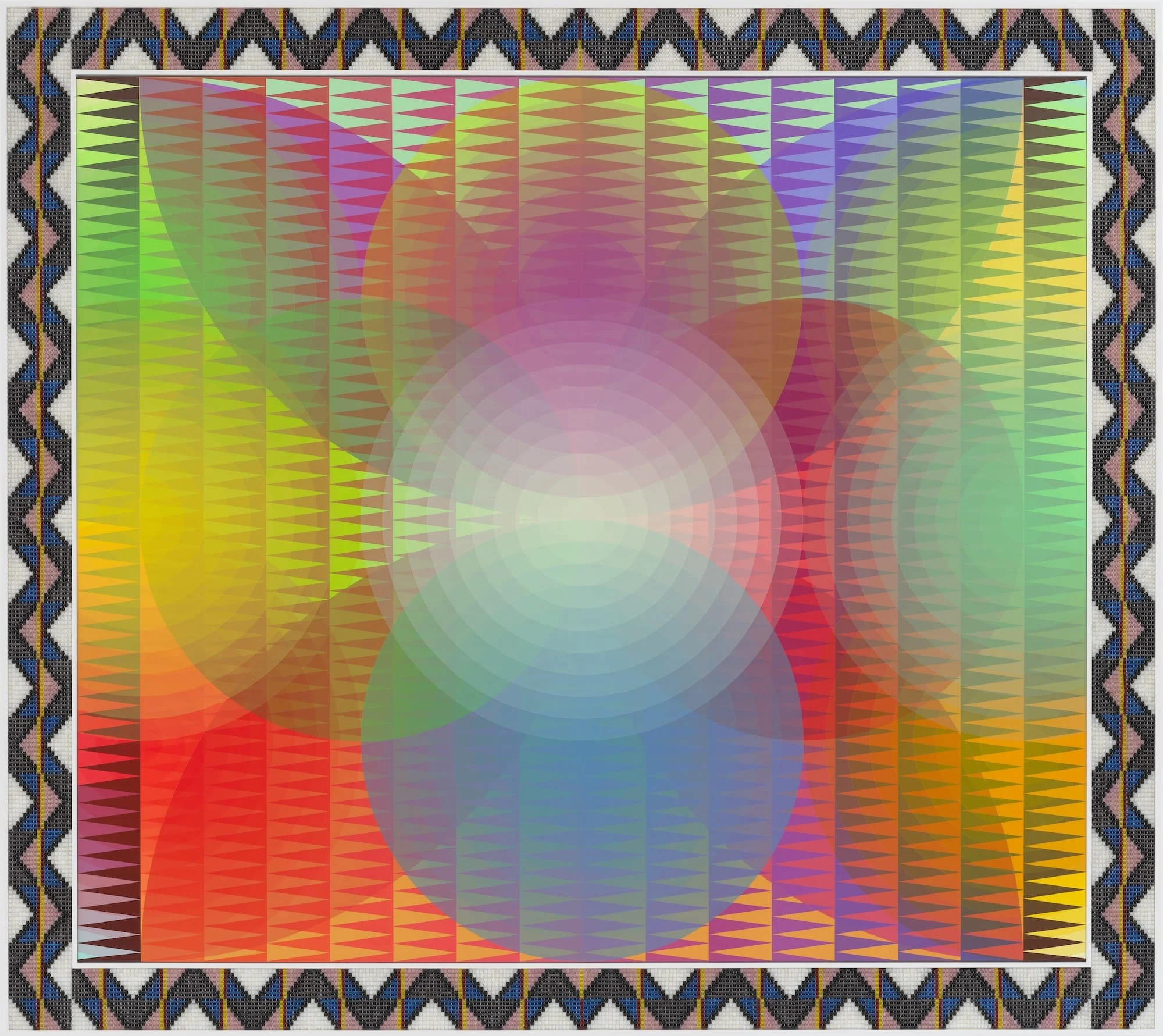
Gibson, whose heritage is Mississippi Choctaw and Cherokee, draws on Indigenous imagery and materials while working across contemporary forms. Glass beads, fabrics and references to ceremonial dress appear alongside prismatic acrylic paintings. His work also incorporates queer iconography, placing different strands of personal and cultural history in conversation. That combination resists a narrow reading of identity as a single, stable category. Instead, the work presents culture as something carried, adapted and expressed through many forms at once.
Music as material
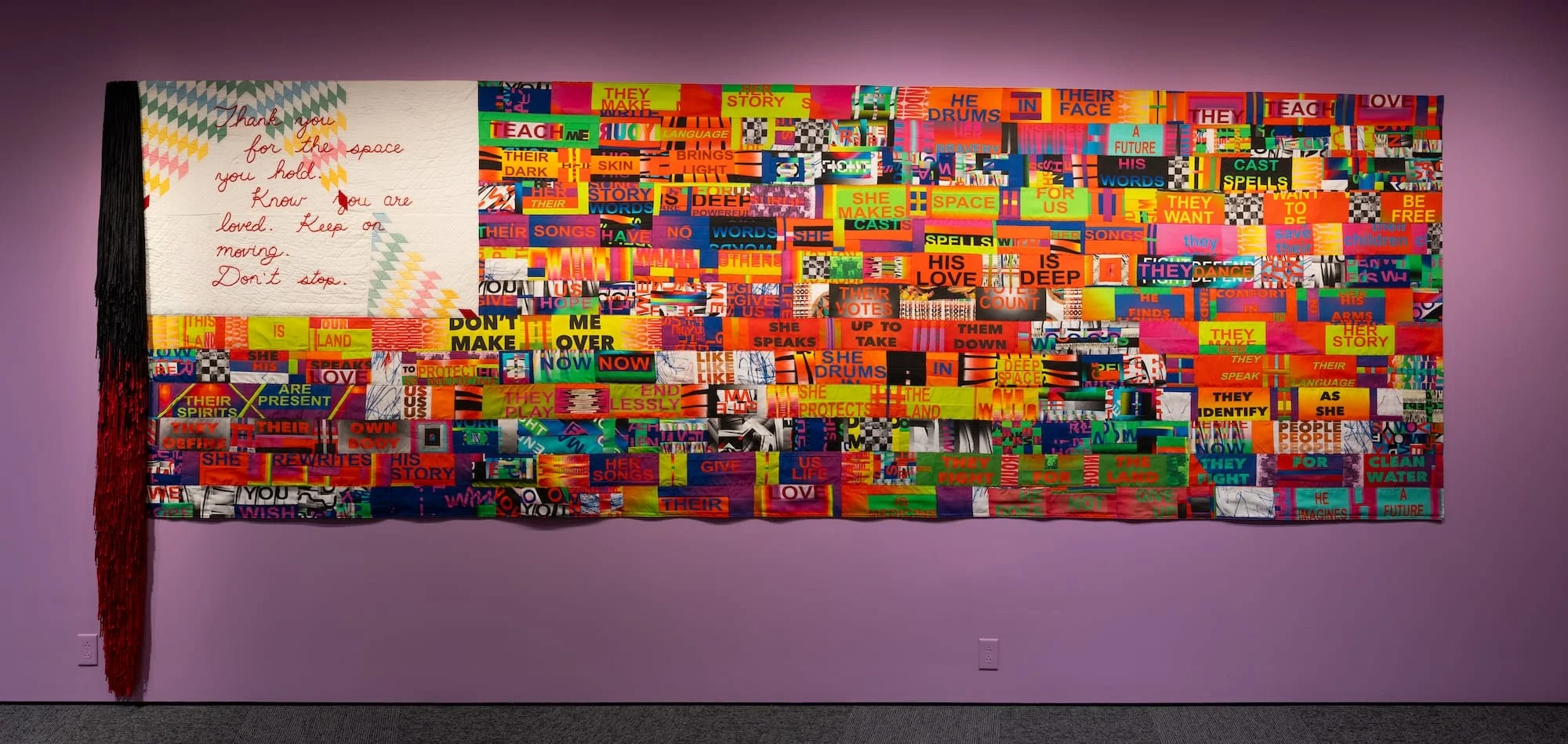
Music has shaped Gibson’s practice from early on. Lyrics surface in tapestry-like hangings and three-dimensional works, where text becomes part of the visual structure. Words in these pieces can be read as language, but they also function as pattern: their repetition and placement give the surface rhythm. The exhibition’s title comes from a 1971 interview with Marvin Gaye, who described the spirit behind his album What’s Going On: “I think I’ve got a real love thing going. I love people, I love life, and I love nature, and I can’t see why other people can’t be like that.”
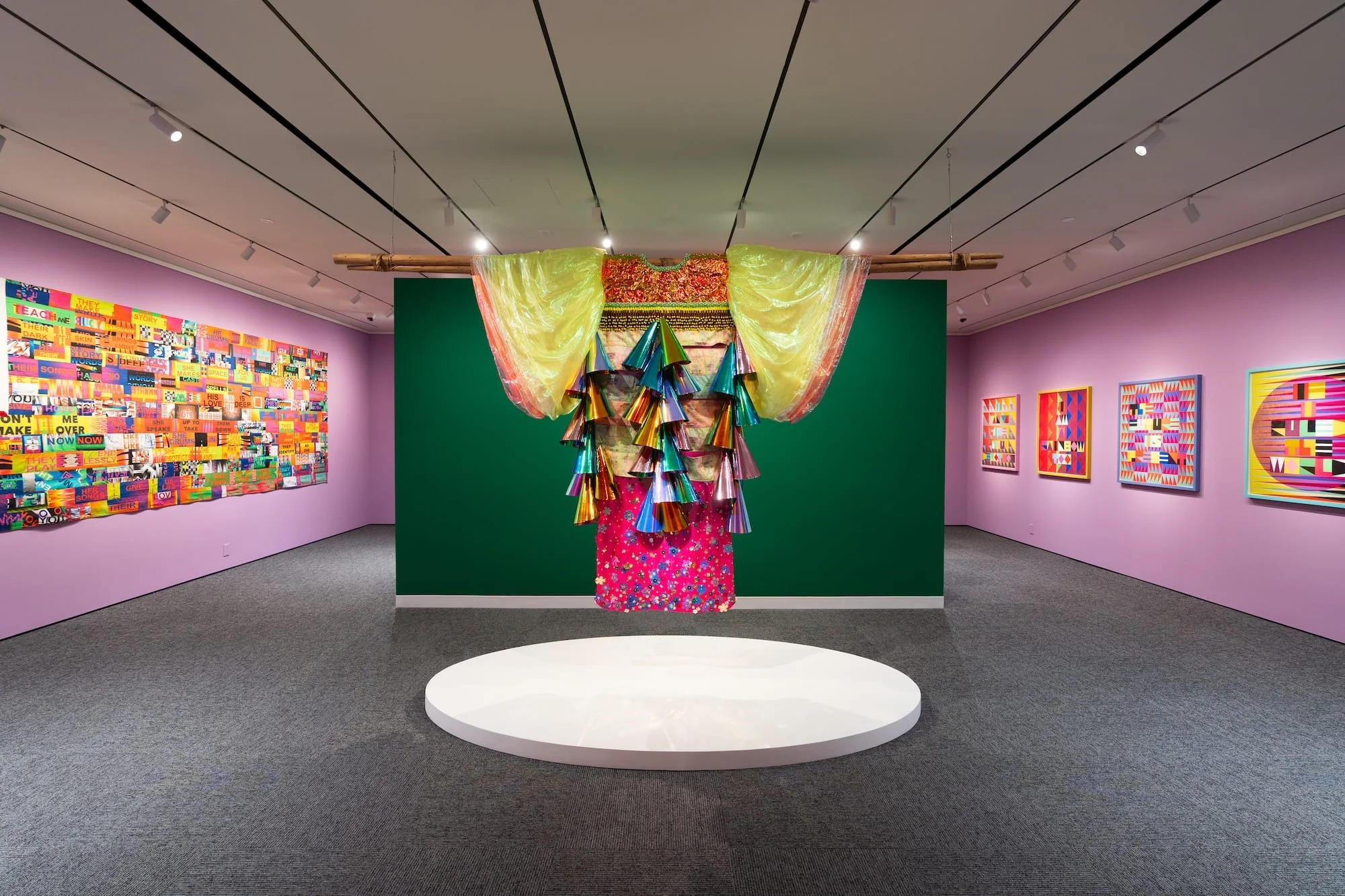
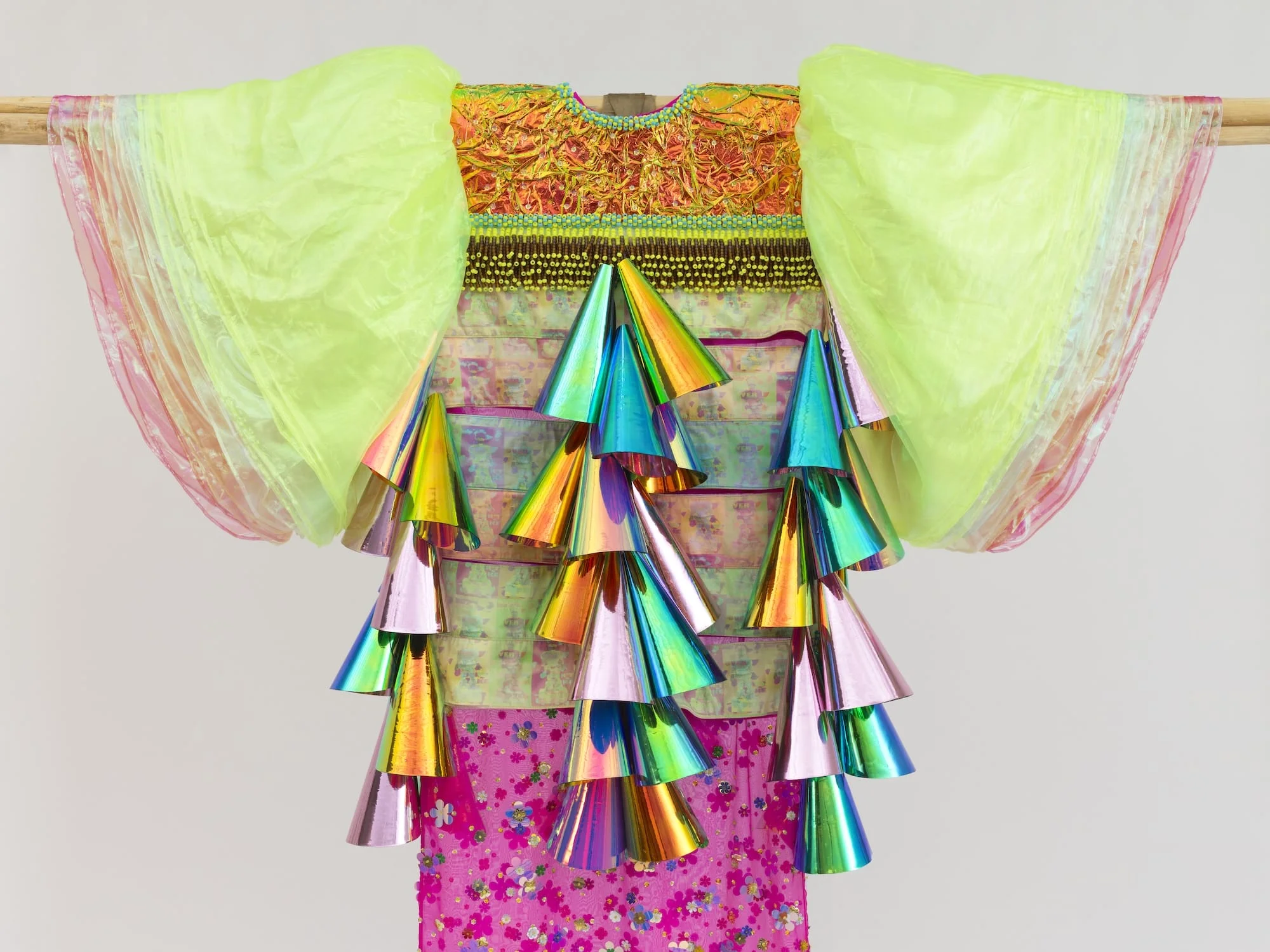
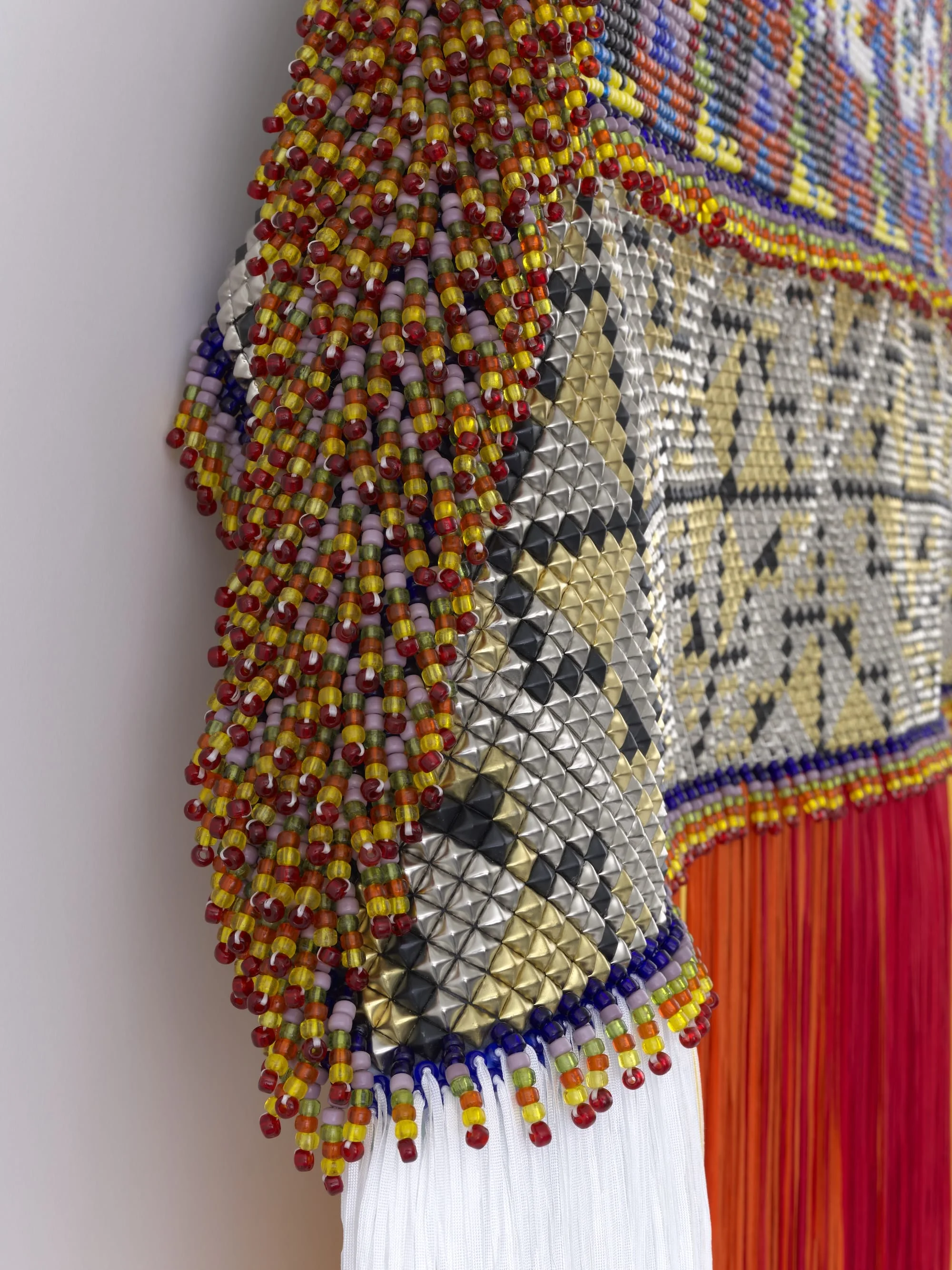
That sentiment offers a useful lens on Gibson’s work. It suggests an ethic of connection, though the exhibition’s appeal isn’t reducible to an uplifting message. Jingle cones associated with ceremonial garments, tipi poles and glass beads connect the pieces to longstanding Native American making traditions. Gibson combines these references with materials including dyed cotton, organza, holographic vinyl and sequins, building works that are vivid and deliberately layered. The materials bring different visual histories into the same frame, while their contrasts make the act of combining them visible. The result points toward a future shaped by hope, joy and acceptance, without smoothing away the complexity of the histories the work carries. This is more significant than it looks: decoration here is doing intellectual work.
On view in Washington and Oregon
A Real Love Thing runs through March 13 at the Bloomberg Center. Gibson is also scheduled to speak November 12 in the Sam Gilliam Lecture series. The talk provides a further point of entry into the work, connecting the gallery presentation with a public conversation about the artist’s practice. In Eugene, Oregon, his traveling solo exhibition They Teach Love is on view at the University of Oregon through March 7. Together, the exhibitions offer a chance to see how Gibson’s recurring materials and references shift across bodies of work. If you’re working in this space, that comparison is especially useful: recurring motifs can reveal what an artist is testing, as well as what remains central to the practice.
What the materials make possible
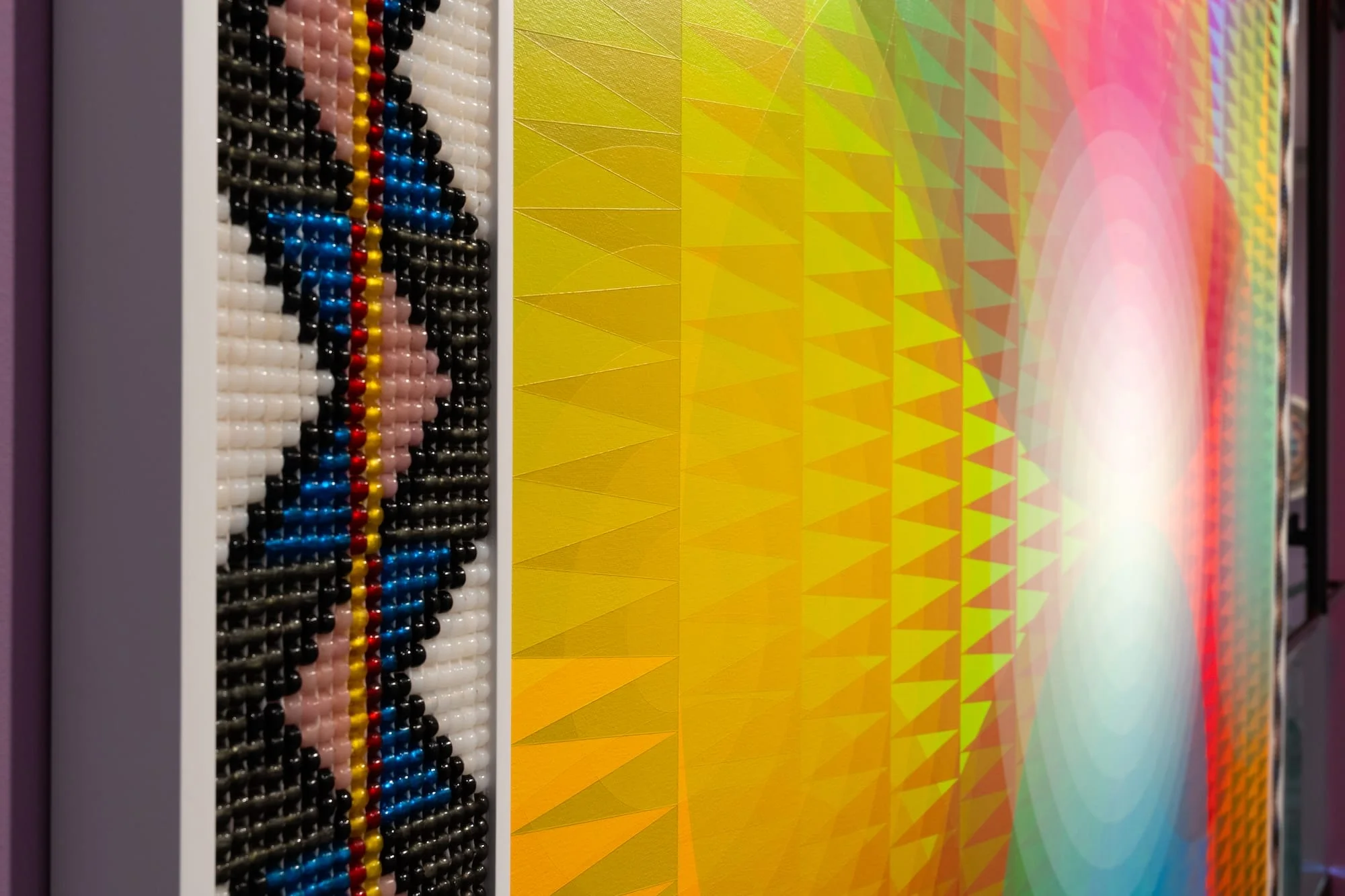
The exhibition’s significance rests partly in how it asks viewers to look. A painting can be approached as an image; a beaded textile or suspended sculpture also calls attention to touch, weight and construction. Gibson’s shifts among these forms complicate the boundaries between fine art, garment and object, allowing materials to carry meaning through their physical presence as well as their appearance. And yet, the work doesn’t need to be decoded as a set of references before it can be experienced. Its color and rhythm offer an immediate invitation; closer attention reveals how deliberately those effects are built.
That balance between access and specificity gives the exhibition its strongest argument. Gibson’s use of Native American making traditions and queer iconography places distinct histories in view without asking them to collapse into one another. The works propose connection as an active process: materials meet, meanings overlap, and difference remains visible. (And this is the part most people overlook.) The vividness isn’t an escape from the subject matter; it’s one of the ways the work holds attention long enough for those layered questions to register.
For visitors, the practical reward is time spent comparing surfaces and forms across the gallery: the framed geometry of “Dewdrops in the Garden,” the textile and pole structure of “Don’t Make Me Over,” and the text-bearing hangings each make different demands on the eye. Some works speak through accumulation. Others use a sharply ordered pattern. A conversation between those approaches, rather than a single grand statement. That said, the exhibition’s central idea remains clear: identity and cultural memory can be carried through materials that change meaning as they move between traditions and contemporary art.



Discussion
Sign in to join the discussion.