Spielberg will direct The Heart in Winter, adapted by Paul Thomas Anderson and starring Cillian Murphy, Jessie Buckley and Mark Rylance.
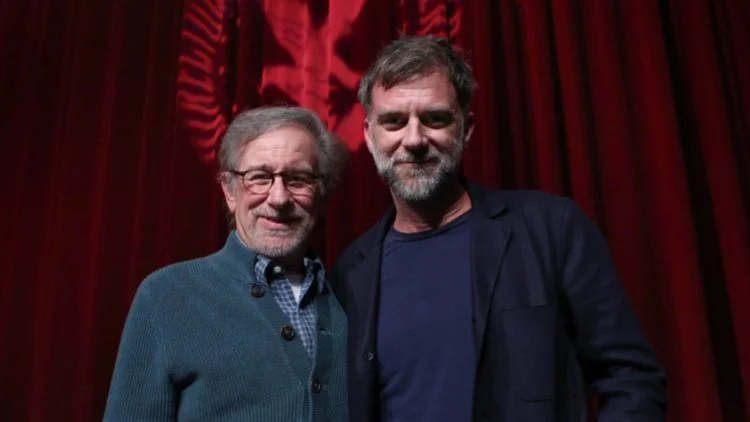
Steven Spielberg is preparing to make his first western, joining forces with Paul Thomas Anderson on a story set in 1891 Montana. Production is expected to start in winter 2027, while Focus Features is set to release the film in 2028. That leaves a sizable stretch between the announced production window and its planned arrival in theaters, giving the project time to move from literary adaptation to finished film.
Cillian Murphy, Jessie Buckley and Mark Rylance are among the cast. The film is based on Kevin Barry’s novel The Heart in Winter, with Universal backing the production. Those details establish the project’s broad shape, but they don’t yet tell audiences how closely the adaptation will follow the book or what form Spielberg and Anderson’s shared approach will take.
The collaboration is the other headline. Spielberg is closely associated with popular storytelling across genres, while Anderson has built a distinct body of work as a writer and director. Putting their names on the same project invites questions about how the film will balance romance, violence and the conventions of a western. For now, the clearest answer comes from Spielberg himself: the story, and the prospect of working together, persuaded them.
Spielberg described the collaboration as a meeting of both genre interests and a story that quickly resonated with the two filmmakers:
“It’s really the excitement for me to get to work together with my dear friend and colleague Paul Thomas Anderson on a genre, but more particularly, the genre notwithstanding, a story that quite quickly became close to both our hearts and we felt that we could do as a team.”
A runaway romance in the mining town of Butte
Anderson’s script draws on Barry’s novel, which opens in Butte, Montana, amid the copper boom and a rough community of Irish immigrants. The setting puts the story among people living through the pressures and opportunities of a mining town, rather than on an open range alone. That distinction may shape the film’s take on the western: its starting point is a crowded, working community, with the characters’ choices pushing the action outward.
Tom Rourke, a poet and ballad-maker, is adrift. His life is shaped by drinking and drug use, and he’s struggling to find a direction when Polly Gillespie arrives as the new bride of devout mine captain Long Anthony Harrington. The pairing sets personal restlessness against a tightly defined local order. Tom’s poetry and ballad-making suggest a character who turns experience into stories, even as his own life remains unsettled.
Polly’s arrival changes the course of the plot. She and Tom fall into a sudden affair and flee west on a stolen horse, turning a private relationship into a public pursuit. The setup is familiar in one sense: two people leave, and others follow. But the novel’s frontier setting gives their escape room to become a test of endurance, judgment and what the fugitives are willing to risk for each other.
Their route cuts through the badlands of Montana and Idaho. A brief stretch of romance gives way to pursuit by a posse of Cornish gunmen, and San Francisco remains far off. The distance matters as a source of pressure: escape has a destination, but reaching it isn’t guaranteed. The fugitives’ decisions carry consequences that will follow them long after the immediate flight is over.
That combination of intimacy and pursuit gives the adaptation several kinds of tension to work with. A western can use landscape and danger to make a journey feel expansive, while a romance depends on the narrower question of how two people respond to one another. Here, those elements are tied together by the chase. Every step toward freedom can also expose the pair to new costs.
And this is the part most people overlook: the story’s romantic premise doesn’t make its characters’ escape simple or clean. Tom and Polly leave in haste, with pursuers behind them and a distant destination ahead. Their flight can be read as an attempt at liberation, but the source material also makes clear that choices have consequences. The tension between those ideas gives the journey more weight than a straightforward chase.
A major collaboration across generations
The pairing brings together two filmmakers with distinct bodies of work around a period western. Spielberg has spoken of watching westerns on 35mm with Anderson as the project took shape, and called the script a story they felt they could tackle as a team. That shared viewing offers a glimpse of their preparation, though it doesn’t settle what either director will bring to the finished film.
Spielberg’s description puts the emphasis on shared enthusiasm, while the source material supplies a more complicated basis for the partnership than genre alone. The story joins a historically grounded setting to a relationship under pressure, with violence waiting beyond the couple’s moments of escape. If you’re working in this space, that mix is the central creative challenge: a film can honor the western’s familiar pursuit structure while still giving its characters room to surprise an audience.
This is more significant than it looks. A collaboration between established filmmakers can draw attention before a production has begun, but attention doesn’t reveal whether their methods will mesh on screen. The project’s appeal will depend on how the adaptation handles the shifts between the mining town, the lovers’ flight and the posse’s pursuit. A story can contain all the right ingredients and still depend on tone, pacing and performance to make them cohere.
There’s also a practical limit to what can be inferred at this stage. The announced cast and release window give the film a visible outline, but the source doesn’t specify further casting, production details or how the book’s structure will translate to the screen. That leaves the filmmakers’ account of their early connection to the material as a useful clue, rather than a promise about the finished result.
What the project’s timeline leaves open
With production expected to start in winter 2027 and release planned for 2028, the next milestone is the film’s production. The gap between those windows suggests a project that still has substantial work ahead, though the available details don’t describe its schedule beyond those expectations. Until filming begins, the clearest measure of progress is the combination already announced: a source novel, an adaptation by Anderson, Spielberg’s first western, and a cast led by Murphy, Buckley and Rylance.
For audiences, the most useful question isn’t simply whether Spielberg and Anderson can make a western. It’s how they’ll shape this particular story, which begins with a poet and a new bride in Butte and sends them into a dangerous flight west. That said, the premise offers a strong framework for a film about desire, escape and the price of decisions. The next chapter will be how that framework survives the move from page to production.
Unfinished business, then: the journey itself.



Discussion
Sign in to join the discussion.