Healthcare provider AltaMed opens The Alta in Montebello, a 30,000-sq.-ft gallery built around a collection gathered since the 1970s. It opens Sunday, 15 November.
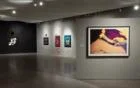
Healthcare providers rarely end up running art museums, but AltaMed Health Services is about to. The Southern California company is opening The Alta, a 30,000-sq.-ft gallery, library and cultural centre in Montebello, a suburb east of Los Angeles. It opens to the public on Sunday, 15 November, and it puts a collection of more than 4,000 works into view for the first time in a purpose-built setting.
A collection that grew out of the clinics
AltaMed started buying art in the 1970s on the premise that creative work is part of holistic well-being. That idea was never a side project. About 1,400 of the pieces currently hang in the company's offices and clinics, which means patients have been living with the collection for decades without a formal way to see the rest of it. The Alta changes that by moving the bulk of the holdings into a space designed to show them.
The roster is broad. It includes Laura Aguilar, Graciela Iturbide and Gabriel Orozco, alongside Carlos Almaraz, Judy Baca, Camille Rose Garcia, Gronk, Frank Romero, Eloy Torrez, John Valadez and Linda Vallejo. The oldest pieces stretch back more than a century, though most were made after the Second World War. Among the early works are pieces by Hernando Gonzallo Villa, a commercial artist who designed ads and posters for the Santa Fe Railway.
A mission statement, stated plainly
Cástulo de la Rocha, AltaMed's president and chief executive and the collection's founder, doesn't dress up the collection's politics. "Our collection focuses on Chicano art," he said in a statement, citing the company's own origins in the Chicano Movement of the 1970s, his own activism in that movement, and the fact that patients and employees can connect with the work culturally. That's a more direct framing than most corporate art programs offer, and it shapes what ends up on the walls.
Pilar Tompkins Rivas, AltaMed's chief curator and vice president of arts, told The Art Newspaper that the collection exists to serve the communities the company works with in Los Angeles and Orange County, which are primarily Latino. The curatorial logic follows from that. The aim is art that feels relevant to those audiences and celebrates them, rather than work chosen mainly for its place in a canon.
Health as a subject, not just a setting
Some of the newer acquisitions and commissions engage with health and community head-on. Sonia Romero's mural The Fence-Pomona (2026) was made for the central communal space of a senior-care facility in nearby Pomona. It measures 6 feet high and 10 feet wide, and shows a white lattice fence covered in roses, with the San Gabriel Mountains behind it. The mural looks down on a room where residents eat, make art and gather. It's a rare case where the artwork is built around the function of the room it hangs in, and it's a sharp example of the idea that art belongs inside care environments.
Working space, not just storage
AltaMed has spent recent years converting a warehouse on the edge of a Montebello shopping mall, and the building reflects a different model of collection display. Visitors can tour the gallery with regular hours, see works on shelves and sliding racks in open storage, and watch digitisation and conservation work in progress. The studios on site are for artist residencies, so the building is meant to keep producing work as well as hold it.
One of those residencies is already active. Rubén Esparza is working in one studio on multimedia pieces that explore "the cultural significance of Latinx, Chicano and Queer diasporas." The other studio has become an educational apothecary created by Felicia Montes and her collective Mujeres de Maíz. La Botánica del Barrio (2026) offers samplable traditional herbal teas and tinctures, plus a decorated pushcart. Down the hall, The Wellness Wall invites visitors to pin up their own home remedies. The suggestions run from practical to playful, from "talk to friends" and "travelling" to "Vicks" and "a good mezcal." Few exhibitions ask the public to contribute this directly to the content.
The opening show does the heavy lifting
The first exhibition is Patssi Valdez: LA LA LA, running until 9 April 2027. Valdez is a pioneer of Los Angeles's Chicano art movement, and this is her first solo exhibition in more than a decade. The show brings together photo-based and collage work, including re-creations of portraits she made in the 1970s and 80s of friends who helped define punk and goth glamour.
Valdez has said she wanted to try something "out of the box" with AltaMed, and it shows. Several framed pieces have coloured paper strips flying out past the frame edges. Some portraits carry Swarovski crystals, including Divine Dede (2026) and Hot Pink (Mario, Charlie & DeDe) (1983/2025). She also made new work with two younger artists, rafa esparza and Gabriela Ruiz. The company has bought her paintings and photographs over the years, along with one of her signature full-size paper dresses, which sits in a glass case in The Alta's open-storage area.
That's the real test for an institution like this. A healthcare company that has quietly collected for half a century is now asking the public to walk in, read the labels and form its own opinion. The Alta's first show suggests the collection can hold its own as art, not just as a corporate asset. Whether the gallery keeps that standard once the opening crowds thin out will tell us more.

Discussion
Sign in to join the discussion.