Son Lux and Alex Cook pair a multigenerational family’s quiet rituals with Dust Bowl imagery in a 17-minute meditation on memory and presence.
Son Lux’s “Out Into Us (Slow Down)” asks viewers to stay with a scene long enough for its meaning to shift. Made with artist Alex Cook, the 17-minute work premiered last month at MASS MoCA as an immersive installation jointly commissioned by the museum and Pioneer Works. It accompanies Son Lux’s ninth studio album, extending the band’s music into a film about family, memory, and the cost of idealized visions of the land.
That extended running time gives the work room to resist the familiar logic of a music video, where a sequence of images often has to make its point quickly. Here, the viewer has to wait. A gesture or detail can register first as part of an ordinary family gathering, then take on a different weight as the historical echoes accumulate. The film’s atmosphere depends on that delay: meaning arrives through comparison, rather than through an explanation delivered in advance.
A family at the center of the frame
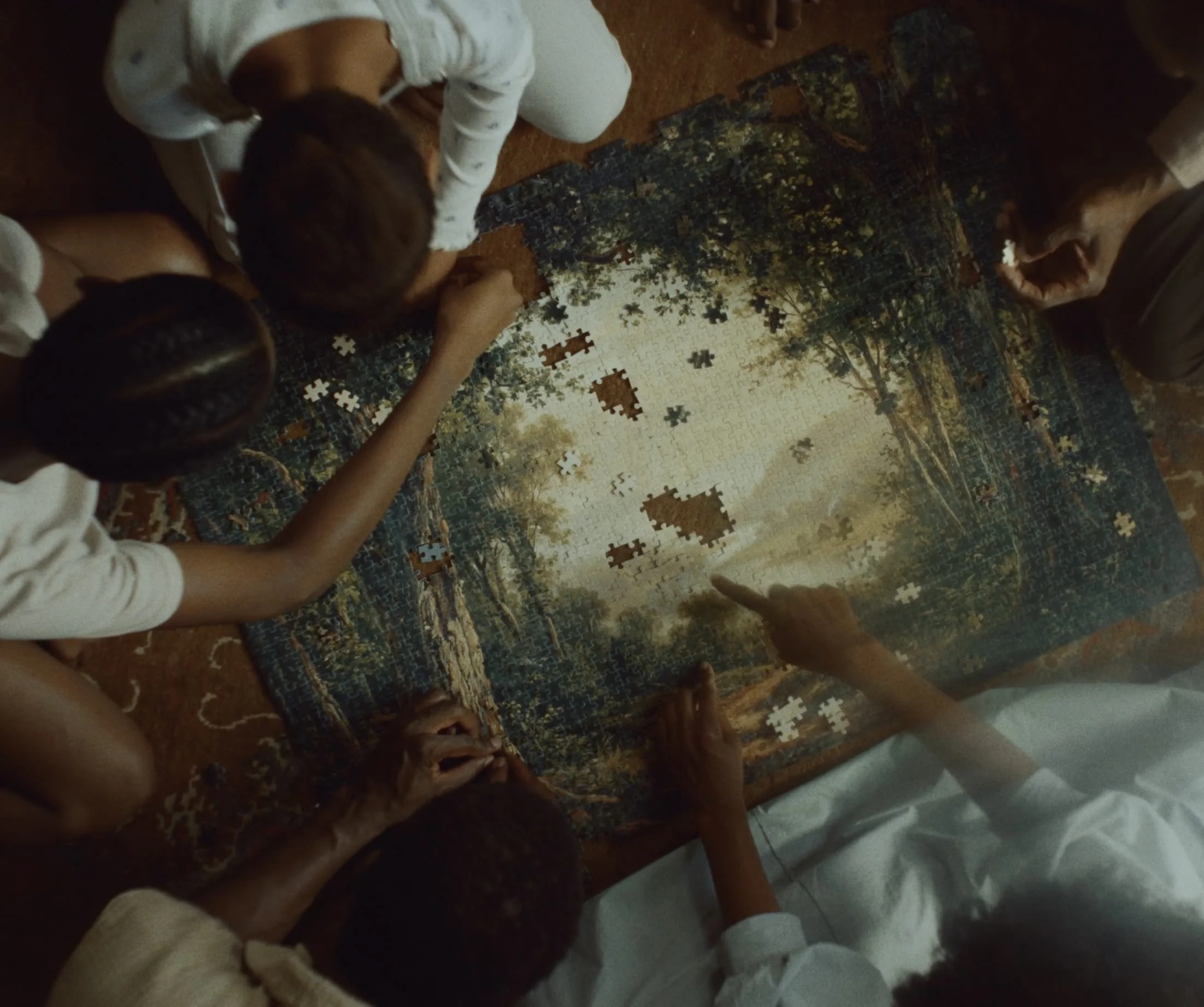
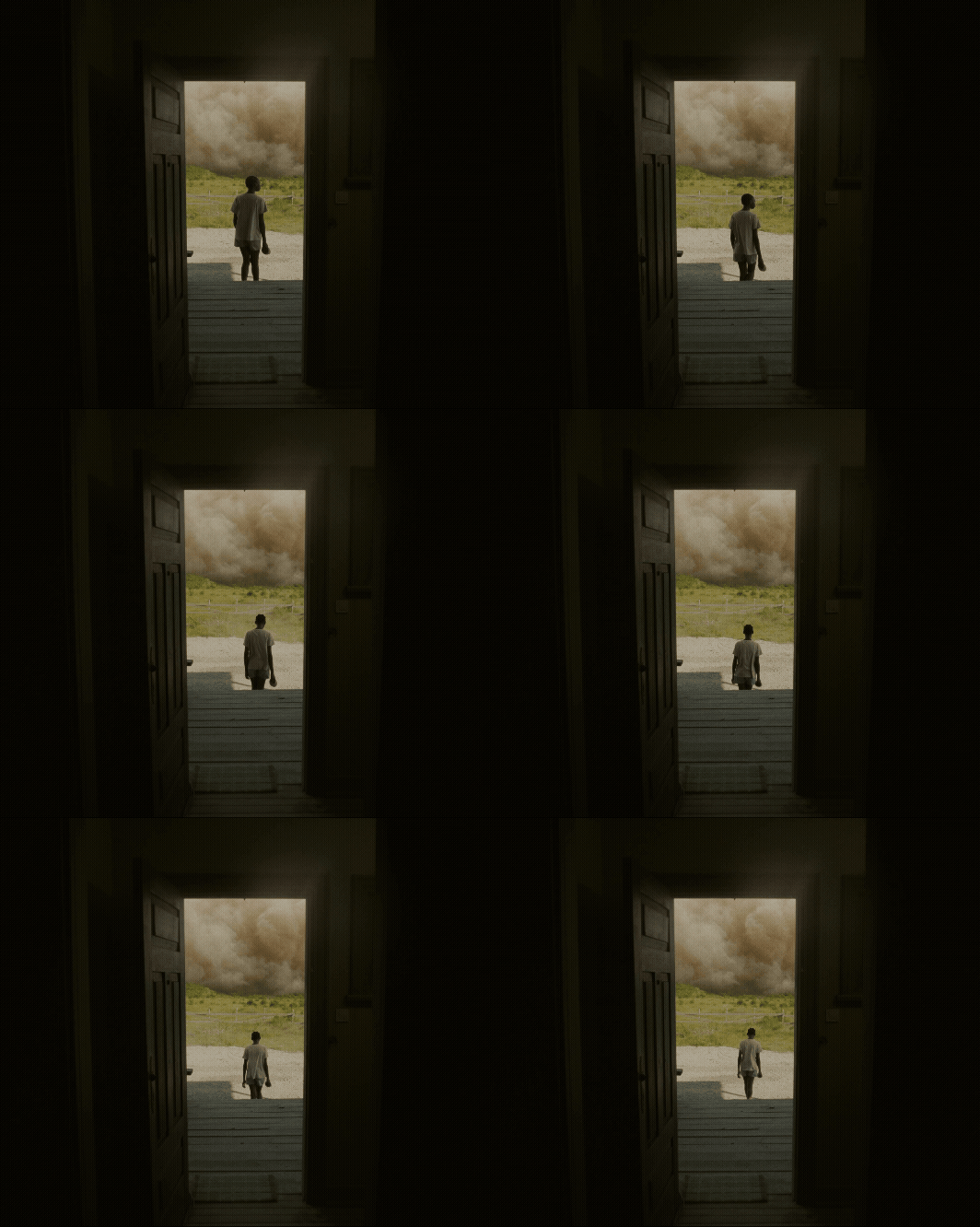
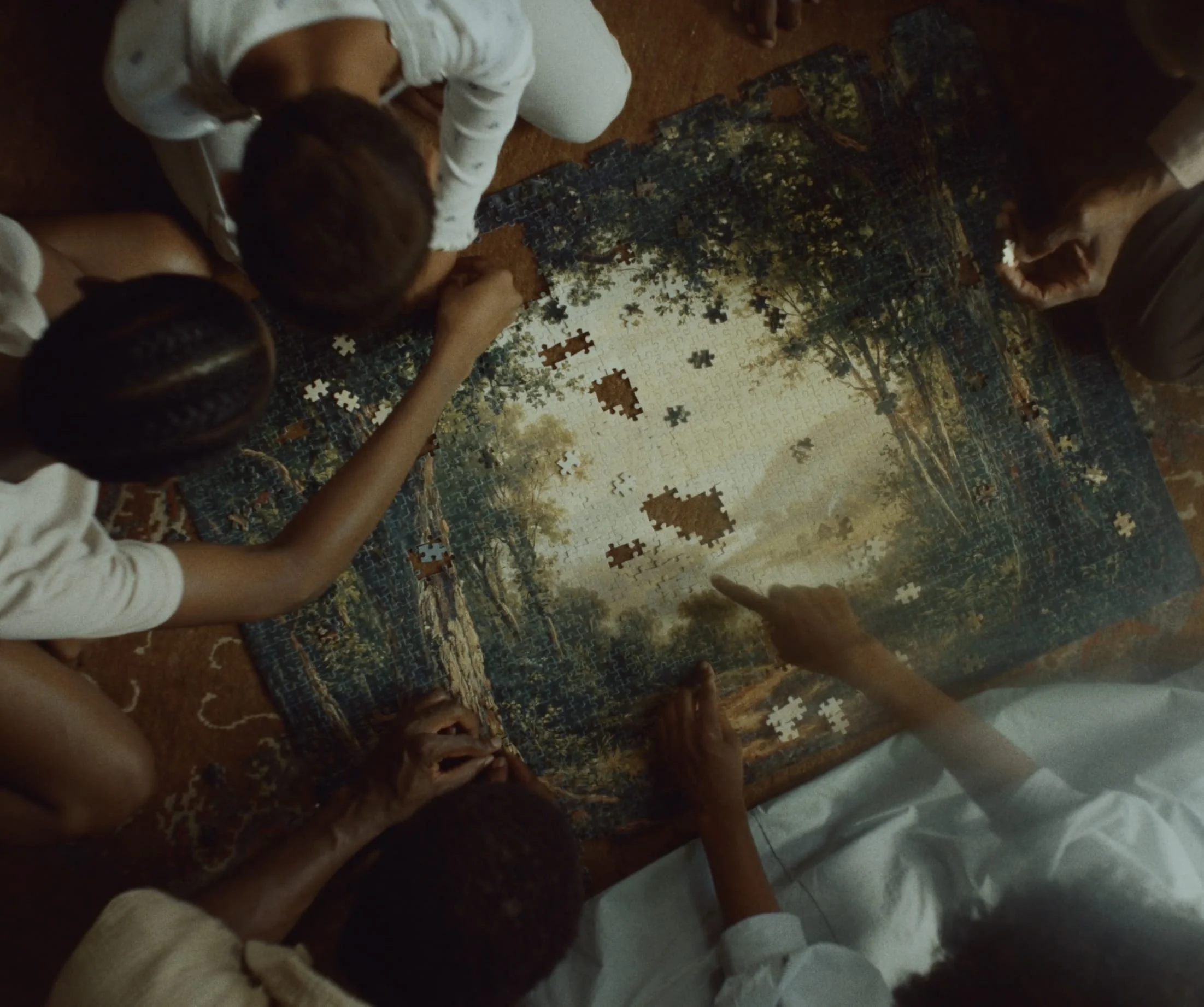
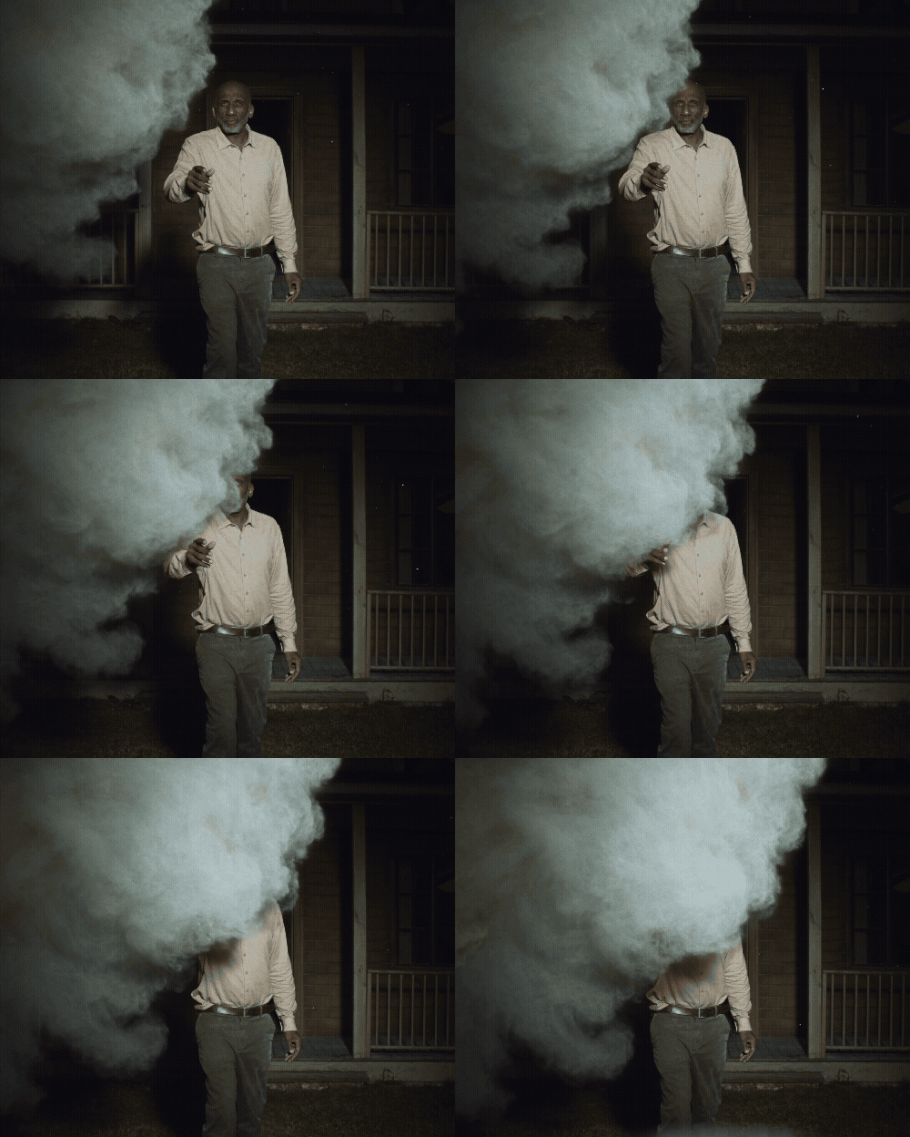
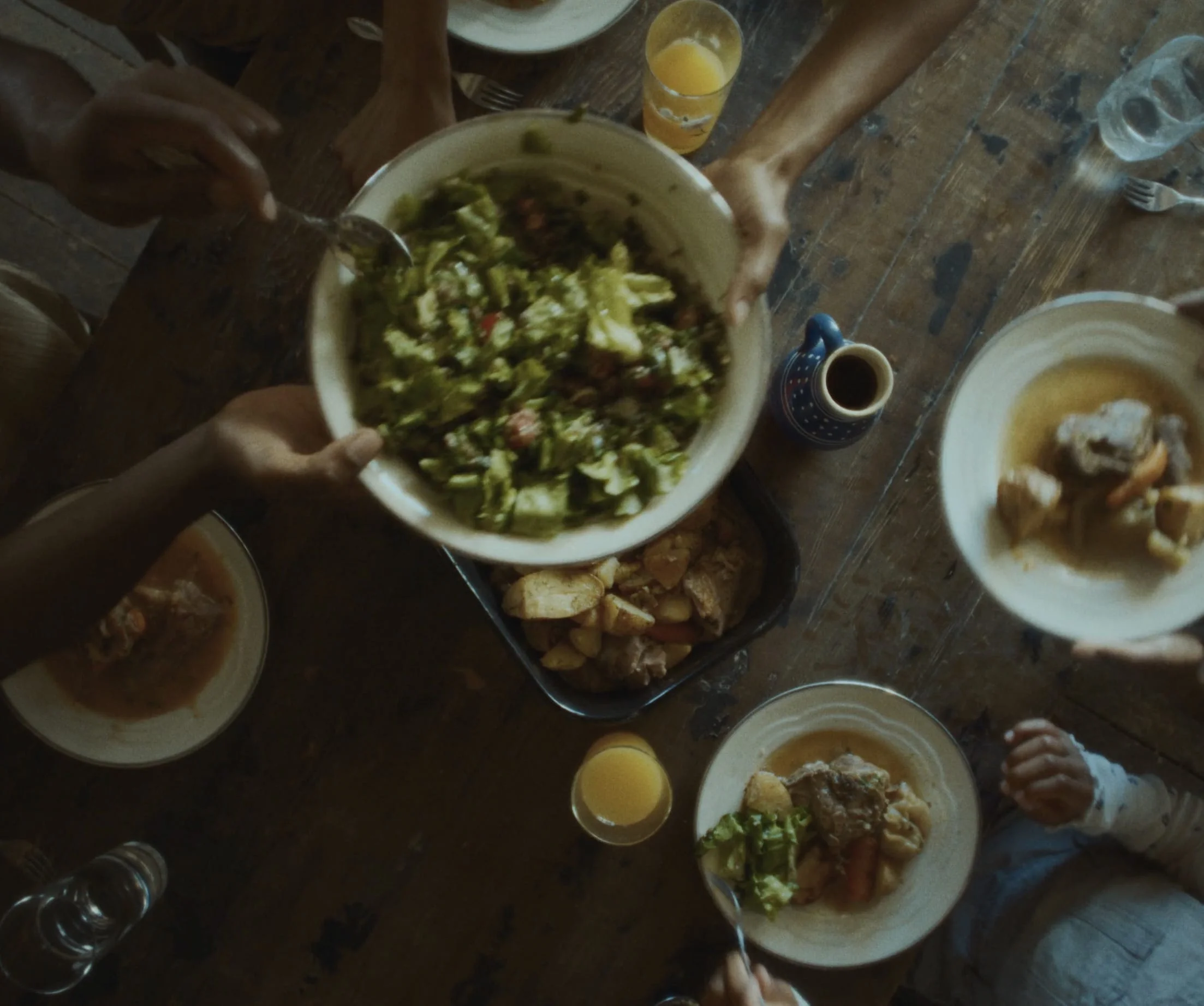
Cook’s video settles around a multigenerational family sharing a meal and working on a puzzle. Their gestures are unhurried: dishes move from hand to hand, and attention gathers around the table. The scene gives everyday acts—serving food, watching another person, fitting pieces together—the kind of sustained attention that fast-moving images tend to cut short. Then a vast cloud of dust intrudes, carrying the scene into the era of the Dust Bowl. The images let past and present overlap without spelling out a single timeline.
That overlap keeps the family from becoming a simple illustration of a historical event. The dust is a rupture in the scene, but the people remain at its center; their shared meal and careful work on the puzzle give the history a domestic scale. Instead of treating the past as distant scenery, Cook brings it into the room. The effect is unsettled, but deliberately so: memory here behaves less like a neat sequence of dates than like something that can enter the present without warning.
That pairing gives the work its tension. The puzzle shows a pastoral landscape associated with the Hudson River School, an image of abundance far removed from the dust and hardship surrounding the family. Such romantic scenes helped sell the promise of fertile land to homesteaders. In the film, the puzzle is a picture within a picture, and its reassuring order sits awkwardly beside the disruption outside it. The film sets that promise beside the consequences of farming practices that removed native prairie grasses, leaving topsoil exposed to drought and the strong winds that swept across the Great Plains.
The contrast is pointed. A landscape can look timeless when it’s reduced to a beautiful image, while the history of how that land was used—and what was lost—falls outside the frame. The puzzle makes that omission tangible: a family assembles an idealized scene piece by piece as a very different image of the plains gathers around them. This is more significant than it looks. The film asks what stories a pastoral picture can tell, and which costs it can quietly leave out.
Slowing down the image and sound
The video also takes aim at the speed and fragmentation of online viewing. Its creators describe a culture where music can be eclipsed by a stream of bite-sized visuals stripped of context. That criticism is familiar, but the film makes it through its form: a 17-minute work asks for time in a medium where viewers are often encouraged to move on after a few seconds. “Out Into Us (Slow Down)” moves in the opposite direction, giving its sounds and images room to hold curiosity, grief, hope, and a sense of togetherness.
That patience changes what the images can do. A quick edit might use the dust cloud as a dramatic signal and move on; here, the slower pace lets its arrival alter the scene around it. The audience has time to notice the details that remain, and to weigh the distance between the family’s ordinary routines and the historical hardship the imagery evokes. And yet the film doesn’t insist that contemplation will resolve that tension. It gives viewers space to sit with it.
Son Lux guitarist Rafiq Bhatia says slowing the music lets listeners linger in details that might otherwise pass unnoticed. “Passing tensions and moments of release become whole rooms you can step into and stay for a while,” he says. That approach turns duration into part of the work’s argument: attention can change what a scene—and a familiar melody—reveals. A musical phrase that might function as a brief cue in a faster video can instead become a place to dwell, with changes in tension and release allowed to register on their own terms.
Here’s the thing: slowness isn’t automatically meaningful. A longer work still has to give viewers something to attend to, and this one connects its duration to specific images and concerns: family, historical memory, land, and the way pictures shape what we see. If you’re working in this space, that’s the more useful distinction. Time alone doesn’t create depth; time paired with a clear visual argument can give the audience a chance to find it.
What the images leave in view
The puzzle’s picture offers a final point of comparison. Romantic landscape paintings once helped circulate a persuasive image of life on the plains; today, screens shape how images reach us. The tools differ, but both can make a carefully selected view feel like the whole story. Cook and Son Lux bring those ideas together through the film’s shifting scenes, leaving the viewer with a concrete invitation: pause, look closely, and consider what a beautiful picture may leave outside the frame.
(And this is the part most people overlook.) The invitation applies to the film’s own images, too. Its layered scenes encourage attention, but they don’t make the viewer’s interpretation automatic; the work’s force comes from holding competing pictures together long enough for their differences to become visible. A pause. A second look.
What this means for you as a viewer is simple: the film asks you to take responsibility for your attention. That’s a modest demand, especially beside the scale of the history it invokes, but it suits a work built around domestic gestures and a puzzle. Its images don’t hand over a tidy lesson. They leave the viewer to consider how ideals about land and beauty persist, and what changes when we look past the image that first draws us in.
More of Alex Cook’s work is available on Vimeo.



Discussion
Sign in to join the discussion.