Guy Maddin casts Hunter Schafer, Maya Hawke, Alexander Skarsgård and Harry Melling in The Confessions as several major filmmakers develop new projects.
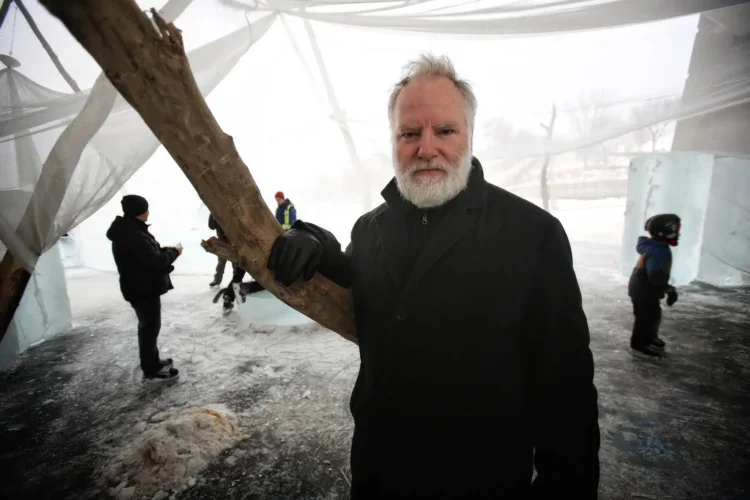
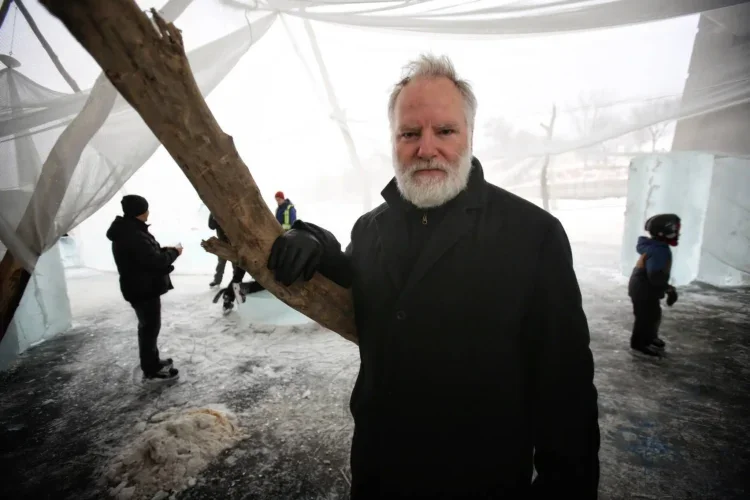
Guy Maddin gathers an unusual cast for The Confessions
Guy Maddin’s next feature is taking shape with a cast built for the director’s singular mix of the surreal and the theatrical. The Confessions, described as a “cautionary psycho-dramedy,” will star Hunter Schafer, Maya Hawke, Alexander Skarsgård and Harry Melling. Their presence gives the project a recognizable ensemble, though the premise and Maddin’s own description suggest that conventional star-driven drama won’t be the point.
Ari Aster and Lars Knudsen’s Square Peg is reuniting with Maddin after Rumours, which he co-directed with Evan and Galen Johnson. That return suggests an established working relationship rather than a one-off pairing, and it places the new film in a creative orbit already associated with unusual material. The production’s precise shape, however, remains difficult to judge from the details available so far.
The story follows condemned nuns bearing witness to a cursed love triangle involving a missing sea captain and his poet wife. Aster called the project “as singular and beguiling as anything they’ve ever written.” Maddin has described it as “part religio-maritime rough-music psychomachy, part hallucinated saltwater shaming parade.” The phrasing signals an interest in mood and theatrical excess, not a tidy historical account. This is more significant than it looks: the film appears to treat its religious and maritime ingredients as a way to unsettle the audience’s expectations about what kind of story it’s watching.
If you’re working in film, the cast may draw initial attention, but Maddin’s language points toward a harder sell: a project whose appeal depends on accepting strangeness as the organizing principle. That could make the film distinctive, while also leaving its eventual tone and audience difficult to predict.
Spielberg’s western and possible stage debut
Steven Spielberg’s western appears to be moving toward production. Cinematographer Janusz Kamiński told The Hollywood Reporter that filming is expected next year. The Sudeten Mountains’ hills, snow and fog are among the setting’s features, but further details about the film remain scarce. That limited information makes the location one of the few clues to its visual character; it doesn’t yet establish what kind of western Spielberg is making.
Here’s the thing: a production timeline and a striking setting can suggest momentum, but they don’t tell us much about the story, the scale or the film’s approach to the genre. Snow and fog could support an austere mood, though any stronger reading would be speculation. For now, Kamiński’s comments offer a concrete production signal without resolving the larger questions.
Spielberg may also be considering a stage musical by Tony Kushner and Jeanine Tesori, with a possible run at New York’s Public Theater in the 2027–2028 season, according to the New York Post. The subject hasn’t been confirmed. A Christmas theme has been rumored, but that remains unverified, so it’s best treated as a possibility rather than a description of the production.
A stage project would put Spielberg in a different production context, where performance unfolds in front of an audience and each night brings its own constraints. That’s a notable prospect for a director whose work is most familiar to audiences through film. Still, until the subject and plans are confirmed, the report remains an early indication of interest, not a settled next step.
Mendonça Filho returns to prewar Brazil
Kleber Mendonça Filho and Wagner Moura are looking to work together again after The Secret Agent. Their potential next feature, Foreign Correspondent, would trace events leading up to World War II through Recife, Mendonça Filho’s home city. The reported subject matter includes Brazil’s 1935 communist uprising and the rise of President Getúlio Vargas, whose government faced Nazi aggression.
The combination of national politics and a specific city could give the project a grounded point of view. Recife isn’t merely a backdrop in this account; it’s the place through which the film would approach events that reached beyond Brazil. That framing may help connect large historical forces to local experience, although the available details don’t yet explain which characters or events will carry the narrative.
The director has already put 14 books on his reading list for the project, a sign that the film may take a layered approach to its history. Research can provide a foundation for a period story, but a long reading list alone doesn’t reveal how the finished work will balance political context with character. The pairing of Mendonça Filho and Moura offers a clear through line from their recent collaboration, while the Recife setting gives the story a distinct local perspective.
And yet the project is still described as potential. Its historical scope is intriguing, but the central creative question is how it will turn a dense political period into a film rather than a sequence of background explanations. A locally rooted perspective could be its strongest asset.
Herzog follows Karl Bushby’s return home
Werner Herzog is developing a project around British adventurer Karl Bushby, who has spent 28 years traveling around the world on foot and by other means. As Bushby reaches home, the journey includes reunions with his mother and 36-year-old son, as well as meeting his 12-year-old granddaughter, according to Asharq Al-Awsat. Those family encounters give the project an immediate human dimension alongside the scale of the journey.
The project has been developing alongside Bushby’s journey: its production company has provided financial and logistical support for 16 years. That history means the filmmakers have been connected to the undertaking well before its homecoming, a structure that could let the project follow both the expedition and the long wait for its end. The focus may now shift from distance covered to relationships changed by years apart. The return home. A simple phrase for a complicated transition.
Herzog’s involvement puts the focus on a homecoming shaped by decades of travel, with the personal reunions now coming into view. The story’s potential lies in the contrast between an outward journey measured in miles and a return measured in relationships. What this means for you as a viewer is that the most compelling material may come after the adventure’s physical endpoint, when Bushby has to re-enter a family life that continued in his absence.
What these projects signal
These announcements share little in subject or scale, yet each is built around a clear point of tension: Maddin’s collision of religious imagery and surreal performance, Spielberg’s still-mysterious western, Mendonça Filho’s local view of international history, and Herzog’s portrait of an expedition reaching its personal endpoint. That variety is a reminder that early project reports often reveal a director’s interests before they reveal a film’s finished form.
For now, the claims also vary in certainty. Some details come from reported comments or a named source, while other elements remain possible, unconfirmed or described only in broad terms. Readers should resist treating every casting, setting or scheduling detail as evidence of a settled production plan. The projects are worth tracking, but the next useful signal will be clearer information about what’s actually being made and when.



Discussion
Sign in to join the discussion.