Opening in 2027, Fondazione Vezza will start a decade-long art trail among woodland and medieval monastery ruins in Monforte d’Alba.
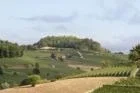
Fondazione Vezza is planning a decade-long public art project in Monforte d’Alba, pairing new commissions with woodland paths and the remains of an early medieval monastery. The site is due to open in 2027, with works by US artist Kathleen Ryan and Italian sculptor Alessandro Pessoli setting the initial course. The plan brings contemporary art into a setting whose character comes partly from its landscape and long history. That combination can make a visit feel different from moving through a gallery, where the work and its surroundings are usually more clearly separated.
A route shaped over time
Founded by Piedmontese entrepreneur Sandra Vezza and her son Charley, the project will occupy Colle San Pietro hill in the Langhe wine region, about 60 kilometres southeast of Turin. Its trail will pass through the woodland and the ruins of the monastery of San Pietro, first documented in 1014. The route will make the site itself part of the experience: visitors will encounter art while moving between trees, paths and historical remains, rather than viewing a sequence of works in one building. That format also gives the terrain a role in shaping how the project is seen.
Flavio del Monte, formerly director of institutional relations at Milan’s Massimo de Carlo gallery, will oversee the project. The foundation says it plans to invite one or more artists each year to respond to the site’s paths, trees, architecture and history. Over roughly ten years, those commissions will form a route designed to evolve while retaining the site’s character. Here's the thing: a long schedule gives artists room to respond to a place in different ways, but it also makes continuity a curatorial challenge. The works will need to speak to the setting without reducing it to a backdrop.
Permanent works, open access
Sandra and Charley Vezza will fund production; the budget has not been disclosed. The commissioned works will remain permanently installed onsite, according to a foundation spokesperson. Entry will be free, with the project aimed at the broadest possible public. Permanent outdoor works bring practical demands alongside artistic ones: paths and installations have to remain accessible, and the works must be able to live with changing conditions at the site. The announcement doesn't specify how that care will be handled over time.
The foundation describes the opening as the start of a long-term inquiry into contemporary art, place and the Vezza family’s vision. Supporters include the Comune di Monforte, the Comune di Milano and Gagosian Gallery. Their involvement gives the project institutional connections, while the free entry policy sets a clear public-facing ambition. Whether the route draws repeat visitors may depend on how meaningfully each new commission changes the experience of a place people already know.
The Vezzas’ design background
The project adds an art initiative to the family’s work in Italian design. Sandra and Charley founded Barolo-based Italian Radical Design Group in 2022 to preserve and promote historic Italian design brands, according to the company website. The group acquired Memphis Milano, the postmodern design collective, in 2022. The Vezzas bought Gufram, known for pop art-inspired furniture, in 2012. That record suggests the family has experience building projects around design heritage and public identity. The new foundation extends that interest into a place-based art program, though its emphasis is on commissions that will accumulate over time.
What a decade-long format asks of the project
With free access and permanent installations, Fondazione Vezza’s defining feature will be its gradual growth: each year’s commissions will add another layer to a route rooted in the region’s history and terrain. This is more significant than it looks. A project built in stages asks visitors to understand the site as unfinished in a productive sense, with its eventual shape dependent on choices that have yet to be made.
And yet, duration alone doesn't guarantee depth. The artists’ responses, the relationship between the works and the monastery’s remains, and the foundation’s stewardship will determine whether the route feels like a coherent inquiry or simply a series of additions. (And this is the part most people overlook.) A permanent work can change how a familiar path is read, but it can also become part of the scenery. If you're working in this space, the useful test will be whether each commission gives visitors a reason to look again. A slow build.



Discussion
Sign in to join the discussion.