A French court ruled that a 2024 Sotheby’s sale of a Pissarro was invalid, ordering restitution to Salomon Flavian’s heirs and disclosure of the buyer.
A disputed sale and a restitution order
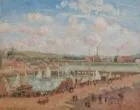
A French court has ruled that Camille Pissarro’s Darse de pêche et bassin Duquesne must be returned to the heirs of Salomon Flavian, a Jewish banker whose collection was seized in Paris in 1941. The 5 November judgment cancels the painting’s sale at Sotheby’s London and gives the auction house two months to disclose the buyer’s full identity, with a €1,000 daily penalty for delay.
The painting, a 1902 view of Dieppe’s port in Normandy, sold for £1.2 million on 25 June 2024. Sotheby’s catalogue noted Flavian’s ownership from 1935 and the work’s listing in the French government’s 1947 Répertoire des biens spoliés, which records looted property. It also said the sale followed a settlement between the current owner and Flavian’s heirs.
Sotheby’s told the court that the heirs’ consent had been secured by Mondex Corporation, a Toronto-based firm that works on the return of looted art. But at a 18 September hearing, Corinne Hershkovitch, representing seven Flavian heirs, said only two relatives signed the agreement and the others had not been consulted.
Conflicting accounts of the painting’s history
Mondex and Sotheby’s relied on research arguing that British artist and collector Edward Le Bas acquired the Pissarro from dealer Paul Rosenberg in the late 1930s. On that account, the painting had left Flavian’s collection before the Nazis seized it in 1941.
The judges found no “direct and convincing evidence” for those transactions. They instead accepted the family’s research as a body of “precise, serious and concurring elements” showing that the painting was looted during the Second World War.
Mondex lawyer Melina Wolman says the company will appeal, arguing that the judgment creates “major difficulties in regard with historical factors”. She pointed to Le Bas’s name in an entry in a 1939 catalogue raisonné edited by Rosenberg. The court treated that reference as one of several “contradictory elements” and said neither Mondex nor Sotheby’s provided direct proof of a sale at a time when France was at peace and its art market was well structured.
Hershkovitch called the ruling “a very important ruling” that opens the way to restitution sought by the family since the war. She said it showed Mondex had failed in its mission and that Sotheby’s must answer for selling a looted work.
What the judgment means for Sotheby’s and the buyer
Sotheby’s London said it was “disappointed by the judgement regarding the restitution”, while welcoming the dismissal of all claims against the auction house. A spokesperson described the painting’s history as complex and said Sotheby’s recognised the Flavian family’s losses, adding that the company had handled the matter responsibly and with respect.
Sotheby’s lawyer, Remi Sermier, challenged the French court’s authority over a sale that took place in London. The court held that French law makes later sales void when the dispossession in 1941 is annulled. It did not, however, cancel the separate agreement between Mondex and the two heirs who waived their rights to the painting in return for a share of the sale proceeds.
Sotheby’s says it is considering whether to join the appeal and has not agreed to identify the buyer, citing client confidentiality. The auction house also said the ruling would need to be enforced through a process in the UK.
If the heirs ultimately recover the work, they will have to deal with its current possessor, who may seek compensation from Sotheby’s. The auction house could, in turn, pursue Mondex and the seller. Sources close to the case say the settlement between Mondex and the vendor contains an indemnity clause benefiting Sotheby’s.
The appeal and the buyer disclosure order will determine how the ruling plays out beyond the French court. For now, the judgment puts the painting’s wartime ownership at the center of the case and leaves the next steps dependent on proceedings in both France and the UK.

Discussion
Sign in to join the discussion.