Five artists and five composers will share £75,000 in no-strings-attached funding, giving them room to develop their work.
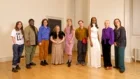
The Paul Hamlyn Foundation’s Awards for Artists give ten recipients something many arts grants don’t: funding they can use without strings attached. This year, five artists and five composers were selected to share £75,000, with the foundation presenting the awards as a way to give recipients freedom to develop creative ideas amid cost-of-living pressures. The structure matters: the award is intended to support the recipient’s work without requiring them to direct the money toward a prescribed project or set of costs. That leaves artists to decide where support is most useful, whether their immediate need is time, materials, experimentation or room to change direction.
For cultural funding, flexibility is a practical feature, not just a phrase in an announcement. A grant tied to a particular output can help bring a defined project to completion, while unrestricted funding gives the recipient more control over how to respond to conditions in their practice. The trade-off is that the award’s public description tells us less about what each person will make with the money. That’s the point, in part: the foundation is backing the artist’s judgment as well as their work.
Artists working across forms
Among the recipients are Hayley Tompkins, whose installations bring painting together with found objects, film, photography and furniture, and Rory Pilgrim, whose work examines how activism, spirituality and music can create spaces for connection. Their practices show the range contained in the word “artist” here: one combines objects and image-based media in installations, while the other draws on forms that can connect personal and collective concerns. The award doesn’t prescribe a single medium or type of outcome.
That breadth also helps explain why flexible support may be valuable. Work involving several forms can require changes in emphasis as ideas develop; a fixed project brief may not capture every turn in the process. This is more significant than it looks. Giving recipients room to decide how to use funding recognizes that creative work can be difficult to plan in a straight line, especially when artists are managing financial pressure at the same time.
Tompkins previously exhibited at Scotland + Venice in 2013 alongside Corin Sworn and Duncan Campbell. She said the award had “still not felt real yet” and that additional resources would give her room to “feel and move a bit differently now.” The words describe an immediate response, but they also point to what unrestricted money can offer: permission to reconsider the pace or direction of work, without the award itself dictating the next step. For a recipient, that freedom may be less visible than a finished exhibition, but it can shape what becomes possible afterward.
Pilgrim, born in Bristol, was nominated for the Turner Prize in 2023 for RAFTS, a commission presented at Serpentine Galleries and Barking Town Hall. They described the funding as “invaluable breathing space, autonomy and financial security” after working through many intensive processes. “Breathing space” is telling: the benefit isn’t framed only as a way to produce another piece, but as support after demanding work. The award’s value, in their account, includes having more control over what comes next.
The other artist recipients are Georgina Starr, known for performance works including Androgynous Egg (2017); Dublin-born Racheal Crowther; and learning disabled artist Linda Bell. The accompanying photograph shows the recipients present at the awards, with Crowther absent. The short descriptions offer only a glimpse of the group, and they don’t establish a shared artistic agenda. What connects the recipients, according to the announcement, is the award itself and the discretion it gives them over the funding.
Recognition across disciplines
Five composers were also recognised, including Daudi Matsiko and Ayanna Witter-Johnson. The foundation’s announcement names the full group of ten recipients. Bringing composers into the same award program signals that the foundation’s support reaches beyond the visual and performance practices represented in the artist descriptions. The source gives limited detail about the composers’ work, so the announcement’s main point here is the scope of the selection: artists and composers are both receiving support under one scheme.
That shared structure may matter to recipients whose work doesn’t fit neatly into a single category, though the announcement doesn’t say how the foundation defines or assesses each discipline. What this means for you, if you’re working in this space, is that the award’s value lies partly in its terms: support can be directed by the person doing the work, across the needs their practice actually presents. The freedom is real, but its effects will depend on each recipient’s circumstances.
Long-running support
The awards have been running since 1994. The Paul Hamlyn Foundation says it has since made 377 awards to artists, distributing more than £12 million. Past recipients include Phyllida Barlow, Yinka Shonibare and Alberta Whittle. Those figures establish continuity and scale, but they don’t, on their own, show what the awards changed for individual recipients or how the money was used. The program’s stated design offers a clearer measure of its intent: fund artists while leaving decisions about the support with them.
The judging panel included Joe Hill, director of Yorkshire Sculpture Park; Melissa Blanchflower, senior curator at Turner Contemporary in Margate; and Sheryll Catto, artistic director of ActionSpace. Their roles place the selection within an arts context spanning a sculpture park, a contemporary art institution and an organization focused on learning disabled artists. The available information doesn’t describe the panel’s deliberations or selection criteria, so the panel’s composition is useful context, but not a full account of how the decisions were made.
The model’s defining feature is its flexibility: recipients decide how to use the money. For artists balancing demanding creative work with financial pressure, that autonomy may matter as much as the award’s profile. And this is the part most people overlook: funding terms shape the work indirectly, by setting how much control the recipient has over time and priorities. A grant with broad discretion can offer valuable room to respond, though it can’t remove the wider pressures the foundation says artists are facing.
There’s no single outcome to point to yet. The award announcement identifies recipients and describes the support on offer; it doesn’t report what the funding will produce. That uncertainty is consistent with a program designed to give artists latitude. The test will be less whether every award leads to a public-facing project than whether recipients find the freedom useful in developing their work.
Photo credit: Emile Holba



Discussion
Sign in to join the discussion.