Timothy Boomer uses focus stacking to reveal the intricate forms of cynipid wasp galls—and the natural processes that shape them.
Small structures, surprising origins
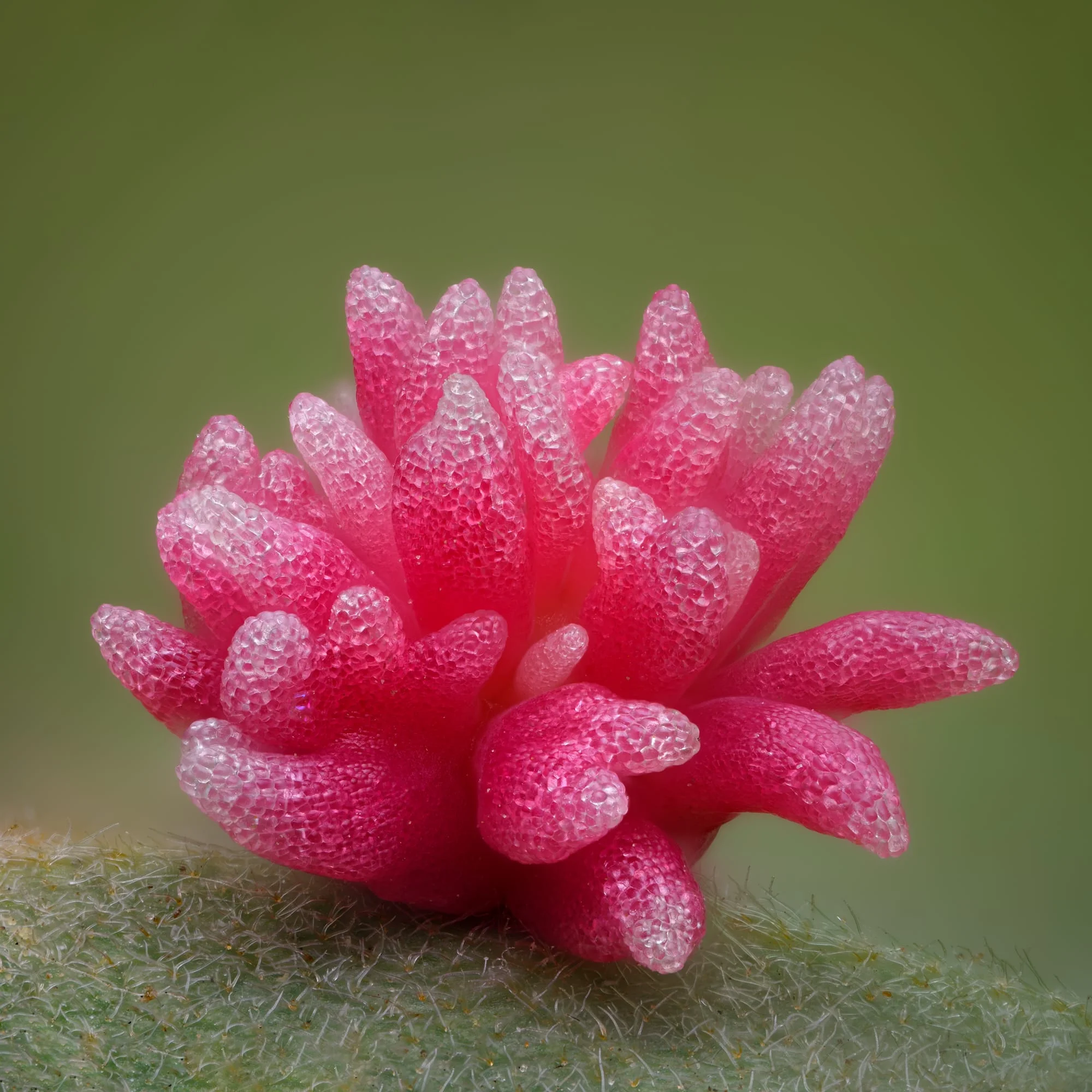
At first glance, an oak gall can look like a tiny sculpture: spined, striped, or bright enough to seem unreal. Nature photographer Timothy Boomer photographs these structures at close range, bringing their intricate surfaces into view while leaving their natural forms intact. The images ask viewers to pause over shapes that might otherwise register as bumps or blemishes on a leaf. Their appeal comes partly from that shift in scale: familiar plant growth becomes a landscape of ridges, points, and color. The subject is strange, but the process behind it is biological rather than ornamental.
Many of the galls Boomer focuses on are made by cynipid wasps, also called gall wasps. The insect’s larvae prompt a host plant to grow a gall through chemicals they introduce into its tissue. The resulting structure shelters the developing larva and supplies it with food, making the gall an unusually close relationship between insect and plant. Once mature, the wasp emerges and continues the cycle. Researchers estimate there are at least 1,300 cynipid species worldwide, many associated with particular plants or plant parts. That variety helps explain why a gall isn’t one fixed shape: the insect, the host, and the part of the plant involved all matter.
“Galls can be brought about by many different organisms, but I tend to focus on the ones induced by cynipid wasps because they are the most visually stunning (at least in my opinion),” Boomer tells Colossal. His preference is clear in the photographs, where the gall’s unusual surface becomes the main event. But the visual drama also points to a less obvious story: each form reflects a living interaction, not simply a striking object found on a branch. That’s what makes the images more than a catalogue of natural curiosities.
When a gall’s development goes off course
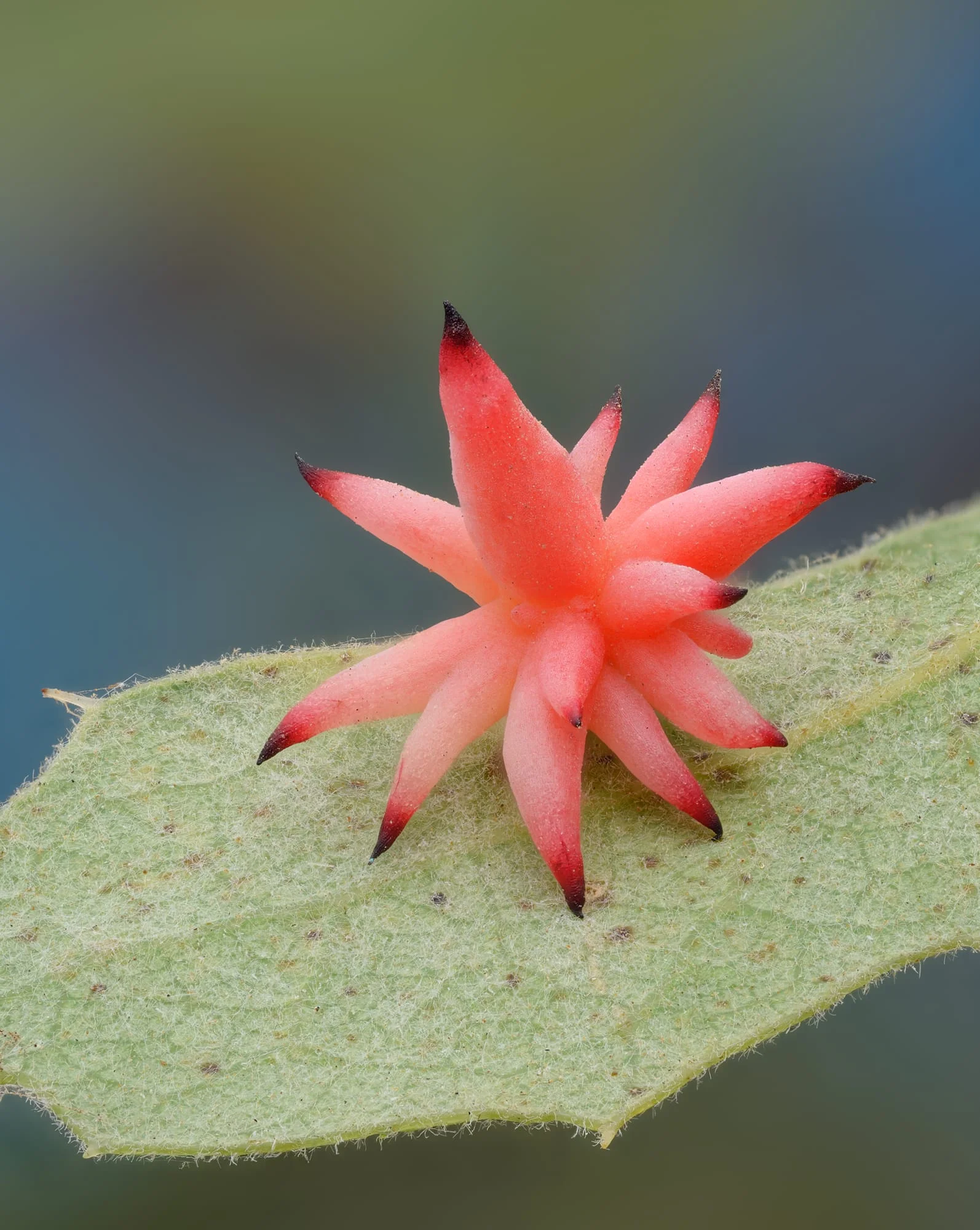
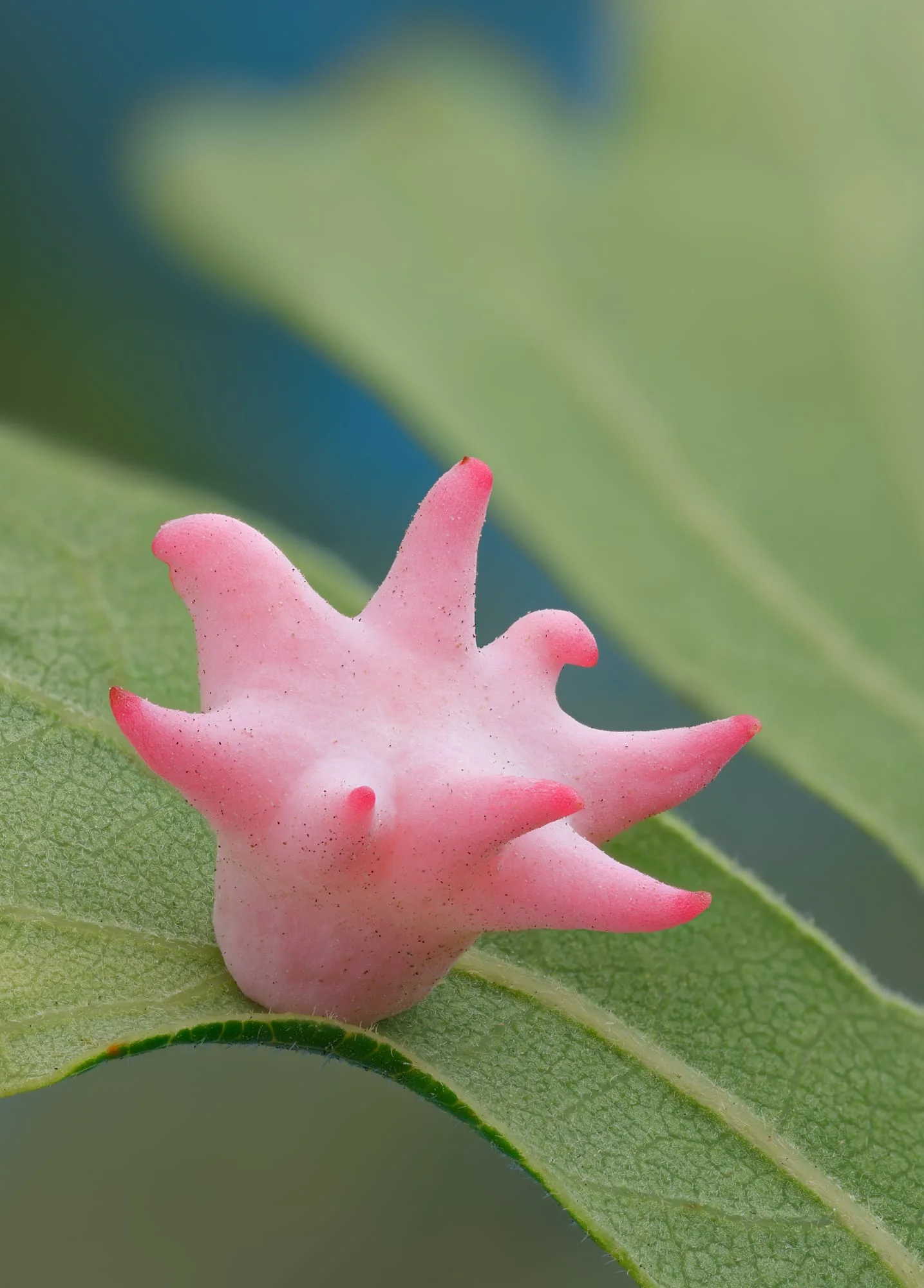
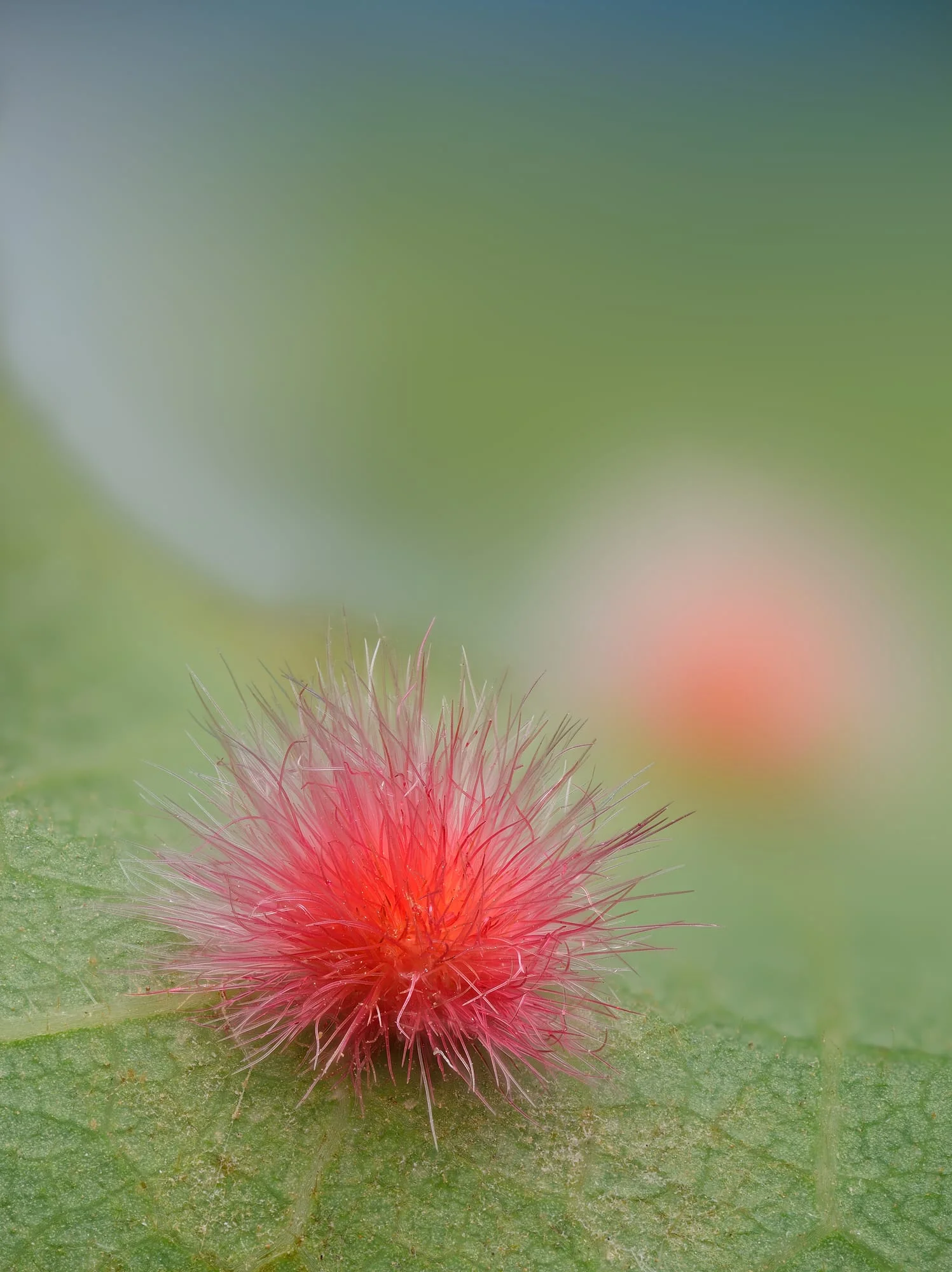
Their forms can shift when something disrupts the gall’s growth. Boomer describes the spined turban gall as usually bubblegum pink, with spines around a comparatively flat center. One specimen he photographed was darker, with blackened spike tips and spines across its surface. He attributes the difference to another organism entering the gall early in its development. The contrast matters because it shows how a structure with a recognizable form can still vary when its development is interrupted. In macro photography, those differences become impossible to miss.
“In this case, normal development was interrupted by a non-inducer entering the gall at an early stage,” Boomer says. “I’m not a scientist, so I won’t pretend to fully comprehend the intricacies of how all this plays out, but I think of it as a ‘home invasion’ that actually alters the home.” The analogy is vivid, though it also captures a limit in what the photographs can tell us: they show the altered result, while the precise biological sequence can be more complicated. That distinction is useful. A striking image can invite scientific questions without pretending to answer them. And this is the part most people overlook: the gall isn’t a passive container, but plant tissue whose growth has been redirected.
Making the minute visible
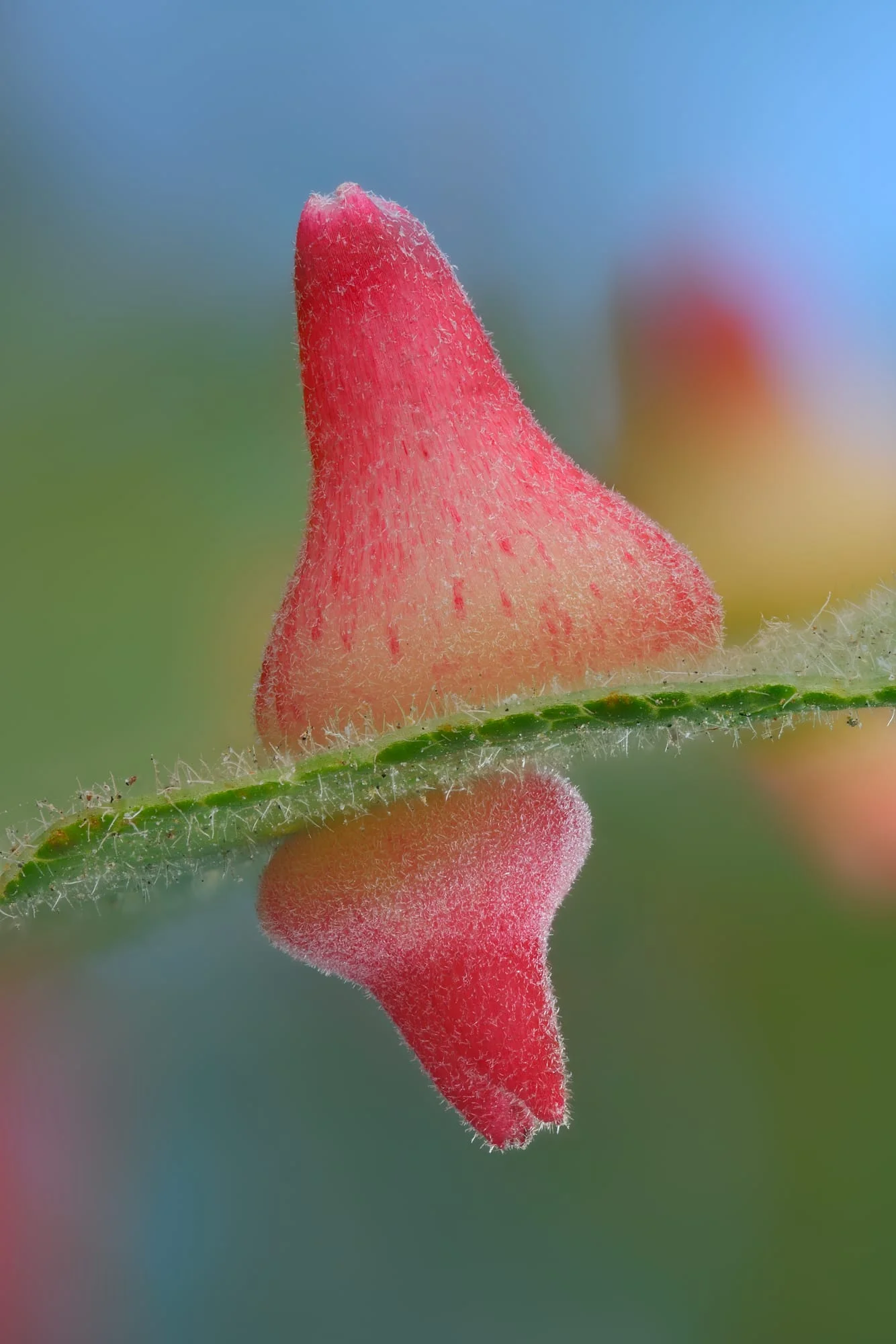
At this scale, a single photograph often can’t keep the full subject in focus. Boomer takes hundreds, and sometimes thousands, of images at different focus points, then layers them digitally using focus stacking. The technique combines the sharp portions of separate exposures so that more of a tiny subject can appear in focus at once. It takes care and time, especially when the details being recorded include small spines and subtle surface changes. The finished image is therefore a constructed view of the subject, built from many photographs, even as Boomer aims to keep the gall’s appearance faithful to what occurs naturally.
His Photoshop adjustments are minimal, guided by a preference for showing what occurs naturally. “Nature does not need to be ‘enhanced,'” he says. That restraint gives the images a clear point of view: the photographer’s work is in revealing detail, not redesigning it. There’s still an editorial choice in what gets framed and brought into focus, as there is in any photograph. But the emphasis here is on making the existing form legible, rather than adding effects that would compete with it. A careful photograph can change what a viewer notices without changing the subject.
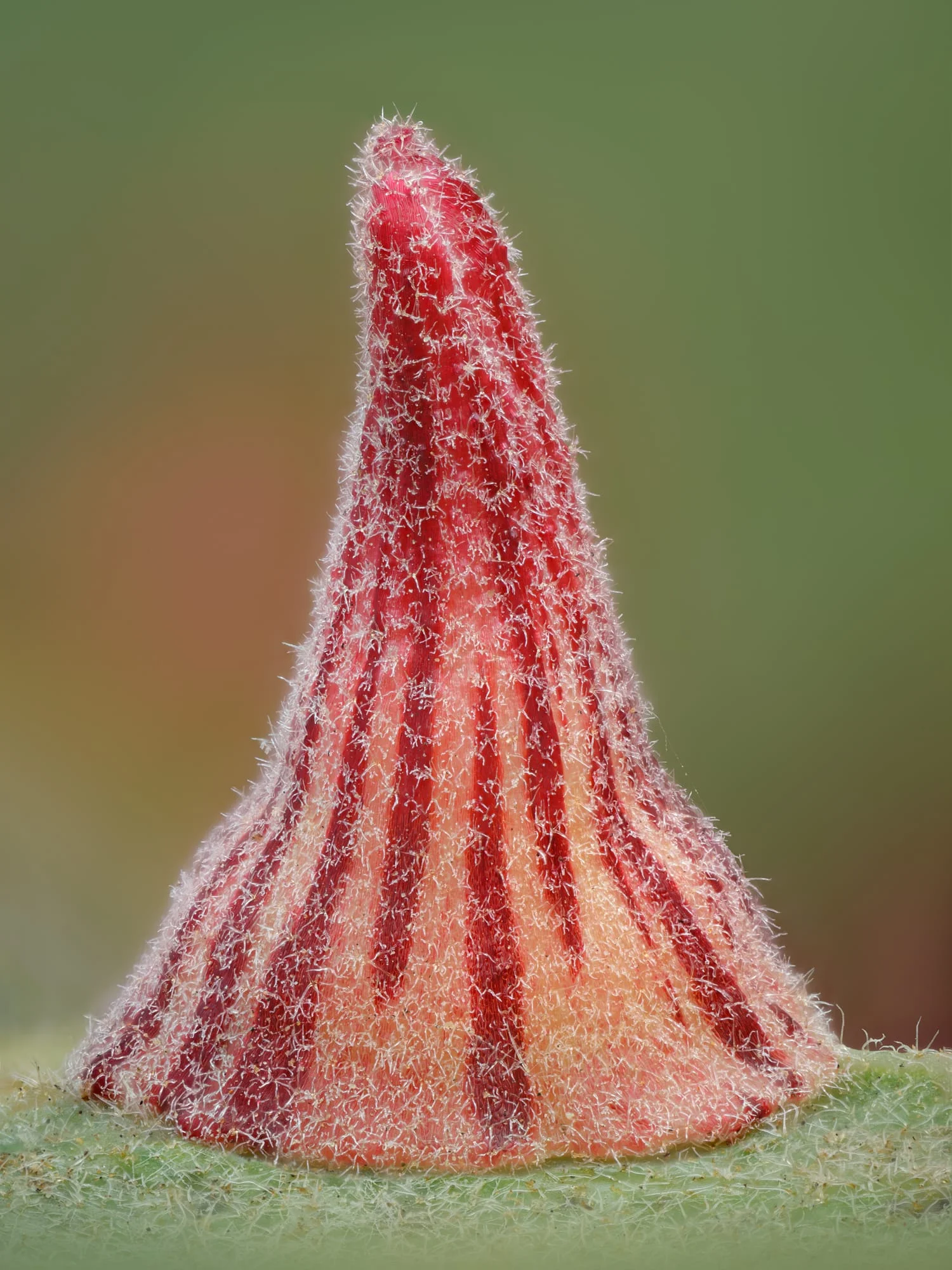
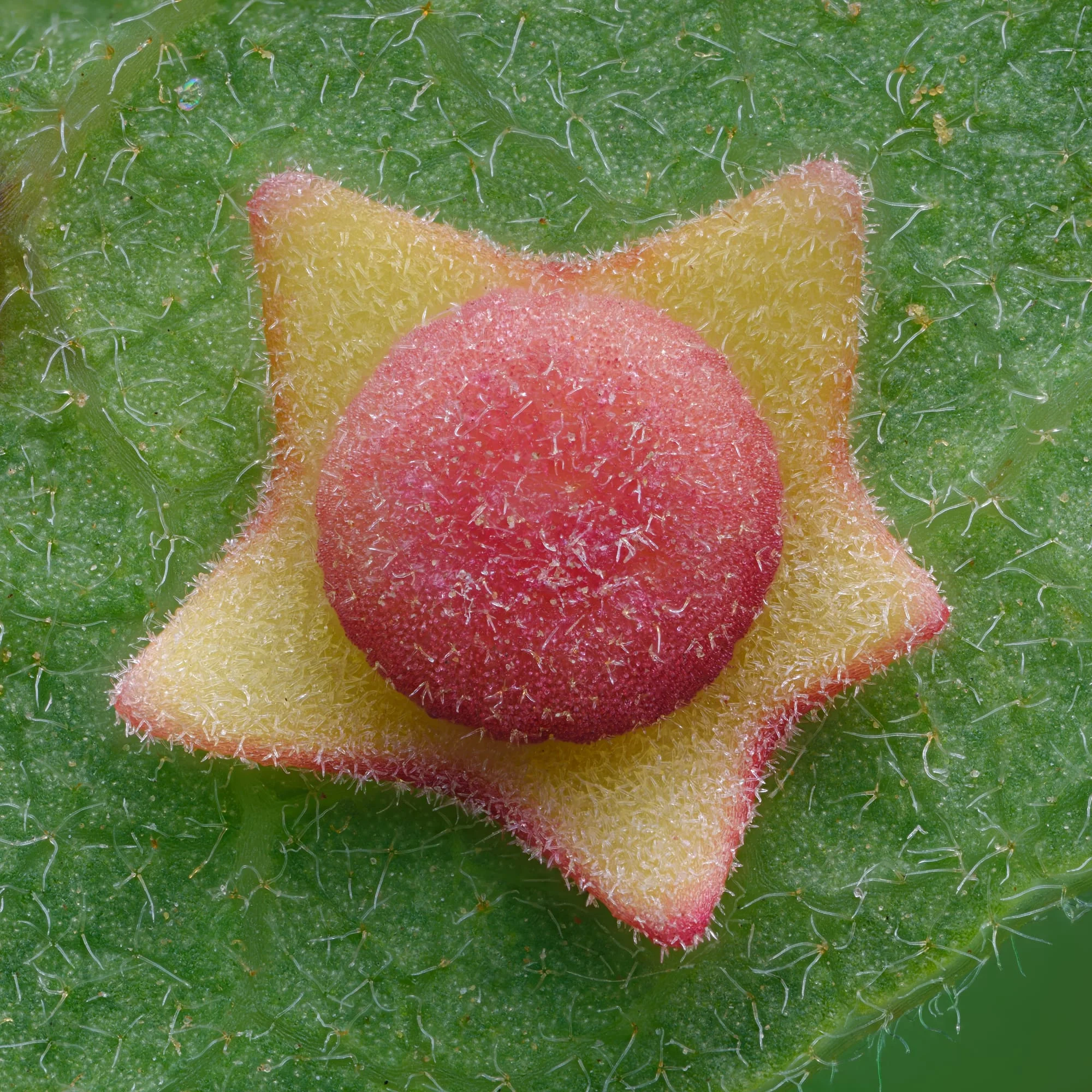
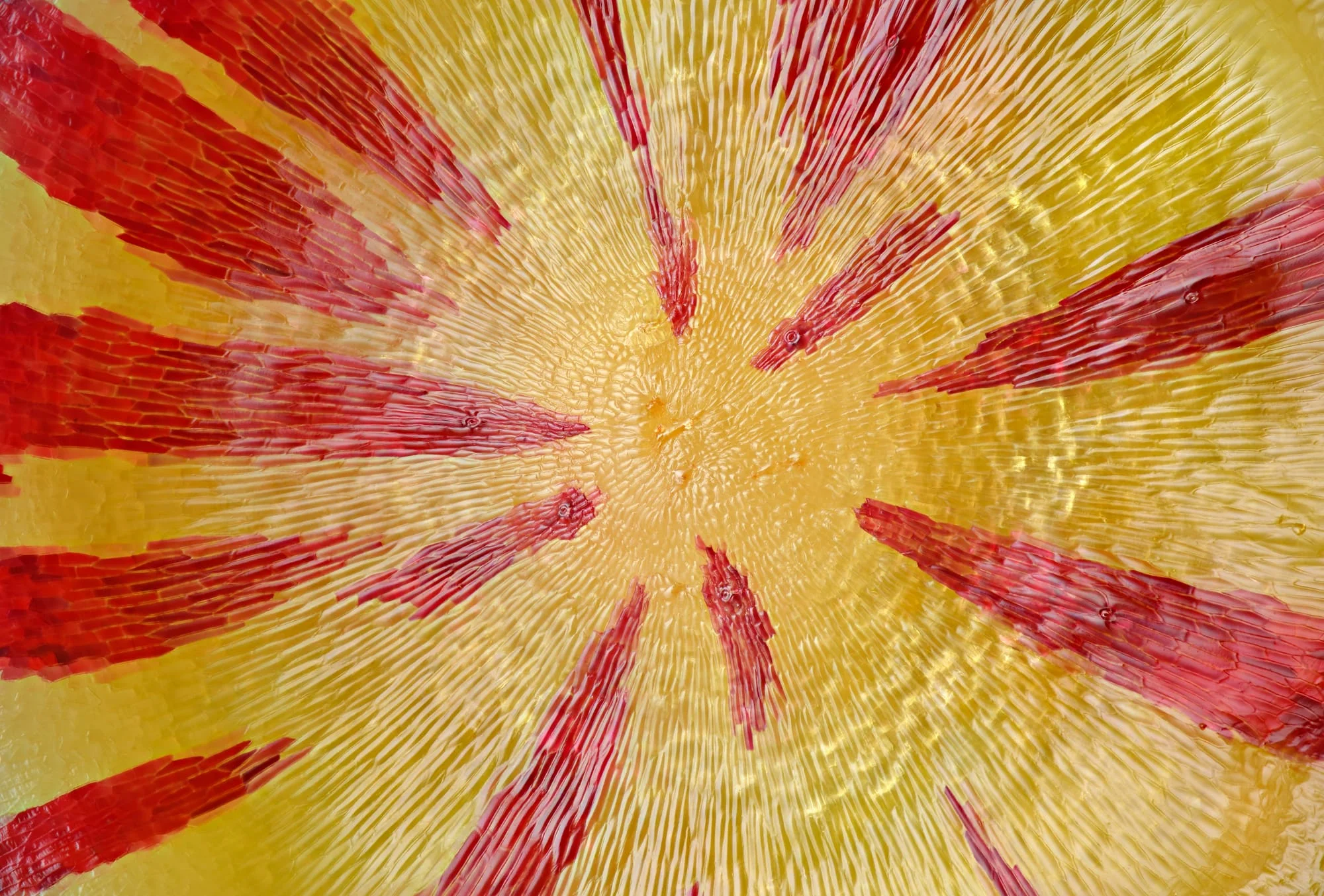
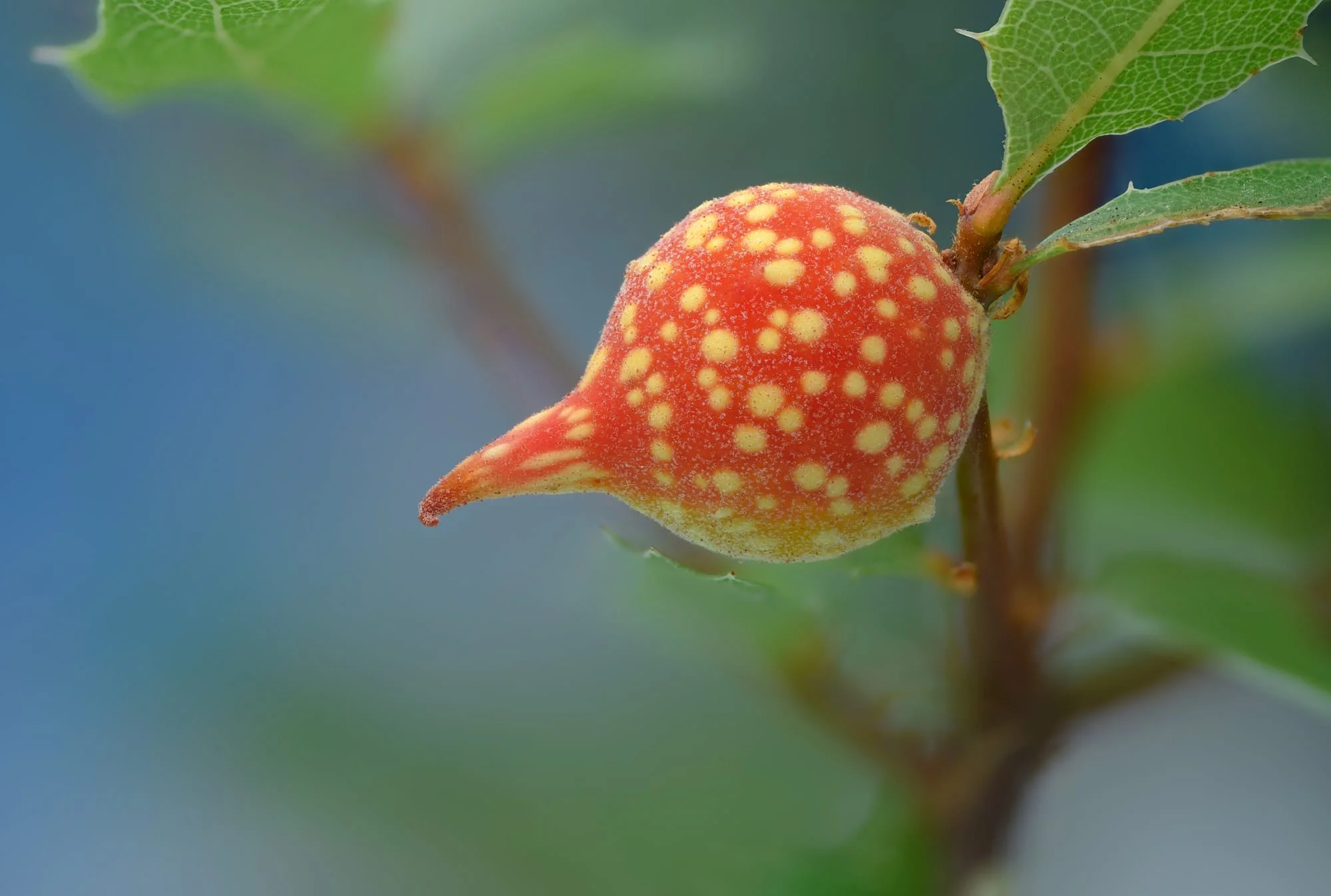
The photographs reveal a wide range of shapes, from the urchin gall on blue oak to red cone galls on valley oak and the ridged surface of a single disc gall. Seen together, they make variation the story: rounded forms, sharp projections, and tightly patterned surfaces all emerge from the same broad category of plant growth. Some images give a sense of the whole gall, while the extreme close-up of the disc gall directs attention to its texture. That difference in scale makes the collection easier to read as both portraiture and observation. Boomer’s work also includes slime molds and flowers; more of it is available on Instagram.
Why looking closer matters
These images make a compelling case for looking closer: a gall is both a product of an insect’s life cycle and a record of the conditions that shaped its growth. This is more significant than it looks, because the same object can be read as an image, a habitat, and evidence of a biological interaction. If you're working in this space, that combination is a useful reminder that visual documentation can make small natural processes easier to notice, even when it can’t replace scientific study. Here's the thing: attention is part of the subject. A gall that might seem incidental at ordinary viewing distance becomes intricate when the photograph gives its structure room to register. Sometimes, simply seeing the detail is the point.



Discussion
Sign in to join the discussion.