The restoration of Villa Silvestri Rivaldi uncovers stunning 16th-century murals long concealed by nuns, marking a significant cultural discovery in Rome.
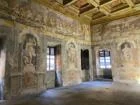
The Villa Silvestri Rivaldi in Rome, a locale shrouded in historical secrecy, is undergoing restoration by the Istituto Centrale per il Restauro (ICR), unveiling a treasure trove of 16th-century murals. These exquisite works, originally crafted by prominent artists, were obscured by a layer of plaster due to their nudity and pagan themes, deemed inappropriate by the nuns who owned the villa in the 17th century.
Located along the bustling Via dei Fori Imperiali, towering near the iconic Colosseum, this historical residence once hosted influential figures including Eurialo Silvestri, a wealthy prelate, in its mid-16th-century heyday. Beneath the peeling layers of paint and brown plaster, the restoration team has begun to expose dramatic battle scenes, divine mythological figures, and intricate zodiac symbols.
One standout feature echoes the heavenly portrayal of Christ in Michelangelo’s Last Judgement from the Sistine Chapel, showcasing the figure of Jupiter in a poise of commanding authority. Not only does this project shed light on the villa's artistic significance, but it also rekindles interest in the stories behind its illustrious occupants.
The Murals' Hidden History
Paola Mezzadri, a conservator leading the project, reflects on previous attempts to uncover these murals between 2002 and 2006. Initial findings indicated the presence of artwork beneath the layers, but progress stalled due to lack of funding from the then-religious owners. Post-1970, the villa had various functions, including an arts center and a communal gathering place, until the Lazio region acquired it for €25 million in 2024.
The 300-year reign of the nuns ended due to their disapproval of the nudity depicted, leading to the murals being covered up. During their tenure, the space thrived as a textile workshop, immersing itself in community service, until it fell into various states of disarray after their departure. While the nuns had noble intentions, their actions represent a broader trend in art history: the suppression of certain themes deemed unacceptable during various social epochs.
Reviving Artistic Masterpieces
The current restoration focuses particularly on the Hall of Divinities, where monumental frescoes of goddesses come alive in vibrant hues of orange and green. Art historian Gianni Pittiglio notes connections to the artist Prospero Fontana, based on drawings found at the British Library that link him to these frescoes. The intricate designs were likely initially guided by Perino del Vaga, an eminent artist under the influence of Ghirlandaio. This historical connection adds an essential layer to understanding not only the artworks themselves but also the networks of artists operating in Renaissance Rome.
Progressing to the Hall of Emperors, the team is meticulously exposing epic scenes of soldiers, cavalry battles, and even wildlife, alongside portraits of historic emperors like Titus and Hadrian. “Every visit reveals more discoveries,” says Pittiglio, expressing the thrill of working on this extensive project, which he deems might be the highlight of his career over the last 25 years. Such sentiments highlight the personal stakes involved in the restoration; for many involved, it's not just an artistic endeavor, but a connection to their own historical narrative.
Community Engagement and Sustainable Practices
Circular in nature, the restoration project prioritizes community involvement, inviting locals who remember the villa’s mid-20th-century life to share their experiences. These narratives not only enrich the historical tapestry surrounding the villa but also foster a sense of collective ownership. Mezzadri emphasizes the use of eco-friendly techniques, favoring water-based solutions and laser technology to strip away the overpaint without damaging the delicate original artworks. The project serves as a model for future restorations, balancing art preservation and environmental concerns.
While the completion of the restoration remains uncertain, hope exists that the Villa Silvestri Rivaldi will soon stand as a major attraction, akin to the Villa Borghese or Castel Sant’Angelo. “It’s a remarkable project,” says Mezzadri, indicating the significance of this endeavor in reviving the villa’s historical importance. The blend of stunning artistry and local engagement reflects a broader renaissance in the way society interacts with its cultural heritage.
Implications and Future Outlook
This restoration doesn't only aim to uncover lost art; it brings to light the tension between art and censorship across centuries. What this means for you, especially if you're working in this space, is an opportunity to reconsider what is worthy of preservation in terms of societal values. More than just a simple restoration, it prompts questions about who decides what art is appropriate and what stories are allowed to be told.
The endeavor not only restores physical structures but also resurrects the rich tapestry of cultural heritage that shaped the Rome we know today. With each layer of paint removed, an exciting chapter in art history is being written, beckoning visitors to witness the beauty that lay hidden for centuries. The Villa Silvestri Rivaldi may well become a focal point for dialogues on art, history, and what it means to celebrate one’s heritage—especially in a city that has served as a crossroads for culture and civilization for millennia.
Discussion
Sign in to join the discussion.