Thomas Kaplan has added a significant Rembrandt piece, St John on Patmos, to his collection while focusing on wildlife conservation through art sales.
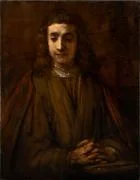
Long considered a likeness of Rembrandt's son Titus, recent scholarship and conservation efforts have confirmed that the painting recently purchased by Thomas Kaplan is, in fact, a portrayal of St John on Patmos. The piece, sold for £6.75 million (approximately $9 million) at a Sotheby’s auction last December, marks the 18th work by Rembrandt added to Kaplan's collection over the past two decades. Kaplan’s ownership reinforces his reputation as one of the world's foremost collectors of the Dutch master’s work.
Interestingly, just two months before this acquisition, Kaplan sold a notable Rembrandt drawing, Young Lion Resting, for nearly $18 million at Sotheby’s. This may raise eyebrows regarding the motivations of a collector who relinquishes an exceptional artwork. Kaplan himself describes the decision as “paradoxical.” The proceeds from this sale are directed towards creating a fund for big cat conservation through the Panthera organization, a cause deeply important to both Kaplan and his wife, Daphne Recanati Kaplan.
Regarding his new acquisition, Kaplan emphasizes its significance: “It's about preserving and returning to the public domain a breathtaking late masterwork that has been hidden for over a century,” adding depth to the narrative of his collection.
This late-career oil painting by Rembrandt has a tumultuous history. After its last public exhibition in 1923, the painting remained largely forgotten, known only through a low-quality photograph. Initially misattributed, it was acquired in 1904 for a mere $160 by an American dealer who believed it was a work by Carel Fabritius. Subsequently, the painting was sold to Wilhelm Valentiner, who appreciated its true worth and bought it for $525, mistakenly believing the subject was Rembrandt's son Titus due to familial resemblances.
In 1923, the painting was purchased by Fritz Thyssen, whose complex ties with the Nazis marked a controversial ownership period. After a series of personal and political upheavals, including a stint in concentration camps, Thyssen managed to regain possession of the painting post-World War II before it moved into family trust upon his death in 1951.
This work remained in obscurity until recent cleaning and conservation efforts brought to light various details that shifted its identified subject. The depiction of a palm tree, symbolizing the Greek island of Patmos, and an eagle, associated with St John, emerged during restoration. These features, previously obscured, clarified the painting’s narrative: it illustrates St John resting over a manuscript, encapsulating his contemplations while authoring the apocalyptic visions found in the book of Revelation.
Experts, including Arthur Wheelock, a noted specialist advising Kaplan, assert that the Sotheby’s attribution to Rembrandt is now widely accepted in art circles. Wheelock posits that the artist likely utilized his son as a model not as a direct portrait but to draw a connection between his paternal feelings and the evangelist's message in Christian theology.
The Leiden Collection is set to announce an upcoming exhibition in Europe, scheduled for autumn 2027, which will include the newly acquired St John on Patmos, marking its first significant public showing after the brief display at Sotheby’s last year.
Kaplan’s significant investments in Rembrandt raise questions about his influence on the art market. Sellers of Rembrandt works are likely to consider Kaplan a priority buyer, which could lead to inflated auction prices. Kaplan himself acknowledges, “perhaps, in specific moments,” but emphasizes that the prices for masterworks derive fundamentally from their scarcity. The rarity of such an intensely personal painting emerging from decades in private hands naturally fosters heightened interest among collectors.
With the acquisition of St John on Patmos, Kaplan continues his dual legacy as both a guardian of art and an advocate for wildlife conservation. The interconnectedness of his collecting pursuits and philanthropic efforts presents a compelling narrative in the art world that could inspire further dialogue on the role of art in social advocacy.

Discussion
Sign in to join the discussion.