Thorsten Sadowsky will take over Oslo’s Munch Museum in 2027, bringing experience leading European museums and a focus on widening perspectives on Edvard Munch.
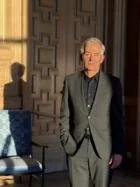
Thorsten Sadowsky will take over Oslo’s Munch Museum on 1 May 2027, bringing experience from several European institutions to a museum whose defining strength is also its central curatorial challenge: keeping a collection devoted to one artist intellectually open. That balance will shape the job. The museum must preserve close attention to Edvard Munch’s work while giving visitors reasons to see it in fresh company and in relation to questions that extend beyond the artist himself.
Sadowsky currently leads Stiftung Schleswig-Holsteinische Landesmuseen Schloss Gottorf, which manages museums in northern Germany, including the Museum of Art and Cultural History Schloss Gottorf and the Jewish Museum Rendsburg. His previous director posts include the Museum der Moderne Salzburg, Museum Kunst der Westküste in Alkersum and the Kirchner Museum Davos, dedicated to German Expressionist Ernst Ludwig Kirchner. The range matters: these institutions differ in their collections and remits, giving Sadowsky experience beyond the single-artist model he’ll now encounter in Oslo.
His experience in Davos shaped how he thinks about single-artist museums. “Such a museum offers an exceptional opportunity to engage with an artist’s oeuvre with a degree of intensity and depth that is rarely possible in an art museum with a more broadly based collection,” he says. But that focus, he adds, can become “intellectual or curatorial narrowness” unless the institution keeps opening up new perspectives and connects its artist’s work with other artistic practices, historical experiences and contemporary concerns. This is a useful distinction: depth can make a museum distinctive, but repetition can make even a major body of work feel closed.
Expanding the view of Munch
The Munch Museum holds nearly 27,000 works by Edvard Munch. Since moving in 2021 to a new building on Oslo’s Bjørvika waterfront, it has paired permanent displays with temporary exhibitions, concerts and conferences. The programme makes the museum more than a place to see familiar works; it also gives curators ways to put Munch in conversation with other practices and audiences. Its exhibitions have brought Munch’s work into conversation with artists including Tracey Emin, Katharina Grosse and Alice Neel. The museum reported more than 700,000 visitors so far this year, a sign of the attention its expanded programme and new home can attract, though attendance alone can’t show how visitors engage with the collection.
Sadowsky first encountered Munch’s work as a university student at the Hamburger Kunsthalle. He sees the artist’s legacy as extending beyond familiar themes of anxiety, loneliness and existential uncertainty. Munch’s work also speaks, he says, to vitality, human relationships, nature and the social transformations of modernity. That broader account gives the museum room to resist reducing the artist to a handful of celebrated images or a single emotional register.
“Few artists have succeeded so convincingly in transforming individual experiences into images of universal human significance,” Sadowsky says, pointing to Alberto Giacometti as another artist who achieved something similar in sculpture. The comparison suggests a way to frame Munch’s work without treating it as self-contained: the individual image can carry meanings that reach beyond its maker and historical moment.
At the Museum der Moderne Salzburg, Sadowsky spoke of broadening the programme and collection beyond the Western European canon. “During my tenure as director, a major focus has been on broadening our perspective beyond the Western European canon and incorporating more postcolonial viewpoints,” he told Austrian art magazine Parnass in 2022. That record offers a clue to his curatorial priorities, but it doesn’t settle how they’ll translate to a museum built around Munch. The test will be whether new perspectives deepen the reading of his work and create meaningful connections, rather than serving as a separate strand beside it.
A six-year term begins in 2027
Sadowsky says he plans to start by listening, learning and developing a deeper understanding of the museum and its people. That’s a sensible opening for a director arriving at an institution with an established identity and a large collection; ambitious programming depends on understanding the staff, audiences and routines that sustain it. Over time, he wants to strengthen its role as the world’s foremost centre of expertise on Munch while developing it as “an internationally minded, intellectually vibrant and socially relevant cultural institution”. The two aims will need to reinforce each other.
The museum is owned by the City of Oslo. Mehmet Kaan Inan, the city’s vice mayor for culture and business development, said Sadowsky brings international experience, arts expertise and a record of audience development and collaboration. He also cited Sadowsky’s interest in Munch’s artistic legacy as a strong basis for leading the institution. Those credentials point to the city’s expectations for the role, though the practical measure will be what the museum does with its exhibitions, research and public programme.
Sadowsky succeeds Henrik Svalheim, who has served as interim director since Tone Hansen left in October to lead Moderna Museet in Stockholm. The directorship is a six-year appointment, with the possibility of one renewal. A defined term gives the new director time to set priorities and build partnerships, while leaving room for the museum’s direction to be reassessed later.
The question behind the appointment
Sadowsky’s task will be to build on the museum’s reach while ensuring that Munch’s work remains in active dialogue with broader artistic and social questions. This is more significant than it looks: a single-artist museum can command attention through the scale of its collection, yet its long-term relevance depends on how it interprets that material for changing audiences. If you’re working in this space, the Munch Museum’s next chapter will be worth watching for how it connects close study of one artist to wider histories and contemporary concerns.
Here’s the thing: an international profile is only a starting point. The harder work is curatorial. And that means keeping the encounter with Munch open-ended.
Discussion
Sign in to join the discussion.