In a London exhibition, Sylvain Lefebvre layers oil paint over hand-marbled paper to imagine forests where people and wildlife gather beneath towering trees.
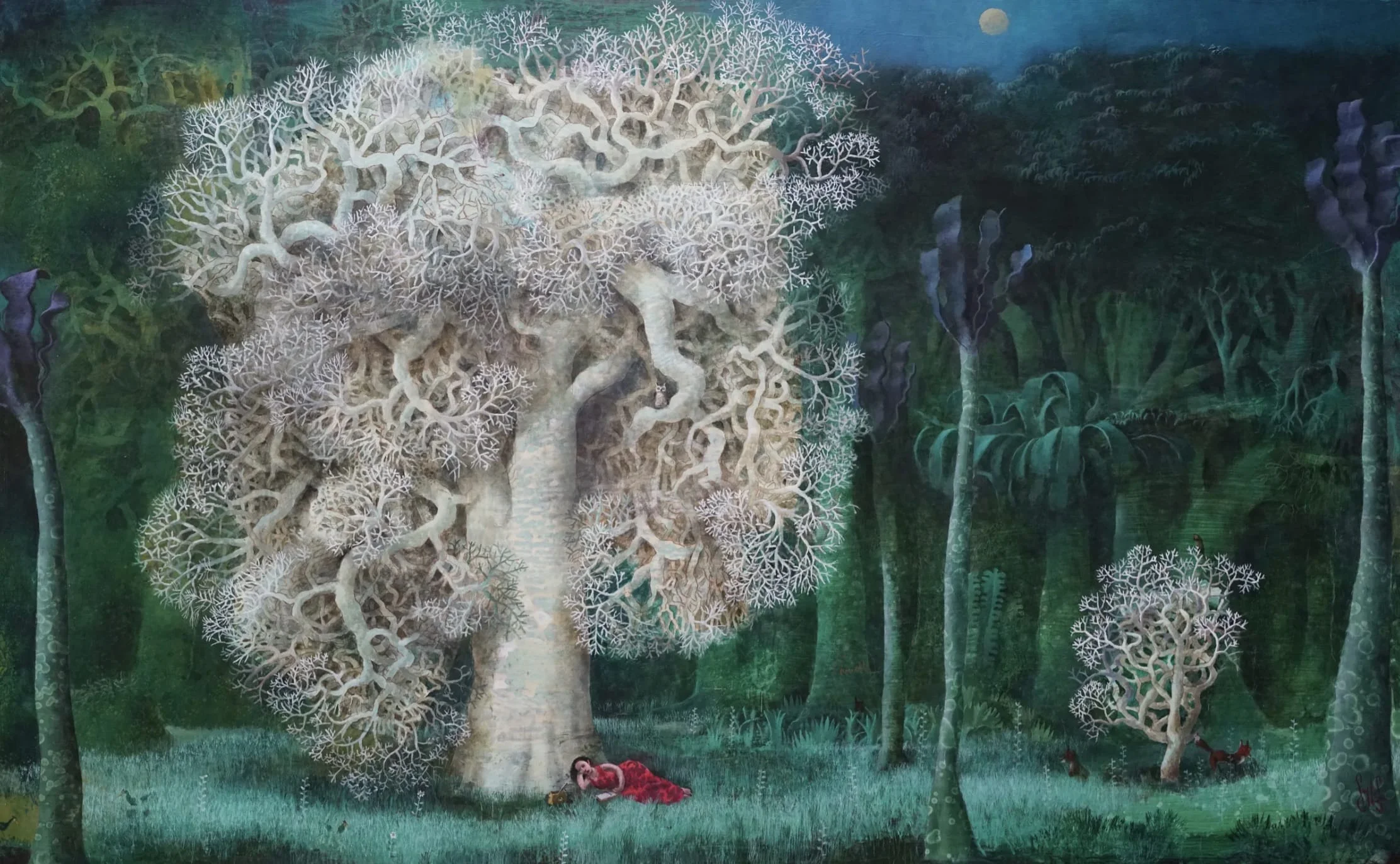
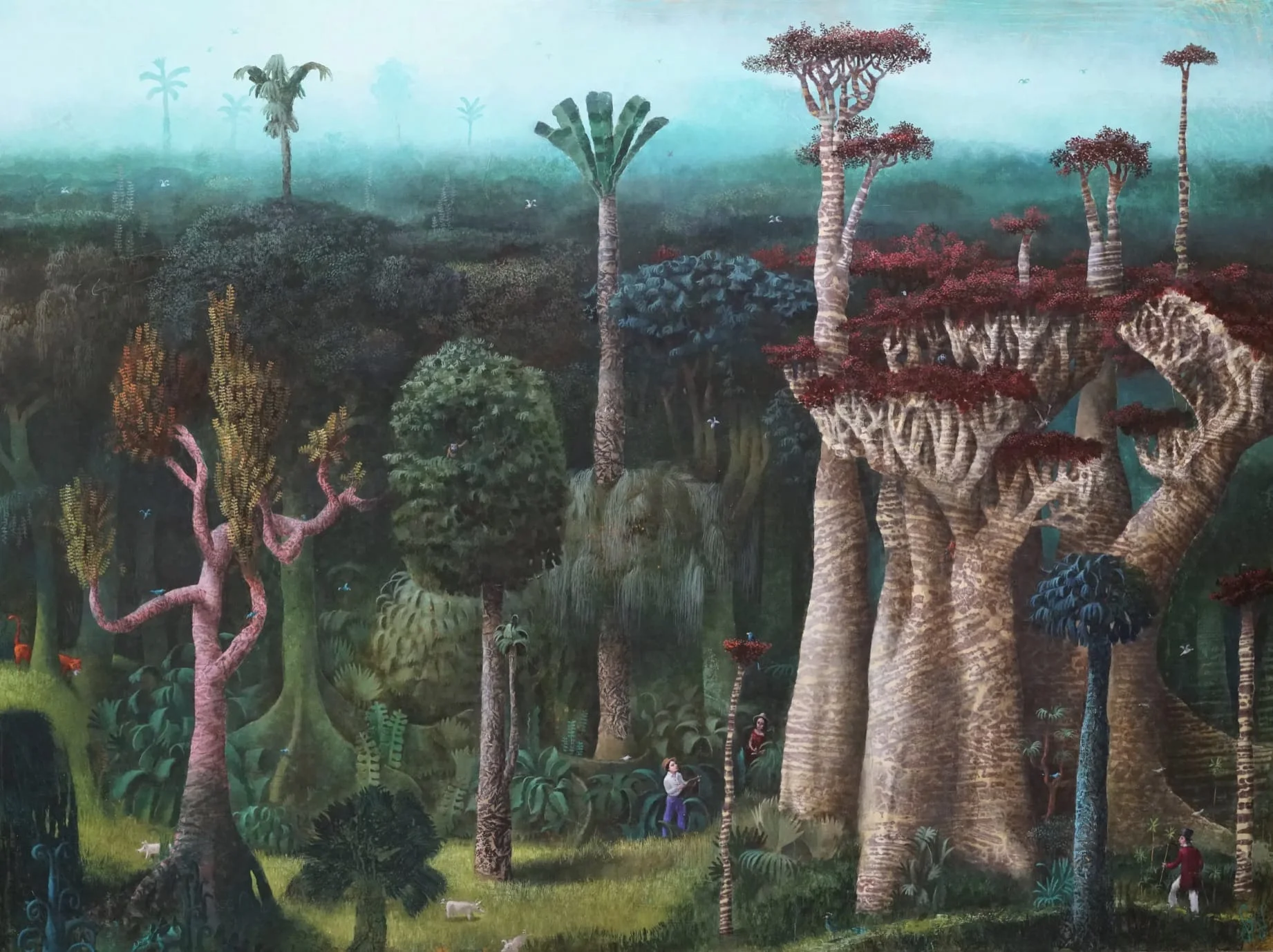
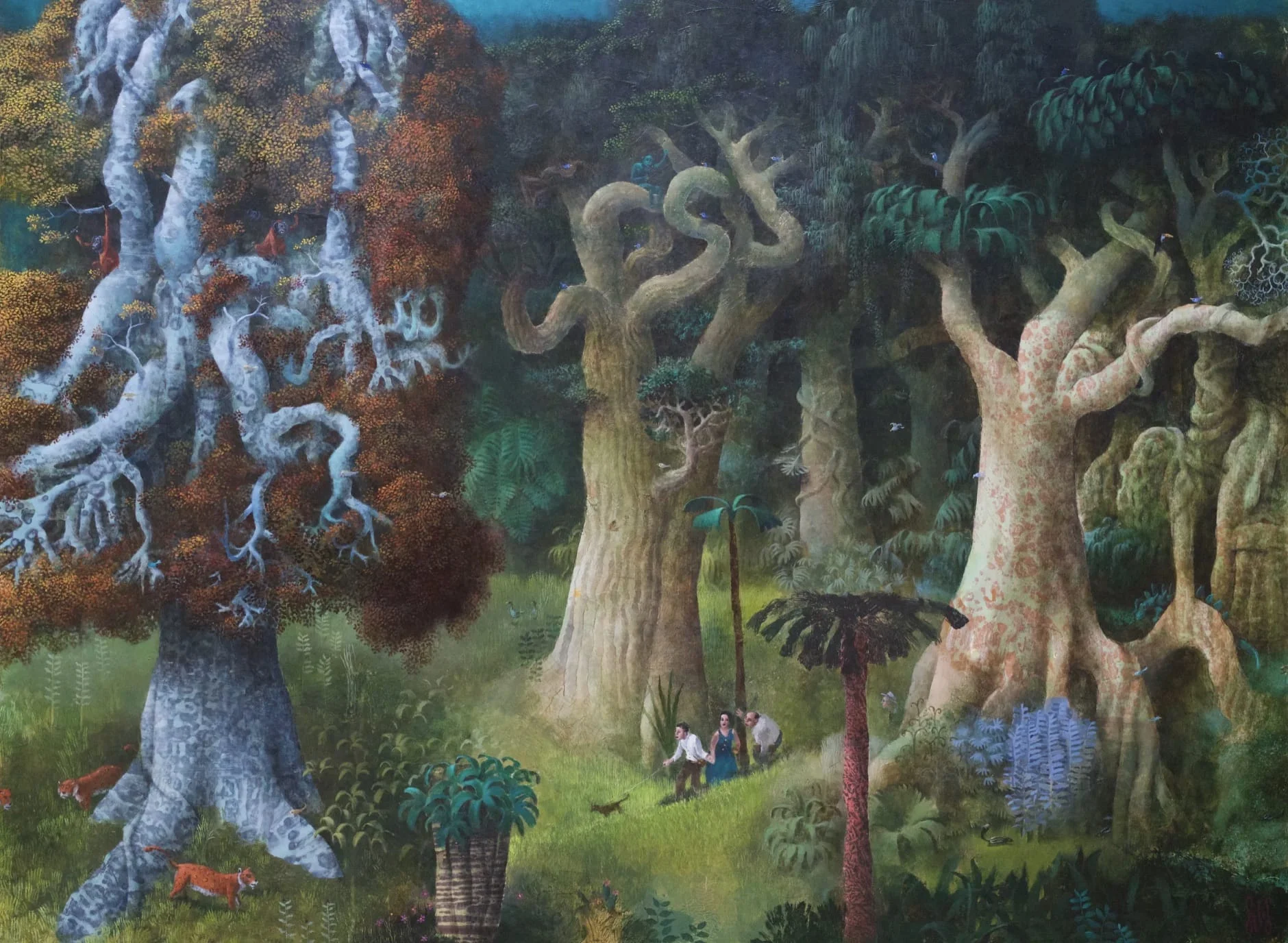
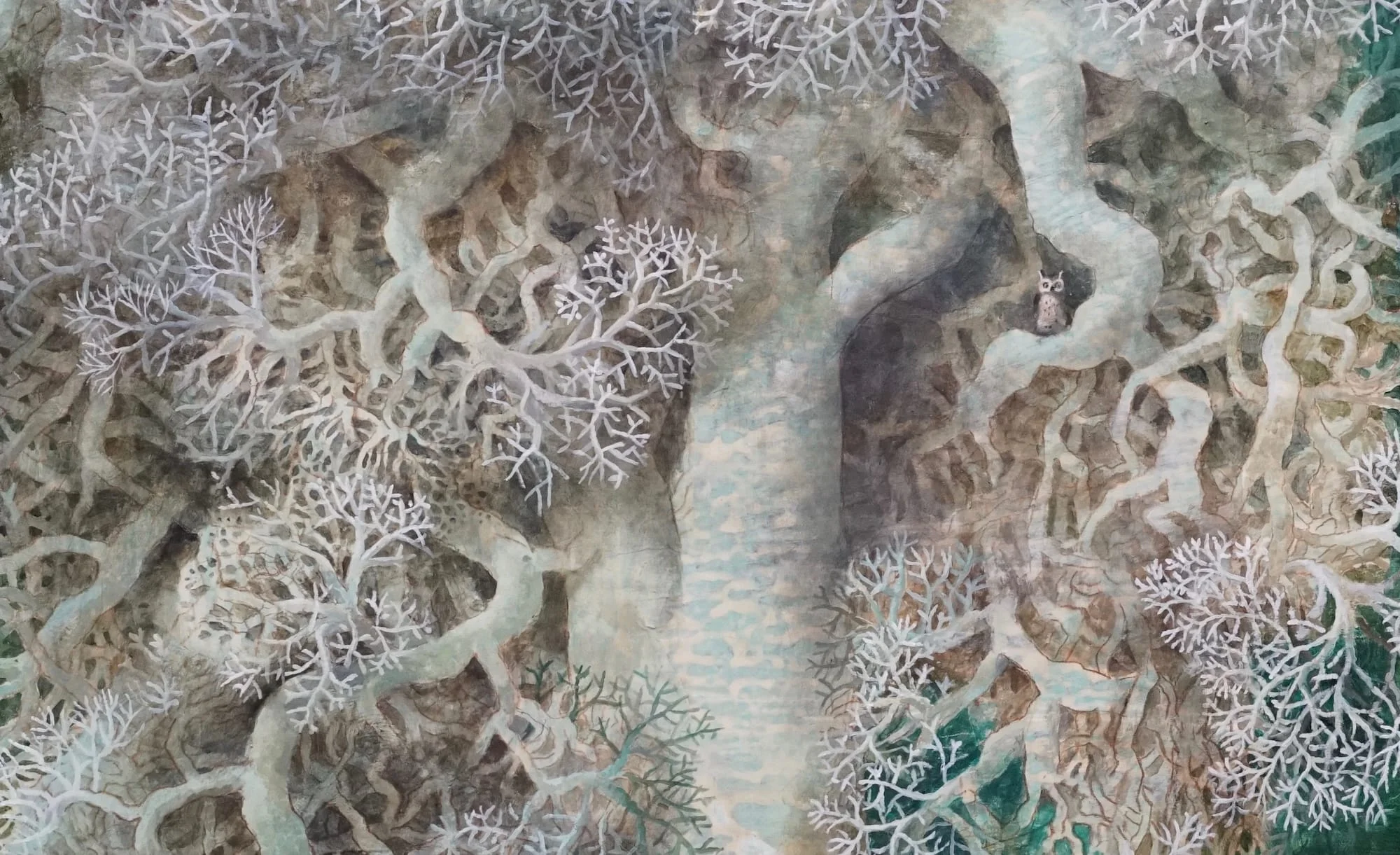
Sylvain Lefebvre paints forests as intricate worlds of their own. Towering, often improbable trees shelter small human gatherings and wildlife, making the people in his scenes seem like visitors within a much older realm. They aren’t simply set against a scenic backdrop: the trees dominate the composition, and human activity takes place on their terms. That shift in scale changes how you read each encounter. A conversation or a moment of rest feels temporary beside a living structure that seems to have grown beyond ordinary time.
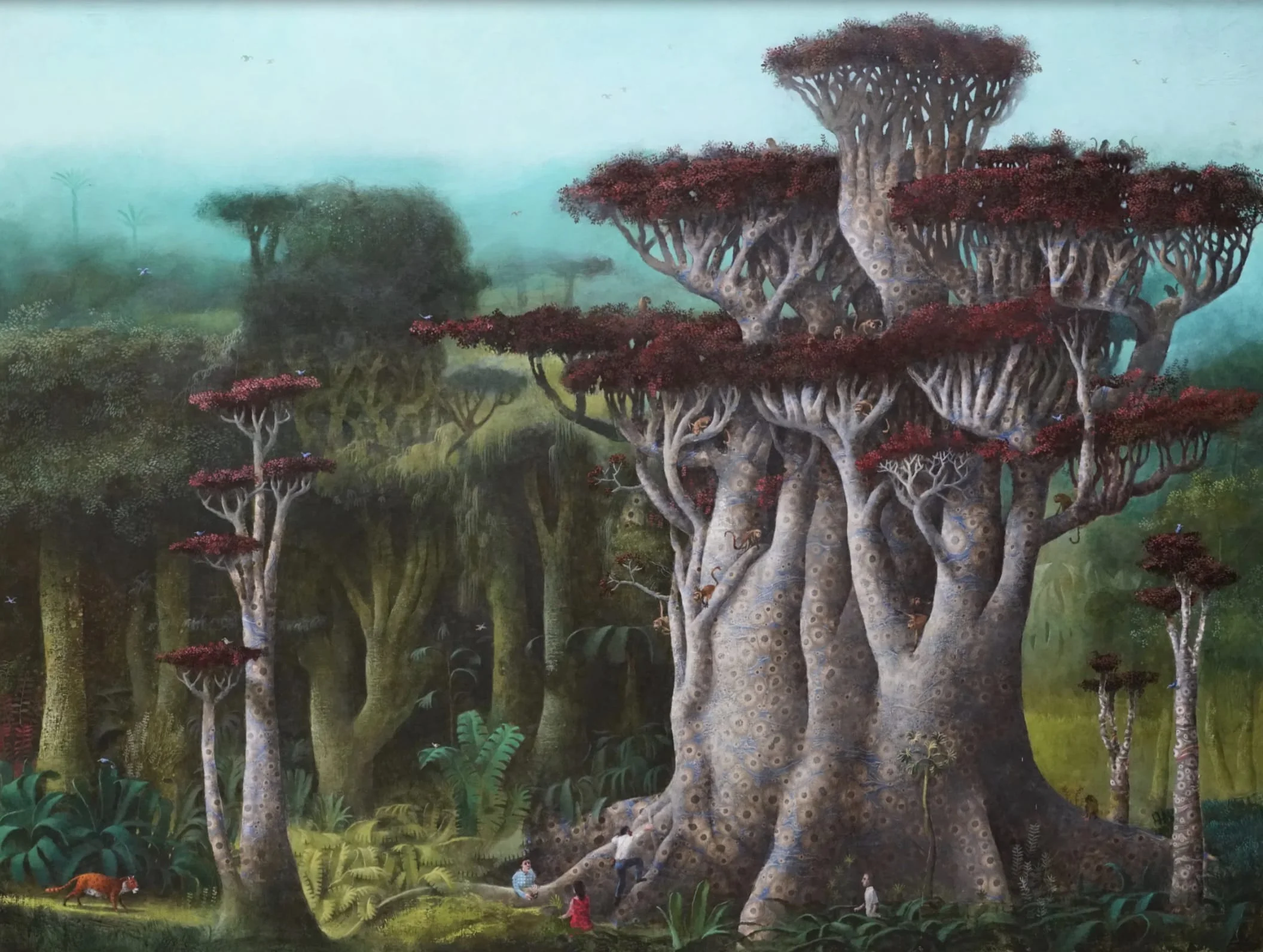
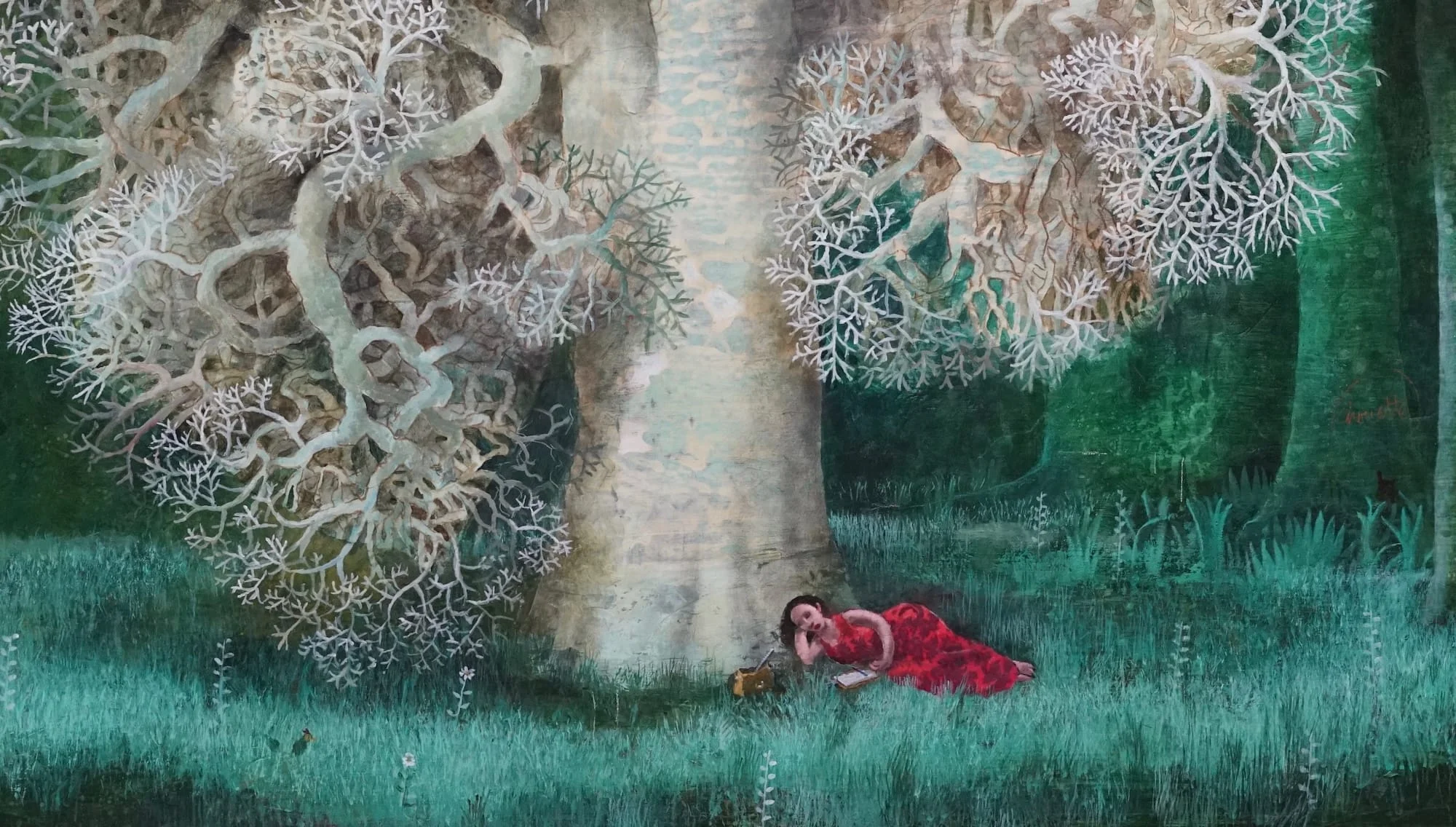
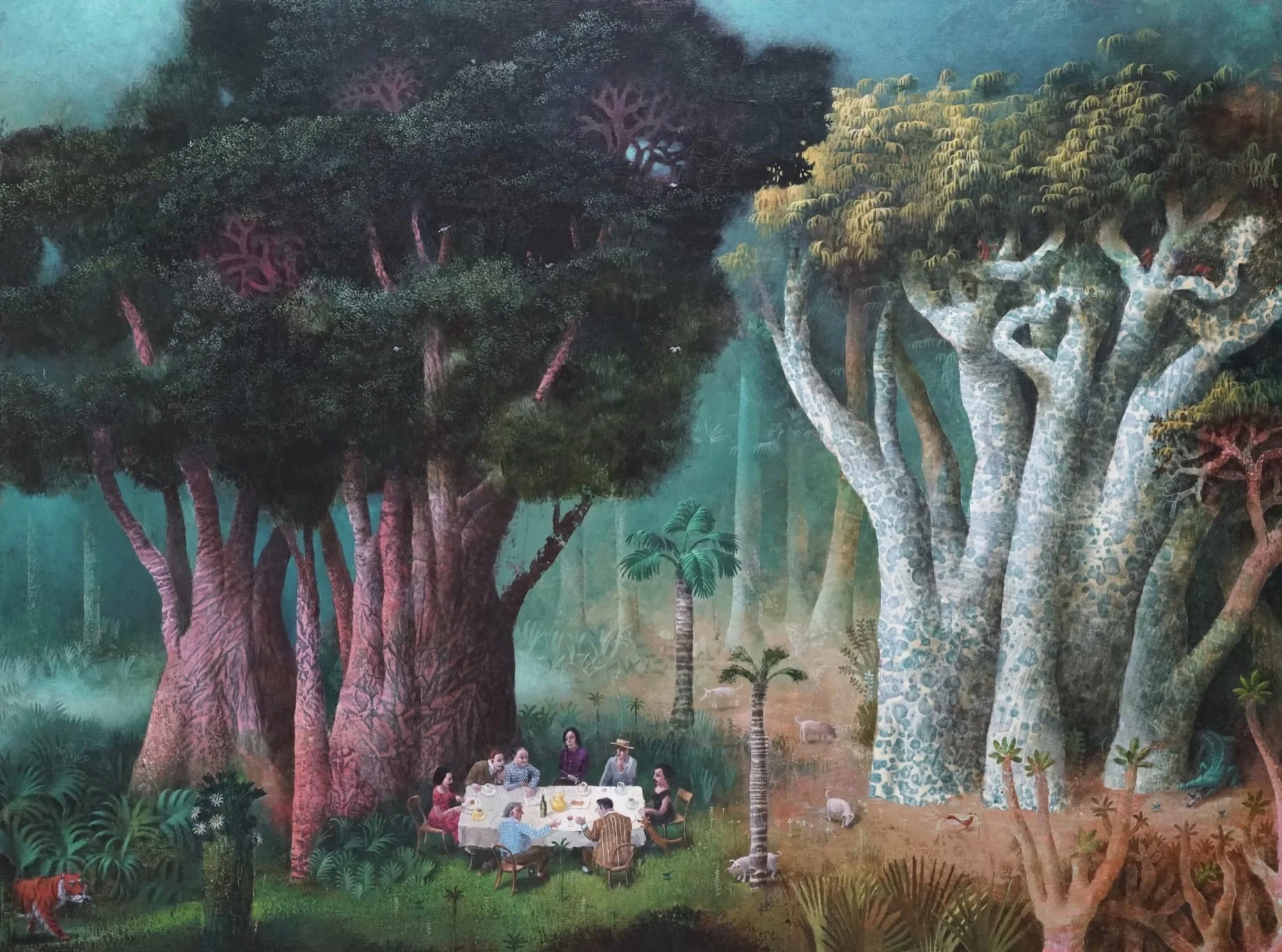
That scale shapes works including “The Quercus Corallium,” where a woman in a red dress rests at the foot of a pale, twisting tree, and “A Debat at Tea Time,” which places a lively table beneath a vast canopy. The French artist’s Journeys Into the Unseen Forest, at Rebecca Hossack Art Gallery in London, brings these imagined environments together. Across the works, familiar activities—sitting, talking, climbing—become small episodes in a setting whose scale and strange growth patterns resist a purely human point of view. The effect is inviting, but it also keeps the viewer slightly off balance.
Paper beneath the forest
Lefebvre builds each scene with collaged, hand-marbled paper under fine layers of oil paint. The patterned ground gives the paintings an unstable, elusive quality, while the painted trees anchor the eye. That tension between surface and structure matters: the marbling suggests movement and variation, while the careful depiction of trunks gives the viewer something solid to follow. In “The Polyphane Pachidermus,” trunks and branches recede into blue distance; elsewhere, densely grouped trees turn the background into a dark, layered enclosure. The forest can feel open in one passage and almost impenetrable in the next.
The figures are deliberately small. They climb, sit, and gather around the massive trunks, suggesting that the forest’s life extends well beyond human activity. Their scale also makes them useful guides: a person beside a tree gives the viewer a sense of its size, while the figures’ varied actions invite closer inspection. A woman lounges beneath the branching form of “The Quercus Corallium”; a conversation unfolds in the shadow of a canopy in “A Debat at Tea Time.” These scenes offer moments of companionship, yet the surrounding trees remain the dominant presence.
Lefebvre frames the trees’ strange shapes as part of nature’s own order. “I wanted to put myself in the place of a forest and its trees by asking myself the following question: How is it that when we look at nature, whatever form it takes, it always appears balanced, while the trees that make it up can grow in such unbalanced ways… twisted, diagonally or horizontally, struggling to find their way towards the light?” The question gets at a productive contradiction in the work: a tree can look misshapen from a human perspective and still belong to a larger pattern of growth. Lefebvre’s compositions ask viewers to consider balance as something broader than symmetry.
Imagined species, real concerns
The exhibition’s speculative mood carries an environmental undertone. It follows a summer of severe heat, low rainfall, and wildfires in France, while Europe continues to experience rapid warming. Lefebvre’s forest offers a counter-image: a place where people, plants, and animals share space beneath old-growth trees. It doesn’t present a policy argument or a direct account of ecological damage. Instead, the paintings make the forest feel like a world with its own claims on attention, one in which human presence is only part of the story.
The gallery describes the paintings’ unfamiliar trees as plausible species that might survive in unexplored corners of the world, or belong to the future. That possibility gives the imagined forest a quiet tension: its forms feel fantastical, yet close enough to nature to seem discoverable. The trees don’t read as pure ornament. Their elaborate shapes suggest adaptation, chance, and the difficulty of judging a living form by familiar standards. (And this is the part most people overlook.) The imagined species aren’t just curiosities; they make uncertainty itself part of the subject.
What the forest asks of its visitors
This is more significant than it looks: Lefebvre’s small figures shift the viewer’s role from owner of the scene to temporary visitor. The paintings don’t spell out a single message, and that restraint suits them. Their scale offers a visual argument for attention: look longer, notice what surrounds the people, and resist treating the setting as passive scenery. If you’re working in this space, that change in perspective is familiar from environmental art, where an image can invite reflection without pretending to solve the problem it evokes.
Here’s the thing: the forest’s appeal depends on both invitation and distance. The tables and resting figures make it seem possible to enter, while the immense trees imply that the place would continue without us. That tension gives the work more staying power than fantasy alone. The numbers here are underwhelming—there are no figures to measure or claims to verify—but measurement isn’t the point. Attention is.
Journeys Into the Unseen Forest continues in London through December 23. More of Lefebvre’s work is available on Instagram. The exhibition’s imagined ecology leaves a question hanging: what kinds of life might become visible if people stopped expecting nature to resemble a familiar picture of balance? An open question.
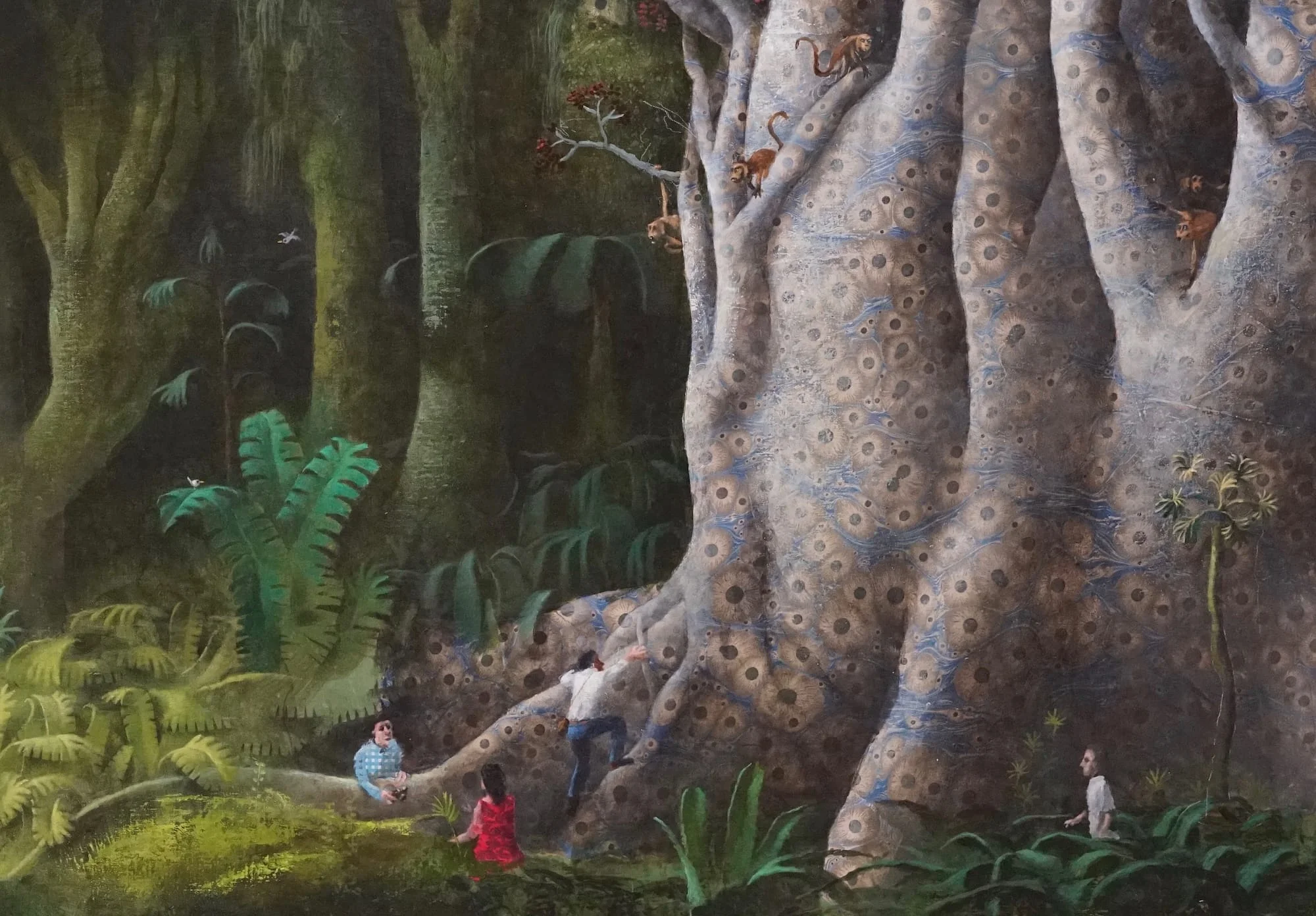
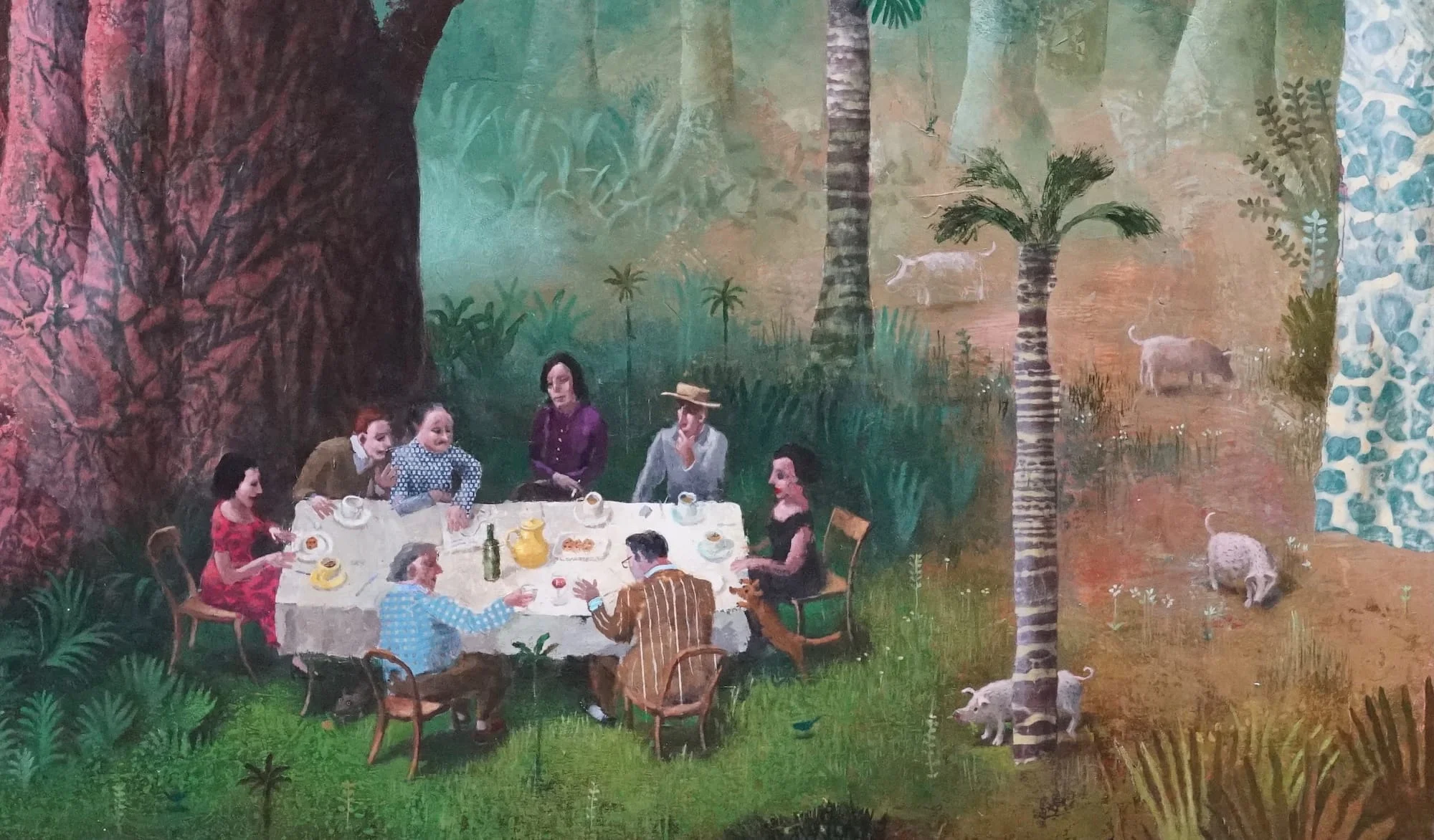 Detail of “A Debat at Tea Time”
Discussion
Sign in to join the discussion.