Craig Wedren and Anna Waronker’s nine-song Blood Hive 4 arrives January 23, led by the eerie acoustic single “Feed Someone.”
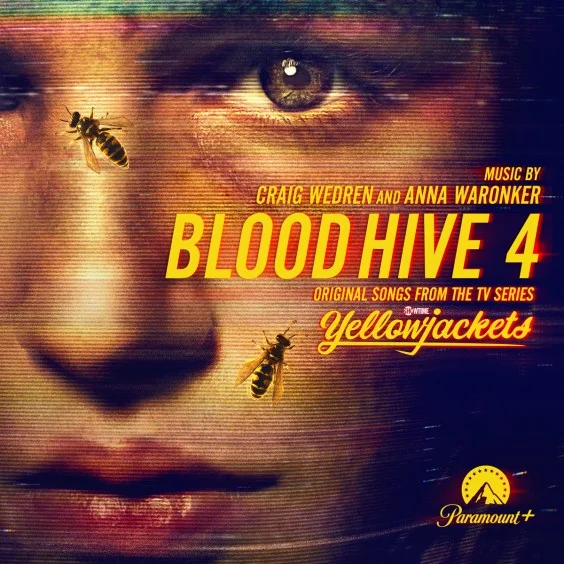
Craig Wedren and Anna Waronker are closing out Yellowjackets with a full album of original songs. Their nine-track collection, Blood Hive 4: Original Songs From The TV Series Yellowjackets, arrives January 23 on Lakeshore, with “Feed Someone” serving as its first single. The release gives the series’ music a final album-length statement, bringing together songs written for the show’s last season rather than presenting only a selection of its score. That distinction matters: songs tied to scenes can carry character, mood and story information in ways an instrumental cue may not.
The album extends a musical identity built around the series’ shifting timelines and its ’90s cultural touchstones. Wedren, of Shudder To Think, and Waronker, of that dog., have composed the show’s score throughout its run, so the songs arrive from collaborators already familiar with its recurring musical language. For the final season, they wrote songs tailored to scenes as the story took shape, with new material appearing in every episode. That approach gives the music a close relationship with the season’s unfolding drama, though it also means the album reflects a story being built in motion rather than a collection planned entirely in advance.
A song for the survivors’ return
“Feed Someone” appears in the season premiere as the rescued Yellowjackets reunite with their parents. The scene holds several emotions at once: relief, anticipation, anxiety and grief. Some parents arrive to find their children aren’t there, while some of the teenagers greet the reunion with dread. The gathering is a homecoming in the literal sense, but the different reactions make clear that survival hasn’t restored anyone to an uncomplicated version of life before the wilderness.
Wedren and Waronker wrote the track as a song before adapting it to the scene. That sequence gives the piece an identity of its own, while the edit and performance can still shape how it works alongside the characters’ reactions. Its acoustic guitar and vocal have a warm, indie-folk feel, but unsettling sounds twist around them. The result stays pretty while hinting that something is wrong, a tension that fits the show’s uneasy shifts between past and present. This is more significant than it looks: a song that seems welcoming at first can make the reunion feel more exposed, because its warmth sits beside the characters’ fear instead of smoothing it away.
That push and pull is a useful measure of the show’s musical method. A straightforwardly ominous cue could tell viewers to expect danger; “Feed Someone” can let a moment feel tender and disturbing at the same time. The difference is subtle, but it leaves more room for the audience to decide what the reunion means. And the title itself carries a plain, domestic suggestion that sits uneasily beside a series shaped by survival. A small, pointed mismatch.
Music built across timelines
The composers describe Blood Hive 4 as a culmination of sounds established in earlier seasons, reshaped for new settings and storylines. The final season brings the survivors back to school in New Jersey in 1997, adding another timeline for the music to connect with the wilderness years and the adults’ present-day lives. That structure gives the score and songs a difficult job: they have to help distinguish periods while making them feel like parts of the same story.
For a series built around fractured chronology, music can provide continuity without spelling out every connection. A recurring sound or familiar musical style may remind viewers that different versions of the characters belong to one history, even when the show cuts between ages and settings. The ’90s references also do more than establish a period. They place the teenage characters in a recognizable cultural frame, while the present-day story can revisit those associations from a very different emotional distance.
They also drew on Theodore Shapiro’s music for the original pilot, which features vocals by Caroline Shaw. That link matters because the pilot helped establish the musical terms of the series before its later seasons could expand them. Wedren and Waronker say the season’s material grew into an album through a mix of their own plans and requests for songs tied to specific scenes. The result reflects both a longer musical arc and the practical demands of writing for individual moments as the story developed.
That mix can be creatively productive, but it makes the album’s shape harder to reduce to a single idea. Some tracks may work as scene-specific pieces, while others may carry more of the series’ recurring musical identity. If you're working in this space, that balance will sound familiar: music written to serve a particular scene has to remain convincing when it leaves the scene and meets a listener on its own. A soundtrack album is strongest when it offers both kinds of value.
The tracklist includes a new version of “No Return,” the show’s theme, alongside a “Diner Version” of “When The Lights Go Out.” Those titles point to two different ways the album relates to the series: returning to a piece viewers already associate with the show, and revisiting a song through a version identified with a particular setting. It closes a run of original songs designed to carry the series through its final episodes. Whether listeners approach the album as a companion to the season or as a standalone collection, those variations offer a record of how the music has been adapted to the show’s changing needs.
Blood Hive 4 tracklist
01 “Feed Someone”
02 “When The Lights Go Out”
03 “Call Me Up”
04 “No Return (Unplugged)”
05 “Till It All Comes Burning Down”
06 “Sweet N' Faded”
07 “When The Lights Go Out (Diner Version)”
08 “See Ya Around”
09 “My Enemy”
What the final album adds
A season-spanning collection can do more than preserve songs from individual episodes. It can make patterns easier to hear: repeated themes, changes in tone and the way a show’s musical vocabulary shifts as its characters move through different stages of their lives. That’s particularly relevant here, where the story’s time jumps ask viewers to keep several versions of the characters in mind at once. The album’s sequencing may offer a different route through those musical connections than the episodes do, though the tracklist alone doesn’t establish how the songs will relate to one another outside their original scenes.
There’s also a practical value in giving songs written for television a life beyond the moment they accompany. A scene may last only a few minutes, but an album lets listeners return to a melody without the dialogue or images around it. That can make the emotional choices in the writing more apparent. It can also expose limitations: material designed for a scene doesn’t automatically become a self-sufficient song. The premiere single offers a strong case for the approach because its gentle surface and unsettled details can register both in the scene and on their own.
The final season of Yellowjackets has begun streaming on Paramount+. The soundtrack is scheduled for January 23 on Lakeshore. For listeners, the album’s appeal will depend partly on how much they value the show’s music as an independent body of work; for the series, it gives the composers’ songs a clear place in the account of how its final episodes sound.



Discussion
Sign in to join the discussion.